Review · TOURS
Vilnius: Regular Walking Tour of Soviet Vilnius
The most revealing part of this Soviet Vilnius walking tour is that it takes you beyond the postcard center. You begin at Gediminas monument and finish near the Seimas parliament, following the city’s Soviet buildings, renamed squares, river views, and memories of life under communist rule.
I like two things here. First, the architecture gives the history a physical shape, especially the former Palace of Concerts and Sports and the National Opera and Ballet Theatre. Second, guides such as Ieva, Tadas, and Šarūnas add family memories to the political story. The main drawback is simple: you walk a lot, even though the route is generally flat.
Key points to know before you book
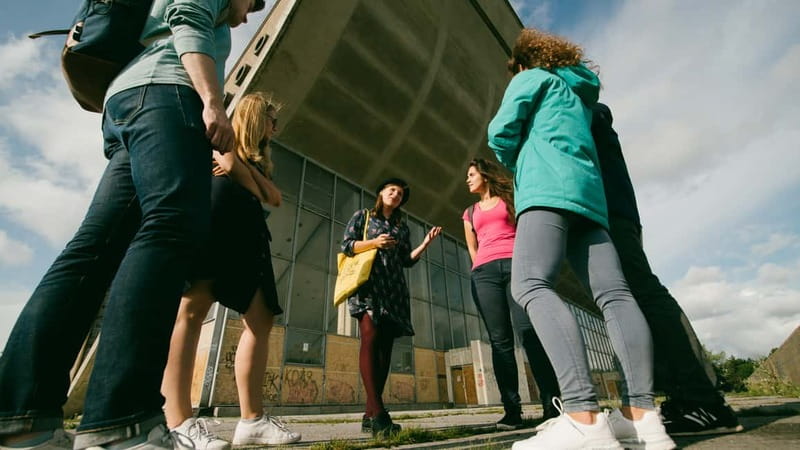
- The former Palace of Concerts and Sports provides the tour’s strongest architectural opening, with its bold Soviet-era concrete design and past as a concert and basketball venue.
- Personal family stories help explain how shortages, restrictions, propaganda, and political fear affected ordinary life.
- The Green Bridge offers a useful lesson in how public monuments can change after independence.
- Lukiskiu Square and the KGB Museum area bring the darker side of occupation into focus.
- The route ends at Seimas, one of the places where Lithuanians defended their independence in 1991.
- Comfortable shoes matter, since the two-and-a-half-hour walk covers much of central Vilnius and continues beyond the Old Town.
Why Soviet Vilnius is best understood on foot
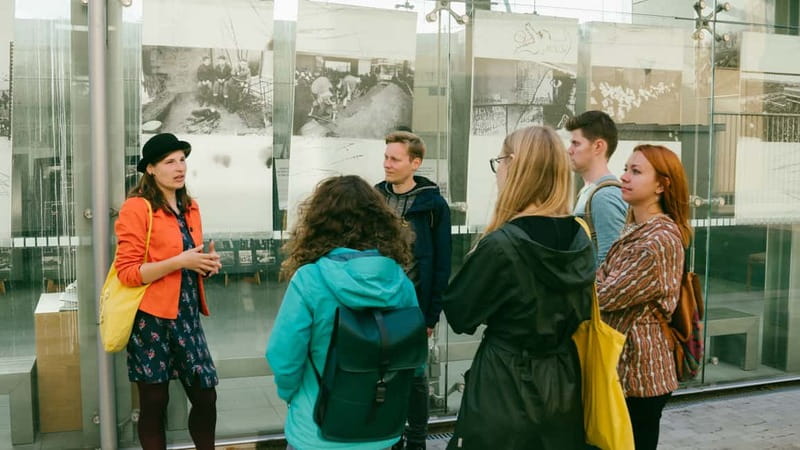
Vilnius is often introduced through its Baroque churches, medieval streets, and castle views. Those sights are important, but they can leave you with a partial picture. Modern Vilnius was also shaped by decades of Soviet rule, and this tour shows you that history in streets and buildings that many people would otherwise pass without a second thought.
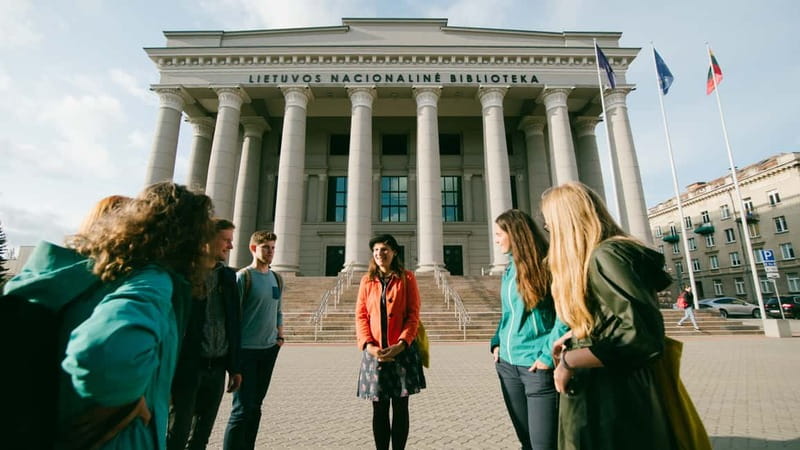
The route begins beside Gediminas monument at Cathedral Square. This is a useful meeting point because it places the tour at the edge of the familiar Old Town before moving into a less polished and more politically charged part of the city.
Your guide carries a yellow bag and a yellow Vilnius with Locals Tours sign. Look for that marker in front of the monument. The tour is in English and led by a live guide, not an audio recording, so you can ask questions as the story develops.
I like the way the walk treats Soviet Vilnius as more than a collection of concrete buildings. You learn how architecture, public space, national identity, and private life were tied together. A square was not just a square, and a monument was never only decoration.
More Walking Tours in the world:
- Magical London: Harry Potter Guided Walking Tour
★ 4.7 · 22,044 reviews - Reykjavik Food Walk – Local Foodie Adventure in Iceland
★ 5.0 · 18,952 reviews - History and Hauntings of Salem Guided Walking Tour
★ 5.0 · 14,564 reviews
From Cathedral Square to the Palace of Concerts and Sports
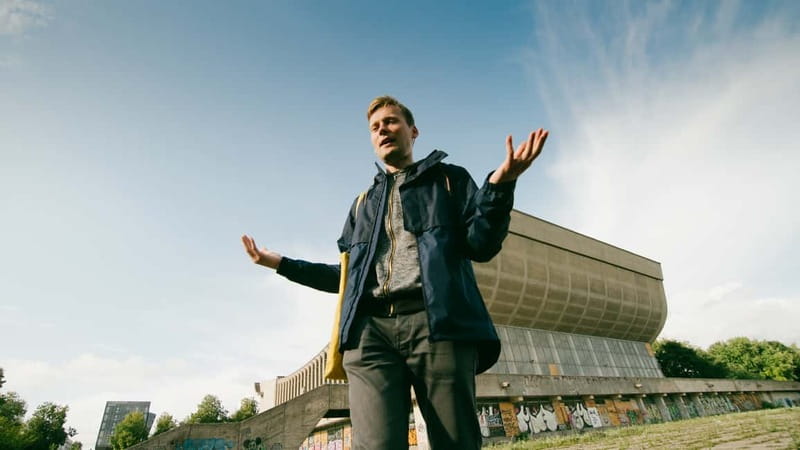
Leaving the Old Town, the tour soon reaches the former Palace of Concerts and Sports. Its large concrete form is a clear example of brutalist Soviet architecture, with a heavy, sculptural appearance that can look strange beside Vilnius’s older streets.
The building once hosted concerts and basketball games. That detail matters because it places the structure in daily life rather than treating it as an abstract political symbol. For local people, it could be a place for entertainment, sport, and shared public experience, even while the wider system controlled much of public life.
The building also makes a useful first stop because it raises a question: what should a city do with difficult or unfashionable architecture from its recent past? You can study the shape, the materials, and the urban setting while hearing how the building functioned in Soviet Vilnius.
If you enjoy architecture, this is one of the tour’s strongest sections. A local architect described the route as a way to understand city planning, interventions around the historic center, and the continuing influence of Soviet construction on Vilnius. You do not need an architectural background, but the tour gives you more to look at than façades and dates.
Along the river toward the Green Bridge
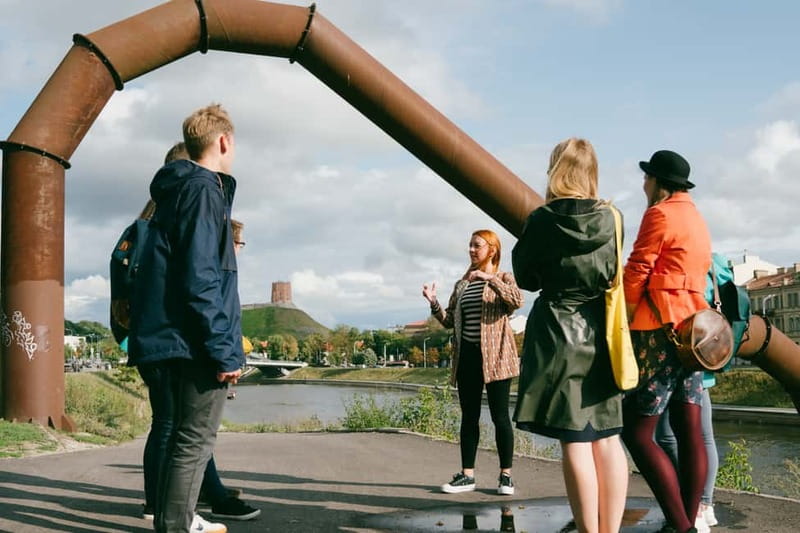
The walk continues beside the river, offering broad views and a different angle on the city. This section gives your legs a steady stretch, but it also helps connect isolated sights into one urban story.
The Green Bridge became famous for its Soviet propaganda statues. Those statues were later removed, making the bridge a useful example of how public space changed after Lithuania declared independence. The bridge itself is not just a photo stop. It opens a discussion about what a country keeps, removes, or reinterprets when it breaks with an old political order.
You may find this part especially helpful if you have seen Soviet monuments in other countries. The guide can place Vilnius within the wider experience of post-communist change while keeping the focus on Lithuania. The story is not simply that one set of statues disappeared. It is about how symbols influence the way people see their own city.
The river section also shows why the tour is not a quick Old Town stroll. You are moving through several parts of central Vilnius, and the spaces between the main stops matter. The walk lets you see how the Soviet city was laid over the older one rather than replacing it completely.
Former Lenin’s Square and the meaning of a renamed place
One of the most useful stops is the site of former Lenin’s Square. The guide explains where it was, what it represented, and how the space changed after independence.
A renamed square can sound like a small detail until you consider how often people use public names. They appear on maps, addresses, newspapers, directions, and everyday conversations. Changing a name can signal a new national story, but it can also raise questions about memory and erasure.
This is where the tour moves beyond architecture. You begin to see how Soviet power worked through ordinary surroundings. Streets, monuments, public buildings, and official ceremonies all helped define what could be remembered and what had to be pushed aside.
The guides are particularly good at connecting these changes to family experience. Ieva, who studied history and trained for six months as a guide, has shared stories from her family’s experience of the occupation period. Tadas has also used memories of growing up during the Soviet era to explain what the period felt like from the inside.
Those personal details are valuable, but the best guides keep them in balance with broader history. The tour is not only one family’s story. It uses family memories to make a larger political system easier to understand.
Same streets, a different guide:
- New Orleans Premier Ghost, Voodoo and Vampire Walking Tour
★ 4.5 · 12,856 reviews - Amsterdam Anne Frank: Small-Group Walking Tour & Local Guide
★ 4.8 · 12,789 reviews - Edinburgh: Harry Potter Magical Guided Walking Tour
★ 4.8 · 11,944 reviews - Edinburgh Castle: Guided Walking Tour with Entry Ticket
★ 4.7 · 11,699 reviews
Lukiskiu Square and the darker side of the occupation
The stop at Lukiskiu Square, beside the KGB Museum, brings a more serious tone. This is where you hear some of the most disturbing stories connected with repression and political control.
The tour does not treat the period as a nostalgic architectural exercise. It makes clear that attractive public spaces and impressive buildings existed alongside fear, surveillance, punishment, and limits on personal freedom. The KGB Museum is nearby, but this walking tour does not include hotel transport or suggest that you will spend the whole visit inside the museum. The value here is the outdoor context and the guide’s explanation of what the place meant.
Expect difficult material. Some stories are described as horrific, and this section may not suit anyone looking for a light sightseeing walk. At the same time, the guides appear to handle the subject with care. Visitors have praised the balance of serious history, personal accounts, humor, and clear explanation.
I find this balance important. A guide who treats repression only as a list of dates can make the subject feel distant. A guide who relies only on emotion can lose historical clarity. The strongest moments here combine both.
The National Opera and Ballet Theatre and anonymous Soviet buildings
Another useful feature of the route is the attention given to buildings that may seem bland or anonymous. The National Opera and Ballet Theatre is one example. Its outward appearance may not immediately draw you in, but the guide explains the stories behind it and its place in the city.
This is a recurring strength of the walk. You are encouraged to stop judging a building only by its appearance. A plain façade can reveal the priorities of the state, the limits placed on architects, or the way a public institution functioned during the Soviet period.
You might also notice the difference between buildings designed to impress and buildings designed to organize city life. Soviet planning was not only about monumental structures. It shaped movement, public gathering, housing, cultural institutions, and the relationship between the old center and newer districts.
The tour is especially worthwhile for anyone interested in architecture, urban planning, or the reuse of politically loaded spaces. It also works for people who know little about architectural history, since the guide explains what you are seeing in clear, manageable sections.
Lithuania’s road to independence
The final part of the tour focuses on Lithuania’s path out of Soviet rule and the struggle to defend independence. You finish near the Seimas parliament building, one of the places where Lithuanians gathered to protect their independence in 1991.
Ending here gives the walk a clear shape. You begin with Soviet power visible in buildings and public design, pass through stories of repression and ordinary life, and finish at a place connected with national resistance.
The road to independence is not presented as a neat overnight change. The tour helps you see how identity, memory, public protest, and political courage came together. The stop at Seimas makes the recent past feel close, not sealed away in a distant century.
This final section can be particularly moving if you have already visited the Old Town and want to understand modern Lithuania. The country’s independence story is not just a ceremonial chapter. It remains part of how Vilnius names its spaces, presents its monuments, and explains its place in Europe.
Guide style and the value of personal stories
The guides are the heart of this experience. Ieva has been praised for combining a history degree, careful preparation, humor, and stories from her family. Tadas is known for an easy speaking style and memories from the Soviet period. Šarūnas has also led tours for locals, pointing out details they had never noticed.
That range matters because the route covers a complicated subject. You will hear about politics, architecture, social life, national identity, and personal hardship in a fairly short time. A guide who can explain difficult ideas in plain English makes a big difference.
The tour also allows questions. One group stayed almost an hour beyond the planned finish because the discussion continued. That should not be treated as a guaranteed extension, but it shows that the format can work well for an engaged group.
Guides have used historic images on an iPad to show how places looked during key events. This is a small but useful tool. It lets you compare the current street scene with an earlier version instead of relying only on imagination.
The tone is usually serious but not grim from start to finish. Good humor appears where it helps, and the subject receives the respect it needs. You may also receive suggestions for documentaries or other ways to continue learning after the walk.
Walking pace, weather, and practical comfort
The tour lasts about two and a half hours and includes a lot of walking. Several people describe the pace as easy and the route as flat, but flat does not mean effortless. You are covering ground between Cathedral Square, the river, the Green Bridge, Lukiskiu Square, former Lenin’s Square, and Seimas.
Wear comfortable shoes. This is the single most useful preparation. In warm weather, carry water, and in colder months bring enough clothing for a long outdoor period. One group completed the tour in hard rain, while another found the winter cold more troublesome than the content. Weather can change how enjoyable the route feels.
There may be a short comfort break during the walk, but you should not treat this as a tour built around frequent indoor stops. Much of the value comes from standing in front of the actual buildings and public spaces.
The activity is listed as wheelchair accessible, but it is not recommended for people with limited mobility because of the amount of walking. If you have mobility concerns, ask for current route details before booking rather than assuming that a generally flat route will be comfortable.
Is $24 a fair price for two and a half hours?
At $24 per person, this tour offers good value if you want both sightseeing and explanation. You are paying for a live English guide, a focused route, local context, and access to places that are easy to miss on your own.
You could walk past the Palace of Concerts and Sports, the Green Bridge, or the Opera and Ballet Theatre without knowing why they matter. You could also read about the 1991 independence struggle separately. The advantage here is that the guide connects those pieces while you are standing in the places themselves.
The price is less compelling if you want a short, low-effort introduction to Vilnius or prefer spending most of your time inside museums. This is a specialist walk with a broad route, not a quick orientation tour.
There is also no hotel pickup or drop-off. You meet at Cathedral Square and finish near Seimas, so plan the rest of your day around those locations. The ending is useful because it leaves you in another central part of the city, but it is not the same place where you began.
Free cancellation up to 24 hours before the start and a reserve-now, pay-later option make the booking more flexible. Those policies are helpful when weather or other plans may change.
Who should book this tour?
I would choose this tour if you are curious about modern Lithuanian history, Soviet architecture, or the way political change reshapes a city. It is also a good choice if you have already seen the Old Town and want a different side of Vilnius.
History fans will find plenty to think about, but you do not need to arrive with specialist knowledge. The guides explain the background clearly, and the personal stories make the subject easier to follow.
Teenagers and adults interested in communism, independence movements, or recent European history should get a lot from it. It may be less suitable for young children, since the material includes repression and disturbing stories.
You can also pair it with a traditional Old Town walk. One visitor combined both tours with the same company, which makes sense: the two routes show very different layers of Vilnius.
Should you book Soviet Vilnius Walking Tour?
Book it if you want to understand why Vilnius looks the way it does beyond its medieval center. The combination of brutalist buildings, renamed public spaces, personal memories, and the 1991 independence story gives you a strong sense of modern Lithuania.
Skip it if you dislike long outdoor walks, difficult political history, or architecture that requires explanation before it becomes interesting. You should also be ready for a serious subject, even though the guides use humor and keep the pace friendly.
For $24, this is a thoughtful and practical way to spend two and a half hours. Bring good shoes, dress for the weather, and give yourself time to ask questions. If you do, you will leave with more than photographs of concrete buildings. You will understand what those buildings, squares, and streets meant to the people who lived around them.
FAQ
Where does the Soviet Vilnius walking tour begin?
It begins in front of the Gediminas monument at Cathedral Square. Look for a guide carrying a yellow bag and a yellow Vilnius with Locals Tours sign.
Where does the tour finish?
The tour finishes near the Seimas parliament building, one of the places where Lithuanians defended their independence in 1991.
How long does the tour last?
The walking tour lasts approximately two and a half hours.
What language is the tour in?
The tour is conducted in English with a live guide.
How much walking is involved?
A lot of walking is involved. The route is generally flat, but it covers several parts of central Vilnius, so comfortable shoes are essential.
Is the tour suitable for people with limited mobility?
The activity is listed as wheelchair accessible, but it is not recommended for people with mobility impairments because of the amount of walking. Check the current route details before booking if this is a concern.
New routes in the world
- Baltimore Walking Foodie Tour in Fells Point★ 5.0 · 182 reviews
- Baku Oil Heritage & Old Town Walking Tour★ 5.0 · 232 reviews
- Baku Walking Tour (Old City)★ 5.0 · 127 reviews
- The Madam’s Curse Walking Ghost Tour★ 4.5 · 103 reviews
- Austin Small Group Morning Walk★ 5.0 · 412 reviews
- Austin Haunted Pub Crawl Walking Tour★ 4.5 · 232 reviews
- Austin Downtown Private Walking Food Tour With Secret Food Tours★ 5.0 · 71 reviews
- Austin Murder Walk★ 5.0 · 310 reviews
Tours, compared.
Magical London: Harry Potter Guided Walking Tour
Read our review →
History and Hauntings of Salem Guided Walking Tour
Read our review →
New Orleans Premier Ghost, Voodoo and Vampire Walking Tour
Read our review →
Amsterdam Anne Frank: Small-Group Walking Tour & Local Guide
Read our review →
Edinburgh Castle: Guided Walking Tour with Entry Ticket
Read our review →