Review · TOURS
Sofia: Communist Walking Tour
Sofia’s communist past is not tucked away in a museum. It is built into the city center, from the grand former party headquarters to the broad avenues and severe 1950s buildings. This three-hour walking tour connects those places with the story of how Bulgaria entered, lived through, and left communism.
I like two things here: the guide explains both the gains and the costs of the system, and the talk reaches beyond monuments into housing, work, religion, food, culture, and daily life. Guides including Vasil, Daniel, Martin, Stefan, and Niki have earned especially strong praise for clear storytelling and open answers. The main drawback is physical: you walk for hours, and some stops have little shelter from winter cold or summer heat.
Key points to know before you go
- The tour covers 1944 to 1989: You get the political background, the Cold War setting, and the aftermath, not just a quick look at statues.
- Personal stories give the subject weight: Guides explain what ordinary Bulgarian life could feel like under the system.
- The route links major central landmarks: Begin at the Palace of Justice and finish near the National Palace of Culture and a section of the Berlin Wall.
- The presentation aims for balance: You hear about social security and industrial growth alongside shortages, surveillance, restrictions, and political control.
- Timing matters: Summer afternoons can be hot, while winter darkness may make some poorly lit sites harder to see.
- The $21 price is fair for history fans: A local English-speaking guide leads the entire walk, though food, drinks, and transport are not included.
Why Sofia’s communist story needs a walking tour
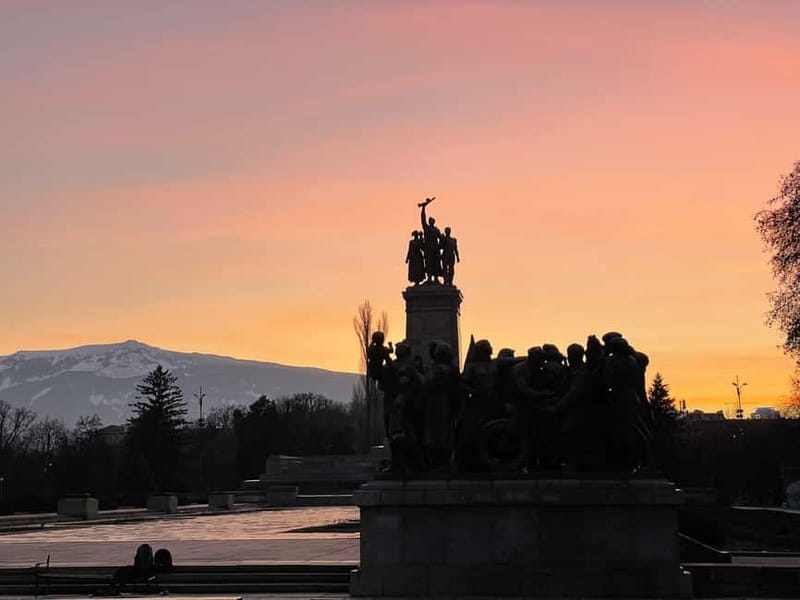
Bulgaria’s communist period lasted from 1944 to 1989, but its effects did not end when the political system changed. Sofia still carries the period in its government buildings, monuments, public spaces, apartment planning, and arguments over what should be remembered or removed.
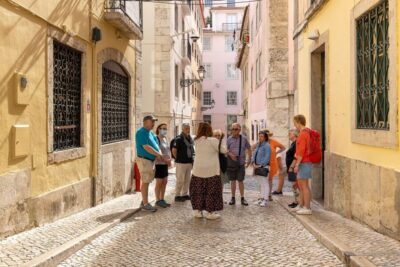
You begin outside the Palace of Justice, a large white building on Vitosha Boulevard with two lion statues in front. It is an easy central meeting point, but give yourself time to find the correct side of the building. The tour then moves through the city on foot, using familiar streets to explain events that can otherwise feel abstract.
This is not simply a parade of concrete buildings. The guide places Bulgaria in the setting of World War II, the rise of communism, Soviet influence, religion, industry, the economy, housing, and culture. That wider frame matters. You see why the system appealed to some people, why it became restrictive, and why its collapse did not solve every problem overnight.
The presentation is also useful for visitors who have seen communist architecture in Prague, Budapest, Bratislava, Riga, Vilnius, or Gdansk. Sofia offers some of the same visual clues, but the Bulgarian story has its own political path and local character.
More Walking Tours in the world:
- Magical London: Harry Potter Guided Walking Tour
★ 4.7 · 22,044 reviews - Reykjavik Food Walk – Local Foodie Adventure in Iceland
★ 5.0 · 18,952 reviews - History and Hauntings of Salem Guided Walking Tour
★ 5.0 · 14,564 reviews
Palace of Justice and Hotel Rila: starting with the city center
The first major stop is the Hotel Rila, a central building with a strong connection to the planned public face of socialist Sofia. Here, the guide begins to point out how hotels, offices, roads, and public spaces were designed to support the image of a modern state.
The route is not rushed from one photo stop to the next. Guides explain what these buildings were meant to communicate and how the city center functioned during the communist period. That approach helps you read the streets around you instead of treating them as a backdrop.
The Hotel Rila is also a practical early stop because the area is central and easy to reach. You are still close to Sofia’s older religious and civic landmarks, which makes the contrast between medieval, royal, and communist-era architecture clear.
St. Nicholas and the place of religion
The medieval Orthodox temple of St. Nicholas the Wonderworker, dating from the 13th century, brings an older Sofia into the walk. It is a useful pause in a tour focused on a 20th-century political system because it raises a basic question: what happened to religion under Bulgarian communism?
The answer was not a simple overnight ban. The guide discusses the changing role of religious institutions and belief under an officially atheist state. You learn how religion, tradition, and public life interacted with communist ideology.
This stop also keeps the tour from becoming visually repetitive. After broad state buildings and formal civic spaces, a small medieval church shows how much older Sofia is than the political system being discussed. You should listen closely here, since the value is mostly in the explanation rather than in a long visit inside the church.
National Assembly and the mechanics of power
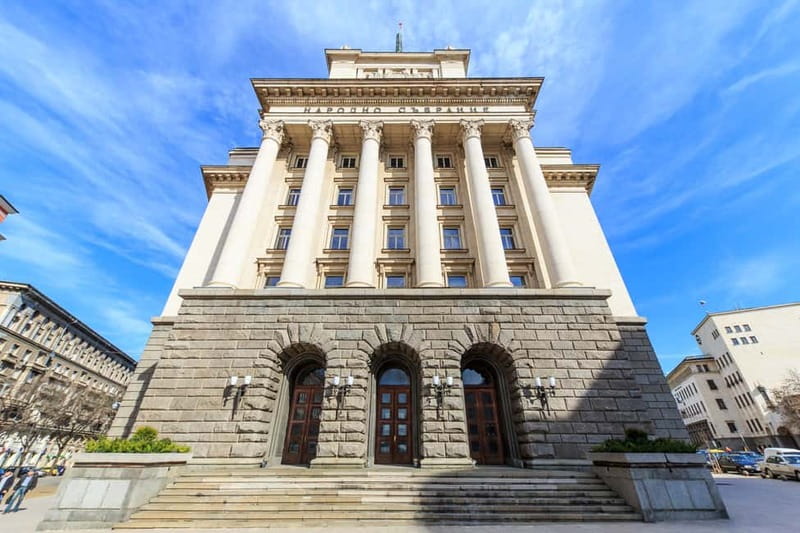
At the National Assembly of Bulgaria, the focus shifts toward government and political authority. The guide explains how the communist state operated and how Bulgaria’s relationship with the Soviet Union affected decisions at home.
This is where the tour’s balanced approach matters most. You are not asked to accept a single easy verdict. The discussion includes claims of stability, employment, industrial development, and access to housing, but also political control, limited freedom, surveillance, and shortages. The result is more useful than a simple good system or bad system lecture.
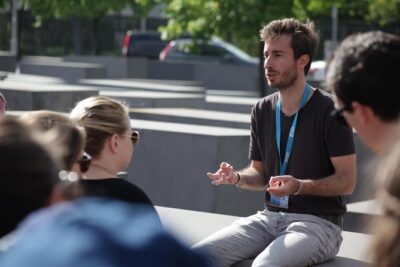
Guides such as Daniel and Stefan have been praised for placing events in a firm historical order, while Vasil and Martin are noted for keeping the discussion lively and open to questions. The exact guide varies, but the activity is in English.
Same streets, a different guide:
- New Orleans Premier Ghost, Voodoo and Vampire Walking Tour
★ 4.5 · 12,856 reviews - Amsterdam Anne Frank: Small-Group Walking Tour & Local Guide
★ 4.8 · 12,789 reviews - Edinburgh: Harry Potter Magical Guided Walking Tour
★ 4.8 · 11,944 reviews - Edinburgh Castle: Guided Walking Tour with Entry Ticket
★ 4.7 · 11,699 reviews
Malko Tarnovo Street and the former secret police world
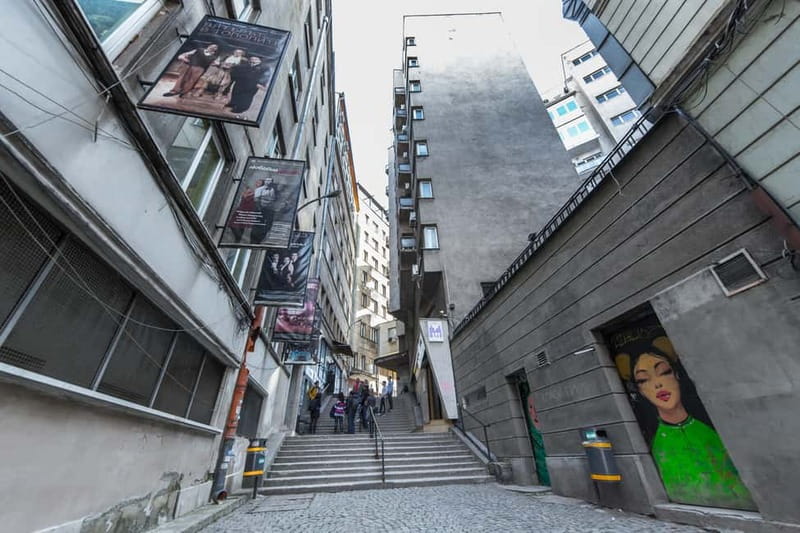
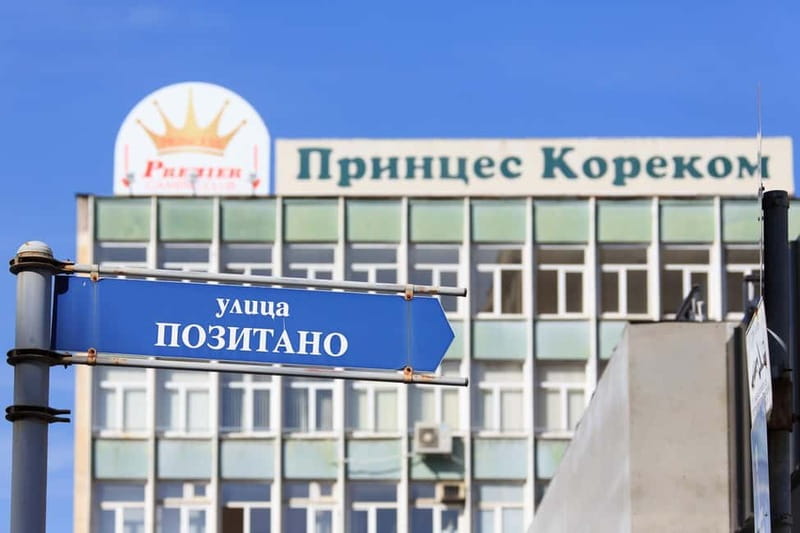
Ulitsa Malko Tarnovo offers one of the tour’s more sobering subjects: the former secret police investigation facility. The building is not just another piece of communist architecture. It points to the machinery used to watch, question, and pressure people considered a threat to the state.
This part helps explain why public calm did not always mean personal freedom. You hear about the atmosphere of suspicion and the reach of the security services, along with the way ordinary people learned to speak carefully in public.
The stop may appeal most to visitors interested in political history, but it also gives the everyday sections of the tour a sharper edge. Housing and employment policies can sound positive in isolation. Set beside surveillance and restricted speech, you get a more honest picture of how the system worked as a whole.
Archives and the problem of what gets remembered
The State Agency Archives continues the discussion about records, official stories, and historical memory. Archives matter in any study of dictatorship because what gets preserved, classified, released, or destroyed shapes what later generations can know.
The guide uses the site to explain how Bulgaria’s communist past is still being understood. That makes the tour relevant to present-day Bulgaria, not just to the period from 1944 to 1989. You are encouraged to think about which parts of the past remain visible in public spaces and which parts have been pushed aside.
Do not expect a long indoor archive visit as part of the walk. The stop is mainly about the building and the ideas connected to it. The route works best if you enjoy listening and asking questions rather than collecting interiors.
City Garden and Knyazheska Garden: public space and public memory
The City Garden and Knyazheska Garden provide open-air settings for discussing propaganda, culture, leisure, and the use of public space. Under communism, parks and central squares were not only places to relax. They also formed part of the public image of the state and could host ceremonies, gatherings, and official displays.
The guide may also connect these gardens with changes in daily life. Topics include work, education, industry, housing, culture, and the economy. The point is not to claim that everyone experienced communism in the same way. A factory worker, an official, a religious family, and a young person in Sofia could have had very different views of the same system.
These gardens are also welcome breathing room during a three-hour walk. In hot weather, look for shade and carry water. In winter, the open spaces can feel cold, and one guide helped a group warm up with a hot chocolate stop. That is not guaranteed, but it shows why clothing and timing matter.
Stalinist Sofia and the architecture of authority
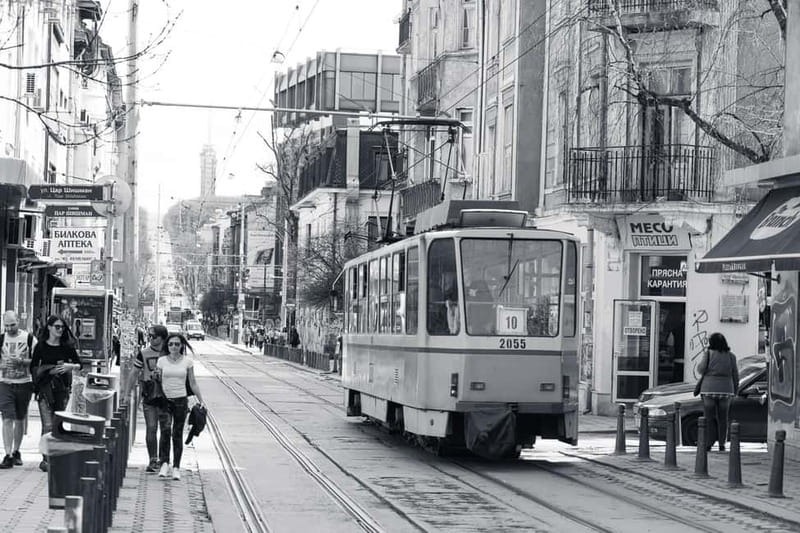
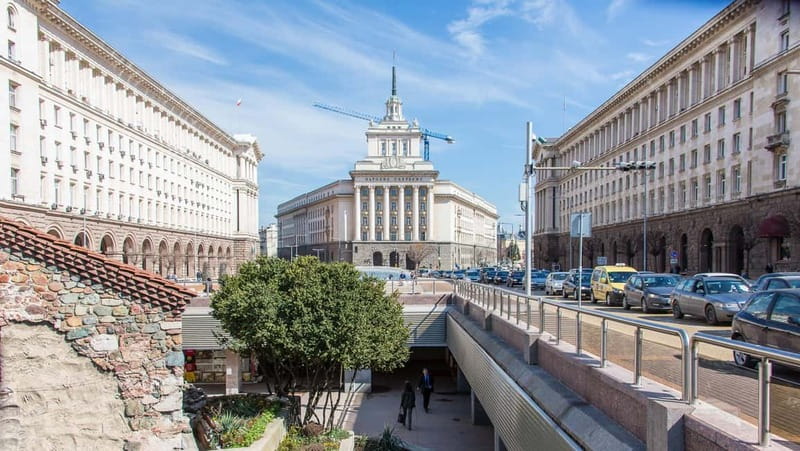
Several examples of classic communist architecture appear along the route, including Sofia’s Stalinist architectural ensemble from the 1950s. The buildings use scale, symmetry, stone, and formal design to express order and state power.
The guide explains how architecture served ideology. Grand facades were meant to suggest permanence and strength, while wide spaces allowed the state to stage public life on a large scale. You can also compare these buildings with older Sofia structures nearby, where religious, imperial, and local styles tell very different stories.
For photographers, this is one of the most useful parts of the tour. For everyone else, the explanation prevents the buildings from becoming a blur of gray facades. Sofia has more visual variety than the phrase communist architecture suggests, and the guide helps you notice both the design and the political purpose behind it.
The Soviet Army Monument and the argument over symbols
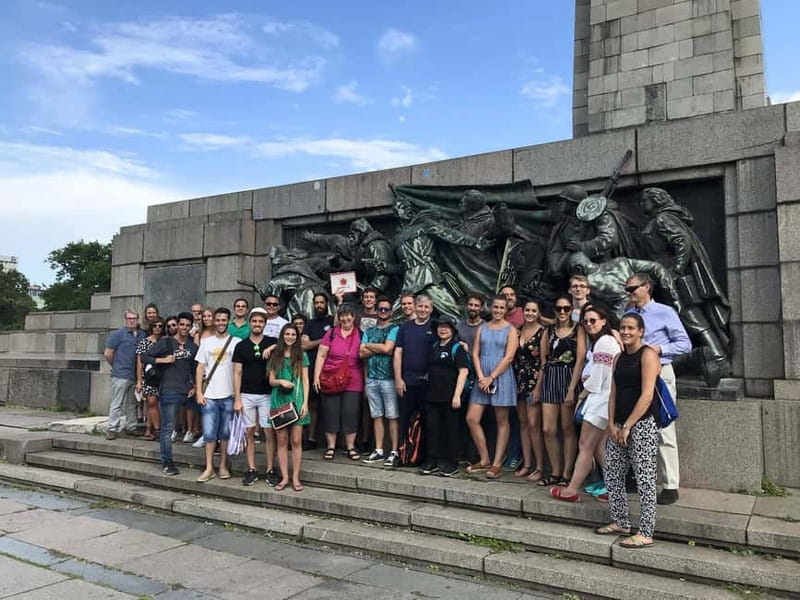
The Monument of the Soviet Army is one of the most controversial stops. It raises questions about liberation, occupation, political allegiance, and the right to control public memory.
The guide explains why the monument remains disputed and how its meaning changes depending on your view of the Soviet role in Bulgaria. This is not a subject that benefits from a neat answer. The value lies in hearing the competing interpretations and understanding why the monument has become a focus of public debate.
You should expect discussion rather than a simple photo opportunity. This stop works especially well for visitors who want to understand how history affects current Bulgaria. It also shows that communist-era memory is not settled or safely stored in the past.
The victims’ memorial and the human cost
The Memorial to the Victims of the Communist Regime in Bulgaria shifts attention from buildings and symbols to people who suffered under the system. The memorial gives the guide a place to discuss repression and the lives affected by political control.
This is one of the most important pauses on the route because it keeps the tour from becoming too fascinated with architecture. Grand buildings can make an authoritarian period look orderly and impressive. The memorial reminds you to ask who paid the price for that order.
The tone is serious, but the tour remains open to questions. Guides are encouraged to explain the period rather than tell you what conclusion to reach. That makes the memorial more meaningful for visitors who know little about Bulgarian history.
National Palace of Culture and the walk toward 1989
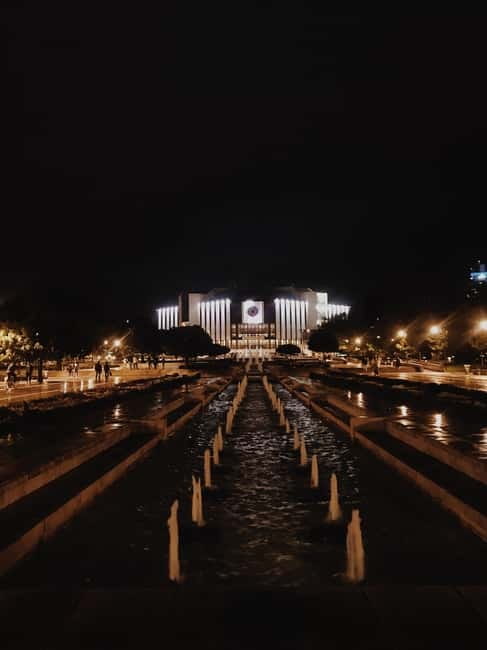
The route ends at the National Palace of Culture, Sofia’s major conference and cultural complex. It is an appropriate final setting because the building links state ambition, public culture, and the later years of communist Bulgaria.
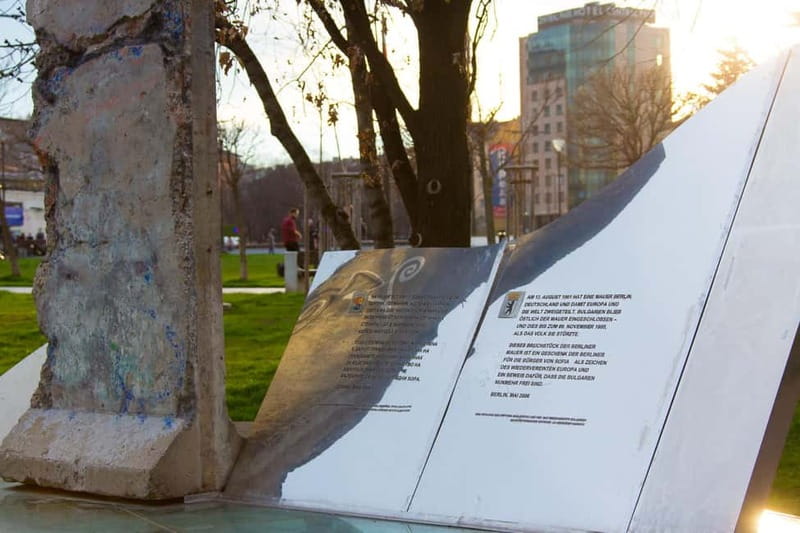
Here, the guide brings together the themes of the walk: industry, housing, religion, culture, economics, government, and daily life. You also consider what changed after 1989 and what did not. The tour finishes near the National Palace of Culture, at or around a section of the Berlin Wall, giving the end of the route a clear Cold War connection.
The finish is practical. You are in a central part of Sofia with access to more of the city, though no hotel return is included. I would plan your next activity nearby rather than expecting transport back to your accommodation.
What the $21 price really gets you
At $21 per person, this is a reasonable buy for a visitor who wants a guided history lesson tied to real places. The price covers a local English-speaking guide, and the walk lasts about three hours. That is a low cost compared with a private guide, though you should remember that food, drinks, and hotel pickup are not part of the deal.
The value depends on how you use the information. If you only want quick photographs of central Sofia, the tour may feel too talk-heavy. If you want to understand why the buildings, monuments, and public arguments matter, the guide adds much more than you would get by walking alone.
The high rating of 4.9 from 1,106 ratings fits the main strength of the experience: clear, engaging explanations. Names that appear repeatedly in strong feedback include Daniel, Vasil, Martin, Stefan, Niki, Dino, Nikolai, Yoan, Ivo, and Nikola. You cannot choose a particular guide from the information provided, but the range of praised guides suggests a well-established team.
Timing, walking comfort, and who should book
Plan for steady walking over three hours. The tour is not wheelchair accessible and is not recommended for people with limited mobility. Children must be accompanied by an adult, and unaccompanied minors are not allowed.
Summer can be hot, especially when the group is standing in open areas. A morning start may be more comfortable. In winter, daylight fades early, and some sites are not well lit, so an earlier start gives you a better look at the buildings and monuments.
Wear comfortable shoes and bring water. The route includes public streets, gardens, and outdoor stops, so dress for the forecast. You may also want a snack before starting, since food and drinks are not included.
I would book this for history fans, first-time visitors who want context, and anyone interested in how political systems shape ordinary life. It is also useful if you have already seen communist-era cities elsewhere and want a Bulgarian comparison.
Should you book the Sofia Communist Walking Tour?
Yes, if you want more than a quick tour of Sofia’s churches and shopping streets. The guide connects the former Bulgarian Communist Party headquarters, secret police site, Stalinist buildings, Soviet Army Monument, victims’ memorial, and National Palace of Culture into one understandable story.
Book it early in your Sofia stay so you can use the guide’s suggestions for places to eat and visit afterward. Choose a cooler morning in summer and an early daylight slot in winter. Skip it only if three hours of walking and historical discussion sound tiring. At $21, it is one of the better-value ways to understand the city’s 20th-century identity.
FAQ
How long is the Sofia Communist Walking Tour?
The tour lasts three hours. One experience may run a little longer, so allow extra time if you have a fixed appointment afterward.
How much does the tour cost?
The listed price is $21 per person.
Where does the tour meet?
Meet outside the Palace of Justice at bul. Vitosha 2, Sofia Center. Look for the large white building with two lion statues in front.
Where does the tour finish?
The route finishes at the National Palace of Culture area, near a section of the Berlin Wall.
What language is the tour offered in?
The live tour guide speaks English.
What period of Bulgarian history does the tour cover?
The main focus is Bulgaria’s communist era from 1944 to 1989. The tour also explains the events leading into that period and its effects on present-day Bulgaria.
Which subjects are discussed?
The guide covers World War II, religion, industry, the economy, housing, culture, government, and daily life under communism.
Which landmarks are included?
Stops and sights include the Palace of Justice, Hotel Rila, St. Nicholas the Wonderworker, the National Assembly, Malko Tarnovo Street, the State Agency Archives, City Garden, Knyazheska Garden, the Soviet Army Monument, the Memorial to the Victims of the Communist Regime, the National Palace of Culture, and communist-era architecture.
Is the tour suitable for wheelchair users?
No. The tour is not wheelchair accessible and is not recommended for people with mobility impairments.
Are hotel pickup, food, and drinks included?
No. Hotel pickup and drop-off, food, and drinks are not included.
New routes in the world
- Baltimore Walking Foodie Tour in Fells Point★ 5.0 · 182 reviews
- Baku Oil Heritage & Old Town Walking Tour★ 5.0 · 232 reviews
- Baku Walking Tour (Old City)★ 5.0 · 127 reviews
- The Madam’s Curse Walking Ghost Tour★ 4.5 · 103 reviews
- Austin Small Group Morning Walk★ 5.0 · 412 reviews
- Austin Haunted Pub Crawl Walking Tour★ 4.5 · 232 reviews
- Austin Downtown Private Walking Food Tour With Secret Food Tours★ 5.0 · 71 reviews
- Austin Murder Walk★ 5.0 · 310 reviews
Tours, compared.
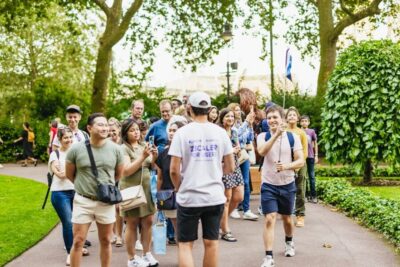
Magical London: Harry Potter Guided Walking Tour
Read our review →
History and Hauntings of Salem Guided Walking Tour
Read our review →
New Orleans Premier Ghost, Voodoo and Vampire Walking Tour
Read our review →
Amsterdam Anne Frank: Small-Group Walking Tour & Local Guide
Read our review →
Edinburgh Castle: Guided Walking Tour with Entry Ticket
Read our review →