
Review · CASTLE AND PALACE
Seoul: Gyeongbok Palace and Bukchon Hanok Walking Tour
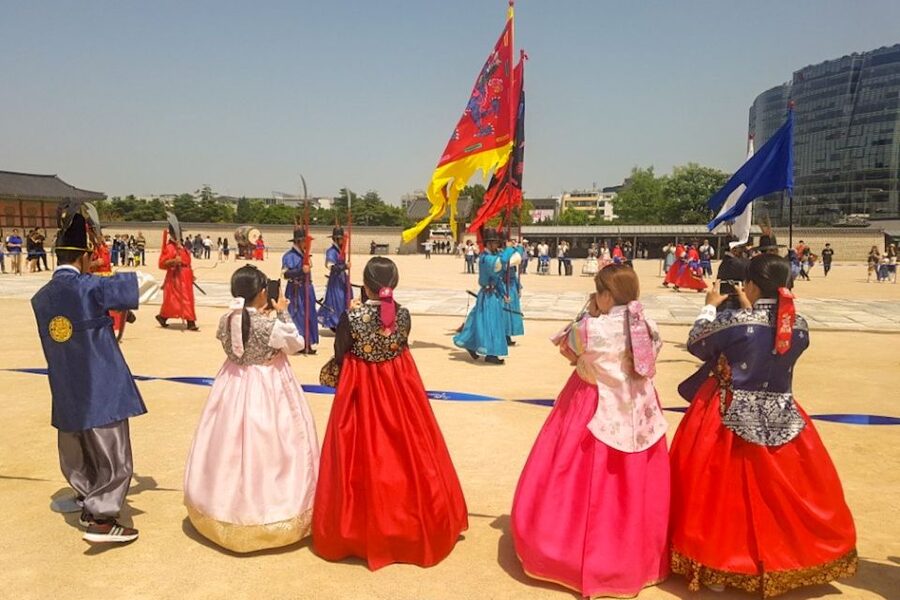
Gyeongbokgung Palace and Bukchon Hanok Village give you two very different views of Seoul in one morning: royal courtyards and guard ceremony first, then steep lanes lined with traditional homes. The best part is the small group of no more than eight, which gives your guide room to answer questions and adjust the pace.
I like the practical side, especially learning how to use Korea’s public transport and finishing near Insadong, where you can shop and ask for food or souvenir tips. I also like the human touch offered by guides such as Stella, Joe, and Jay Kim, who have helped visitors with photography, skincare shopping, vegetarian food, and local customs. The catch is simple: three hours means a brisk visit, with plenty of walking, standing, and some uphill climbing in Bukchon.
Key points at a glance
- Morning palace ceremony: Watch the changing ceremony of the royal guards at Gyeongbokgung Palace.
- More than palace walls: Visit the National Folk Museum and connect historic objects with everyday Joseon life.
- Bukchon on foot: Walk Samcheongdong Alley and see traditional hanok homes beside modern Seoul.
- Useful local guidance: Learn basic public transport habits and ask for restaurant, shopping, or photo suggestions.
- Small-group format: With a maximum of eight people, the tour can feel personal, especially when fewer people book.
- Good first-day choice: The route gives you historical context before you explore Seoul on your own.
Why this three-hour route works so well
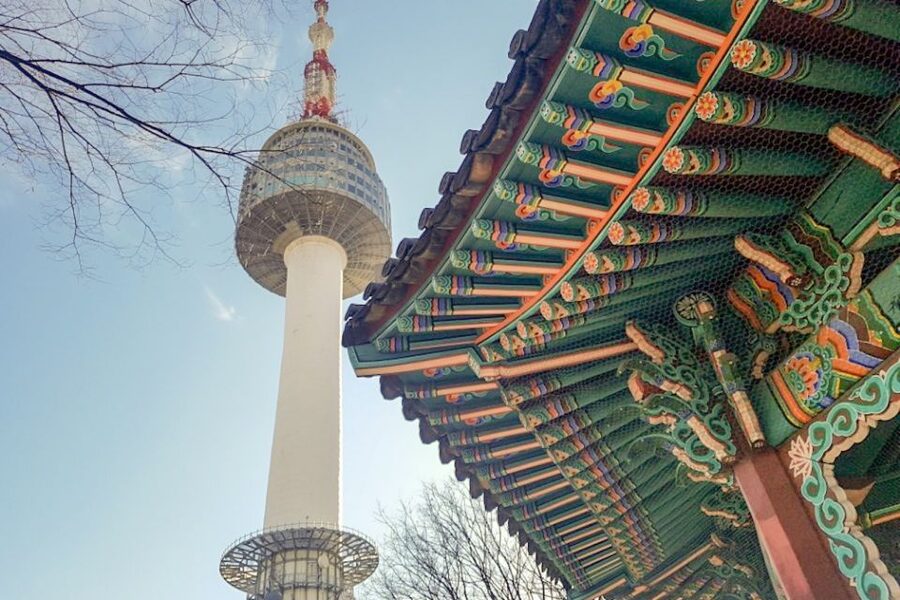
This is a good introduction to Seoul because it does not treat the city as a collection of photo stops. The route links royal power, ordinary home life, modern streets, and practical city skills.
You begin at City Hall Station, Exit 6, outside the exit beside The Plaza hotel. From there, the walk heads toward Gyeongbokgung Palace. That meeting point is central and easy to identify, but you should still arrive ready to walk. Hotel pickup is not included.
The tour is led in English, and the guide is part historian, part city helper. Guides have included Stella, Joe, Jay Kim, Jack, Ben, Kay, Kat, and others. The exact guide depends on the date, but the strongest pattern is clear: explanations are a major part of the experience, not an occasional comment between landmarks.
I especially value that approach early in a Seoul visit. The city can feel huge and fast at first. A guide who explains how the palace connects to Korean history, then shows you how to move around by public transport, can save you time for the rest of your stay.
More Castle and Palace Walking Tours in the world:
- Edinburgh Castle: Guided Walking Tour with Entry Ticket
★ 4.7 · 11,699 reviews - Venice: Doge’s Palace and St Mark’s Basilica Walking Tour
★ 4.4 · 6,291 reviews - Prague: 3-Hour Walking Tour of Old Town & Prague Castle
★ 4.7 · 5,696 reviews
Gyeongbokgung Palace and the royal guard ceremony
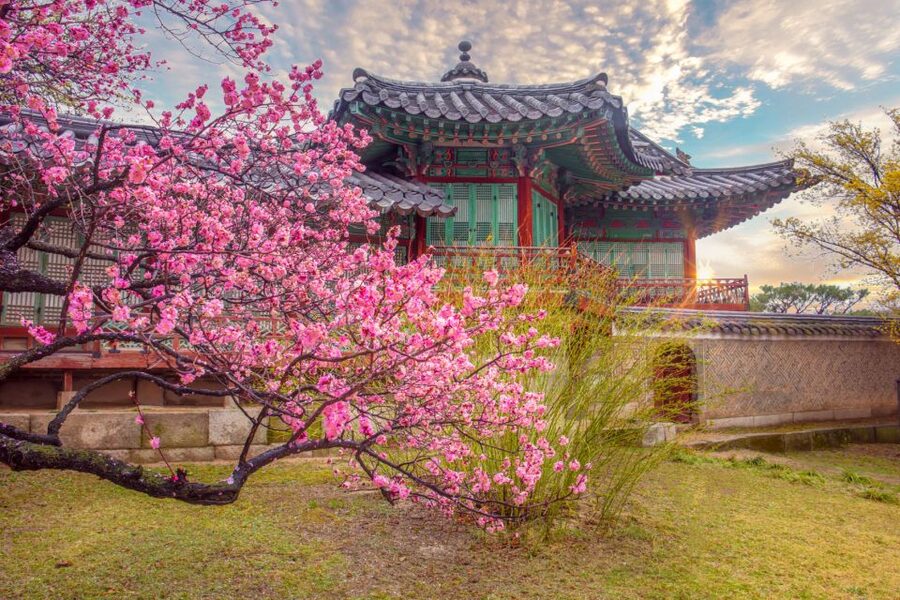
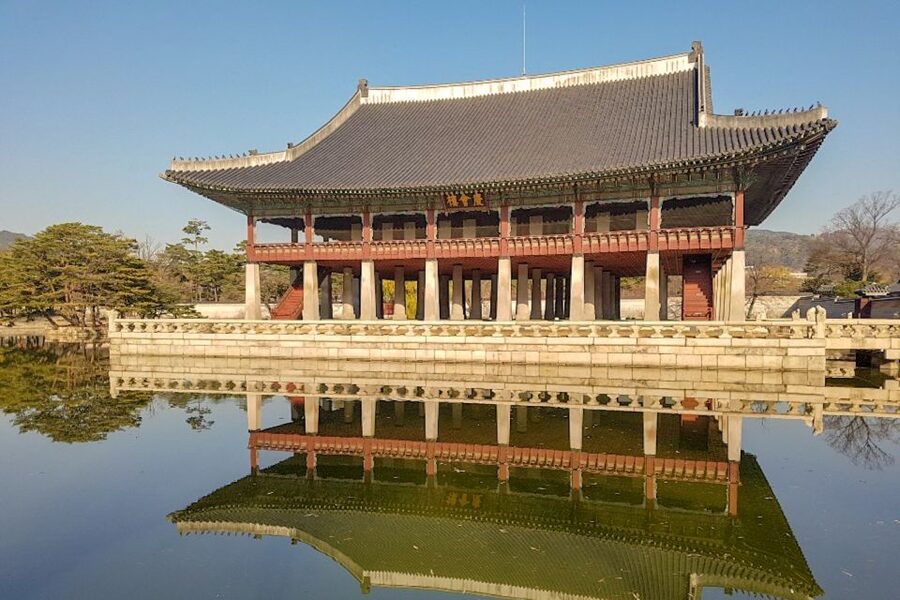
Gyeongbokgung, often called the Palace of Shining Happiness, is the grandest stop on the route. You will pass through palace grounds filled with gates, courtyards, halls, and formal spaces connected with the Joseon Dynasty, which ruled Korea for roughly 500 years.
The changing ceremony of the royal guards is one of the morning’s main visual moments. Period uniforms, formal movements, and the sound of the ceremony give the palace more life than a quiet walk through empty courtyards would provide.
The ceremony also helps you understand that Gyeongbokgung was not simply an attractive backdrop. It was a working royal center, shaped by rank, ritual, and strict court customs. A good guide can point out why the spaces were arranged as they were and explain how royal life differed from ordinary life.
This is where the guide’s storytelling matters most. Joe has been described as a former teacher who uses clear stories and extra facts, while Jay Kim has led wide-ranging conversations about history, politics, food, and social movements in modern Korea. Stella has been praised for linking older events to present-day Seoul.
You should allow for standing and walking on hard surfaces. The palace visit is not physically extreme, but the tour keeps moving, and the three-hour schedule does not leave unlimited time to linger at every building.
The National Folk Museum and everyday Joseon life
Inside the palace grounds, the route includes the National Folk Museum of Korea. Its collection contains more than 98,000 artifacts, giving you a chance to move beyond royal architecture and look at daily Korean life during the Joseon period.
That change of focus is important. Palaces tell you about rulers and ceremony. A folk museum helps explain homes, work, family customs, clothing, celebrations, and the objects used by ordinary people.
You should not expect to inspect every display in detail during this walking tour. The museum is one part of a compact morning, and the available time at each stop can feel limited if you prefer museums at a slow pace. The advantage is that your guide gives selected context, helping you understand why certain objects matter instead of leaving you to guess.
This stop works best for people who want a broad introduction rather than a specialist museum visit. If you already plan to spend half a day examining the museum on your own, treat the guided visit as an orientation and return later if time allows.
Bukchon Hanok Village and the climb through Samcheongdong
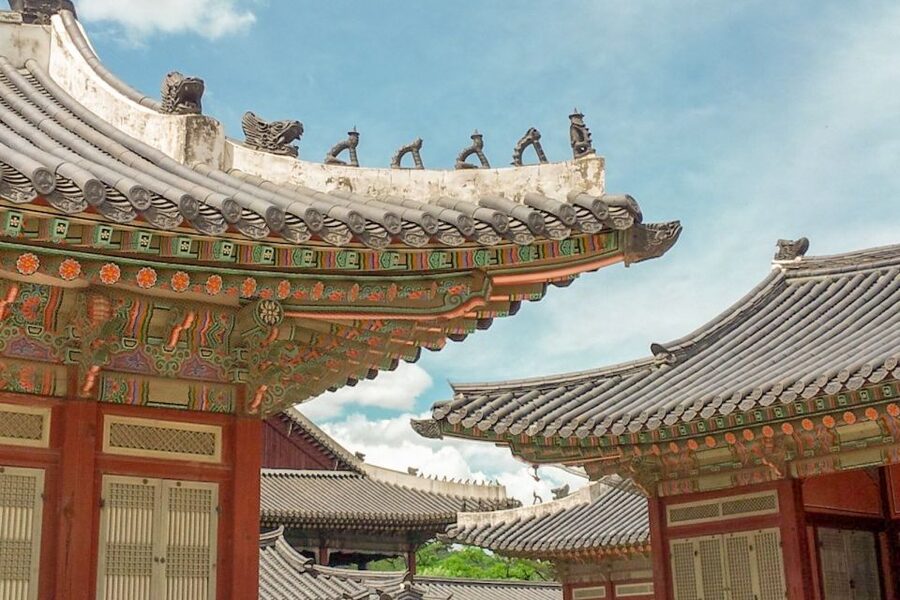
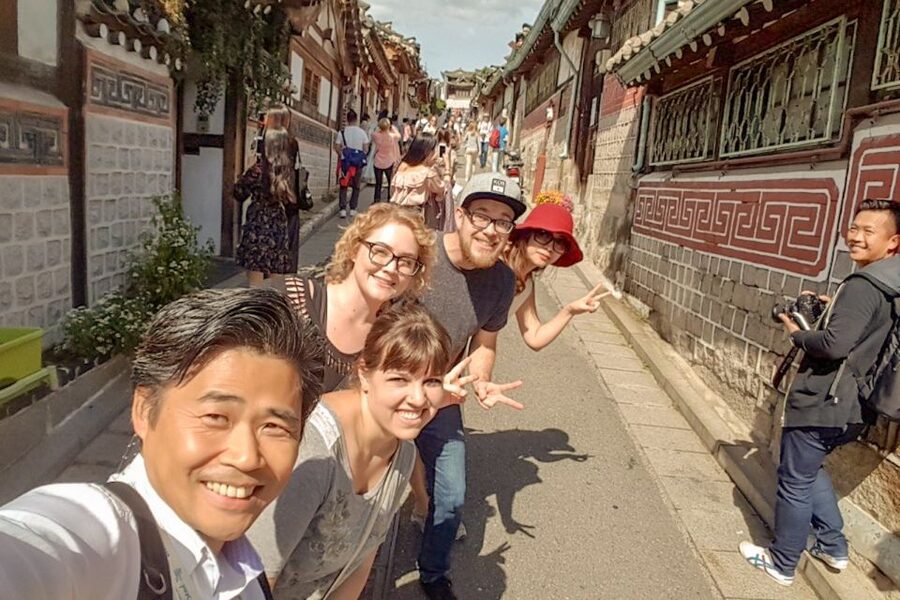
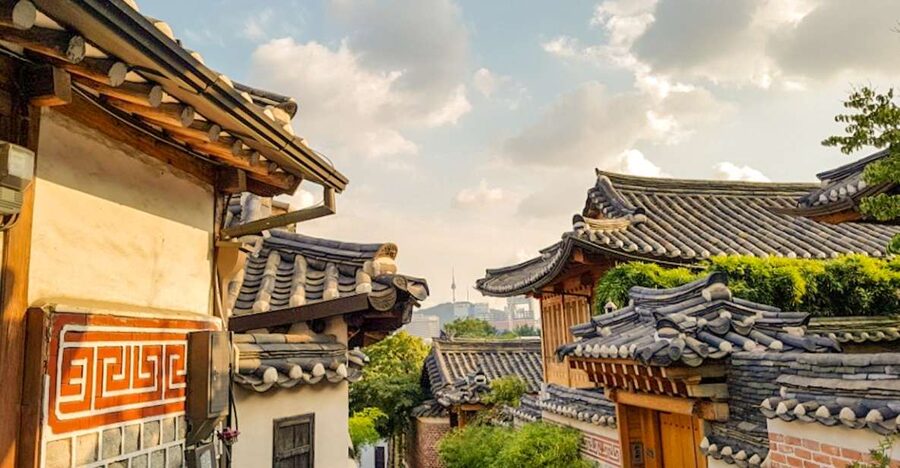
After the palace and museum, the route continues toward Bukchon Hanok Village. Here, the mood changes quickly. Instead of palace gates and formal courtyards, you walk through residential lanes lined with hanok, traditional Korean houses with tiled roofs and carefully framed wooden details.
Samcheongdong Alley is one of the most appealing parts of the walk. It shows how older Seoul and present-day Seoul occupy the same narrow streets. Traditional homes sit near shops, cafes, galleries, and newer buildings, giving you a more useful picture of the city than a preserved historic site alone.
The route includes uphill sections and some climbing. Several people have praised the guides for stopping when needed, offering ice cream or snack breaks, and helping with photographs, but you should still wear comfortable shoes and clothing. The hills are not a minor detail.
Bukchon is also a residential area, so the guide’s presence can help you understand how to behave there. Keep your voice down near homes, avoid blocking narrow lanes, and follow any local signs. You are walking through a living neighborhood, not a film set.
The village is often the tour’s most memorable section because it combines architecture with everyday Seoul. You get attractive views and photo opportunities, but you also see how a historic housing style remains part of a modern city.
More Walking Tours in the world:
- Magical London: Harry Potter Guided Walking Tour
★ 4.7 · 22,044 reviews - Reykjavik Food Walk – Local Foodie Adventure in Iceland
★ 5.0 · 18,952 reviews - History and Hauntings of Salem Guided Walking Tour
★ 5.0 · 14,564 reviews - New Orleans Premier Ghost, Voodoo and Vampire Walking Tour
★ 4.5 · 12,856 reviews
Insadong is a useful place to finish
The morning tour ends in the Insadong area. This is a practical finish because you can continue your day with shopping, lunch, tea, or more sightseeing without crossing back through the city.
Ask your guide for suggestions before saying goodbye. Guides have offered advice on Korean street food, vegetarian choices, skincare, restaurants, photo spots, and places to visit later. One guide even helped a visitor try Sulwhasoo skincare products after hearing about that person’s interest.
These personal recommendations are not guaranteed, since they depend on your guide and interests, but the ending gives you a natural chance to ask. If you want souvenirs, Insadong is also a convenient place to browse after the formal tour has ended.
The value of a $88 small-group tour
At $88 per person, this is not Seoul’s cheapest walking tour. The price includes the guide and the Gyeongbokgung entrance ticket, but not hotel pickup or drop-off.
The real question is what you want from the morning. If you only want to enter the palace and take a few photographs, paying $88 may feel high. You could visit some sights independently and spend less.
I see better value if you want context, navigation help, and a personal introduction. You are paying for an English-speaking guide who explains the Joseon period, interprets museum objects, leads you through Bukchon’s alleys, and can answer questions about present-day Korea.
The small group matters here. The stated limit is eight participants, and some dates have had only one or two people booked. In those cases, the experience can feel close to a private tour. You should not assume that every departure will be private, but a small group gives you a better chance to ask questions than a large bus tour.
The three-hour length also keeps the cost in perspective. It is long enough to cover the main sights but short enough to fit before lunch and an afternoon in another Seoul neighborhood. The tradeoff is less free time at each stop.
What the guide can add to your Seoul visit
The guides are the main reason to choose this experience instead of simply following a map. Strong guides have explained historical events, architecture, language, modern politics, food, and social customs in the same morning.
Stella has received especially warm praise for her friendly manner, clear English, history explanations, food suggestions, and practical Seoul advice. Joe has been described as funny and generous with detail, while Jay Kim has offered extensive historical background and led visitors through lesser-known lanes.
Other guides have helped with pronunciation, taken photographs, suggested viewpoints, explained T-money cards, and shown visitors how to handle public transport. These details matter because the tour is not only about seeing landmarks. It is also about feeling less uncertain during the rest of your stay.
Guide quality can vary by assignment, and no listing can promise a particular person unless your booking confirms it. Still, the repeated names and consistent praise for the guide-led format make this a sound choice for people who enjoy asking questions.
Walking, weather, and the pace you should expect
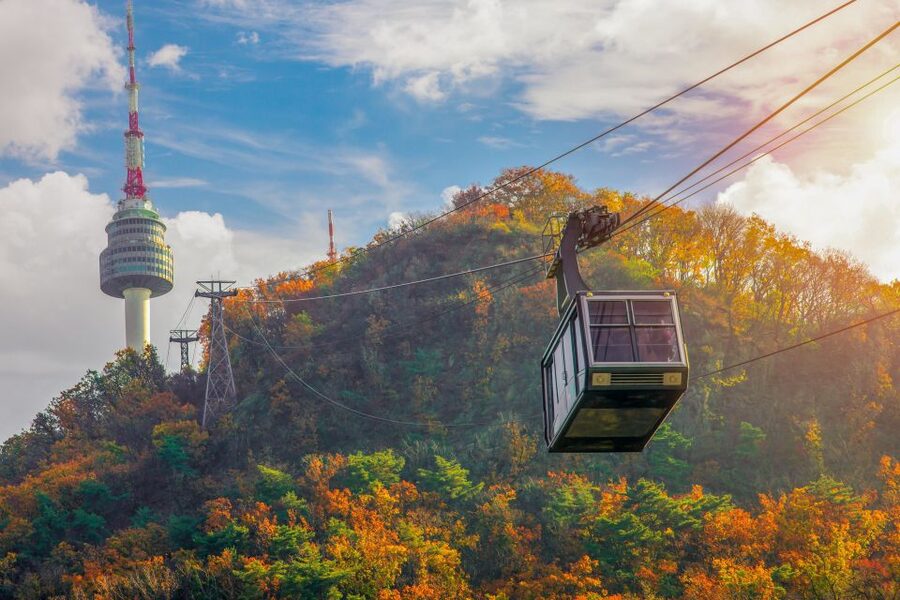
Bring comfortable shoes. You will walk between the meeting point, palace, museum, Bukchon, and Insadong, with extended periods on your feet. Bukchon includes uphill stretches, and the tour may feel tiring in hot, wet, cold, or snowy weather.
The itinerary can change because of weather and traffic conditions. A winter review described intense cold and snow, yet the guide continued helping the visitor enjoy the route. That does not remove the need for a warm coat or rain protection. It simply shows why clothing matters on a walking tour.
The morning timing is a strong choice for many people. You can see the palace before spending the rest of the day elsewhere, and the route ends early enough for lunch or more sightseeing. Starting times vary, so check the available departure when booking.
If you prefer a slow museum visit, long photo sessions, or time to sit at every palace courtyard, this may feel too fast. If you want a well-organized overview and a clear path through old Seoul, the pace should suit you.
Who should book this Seoul walk
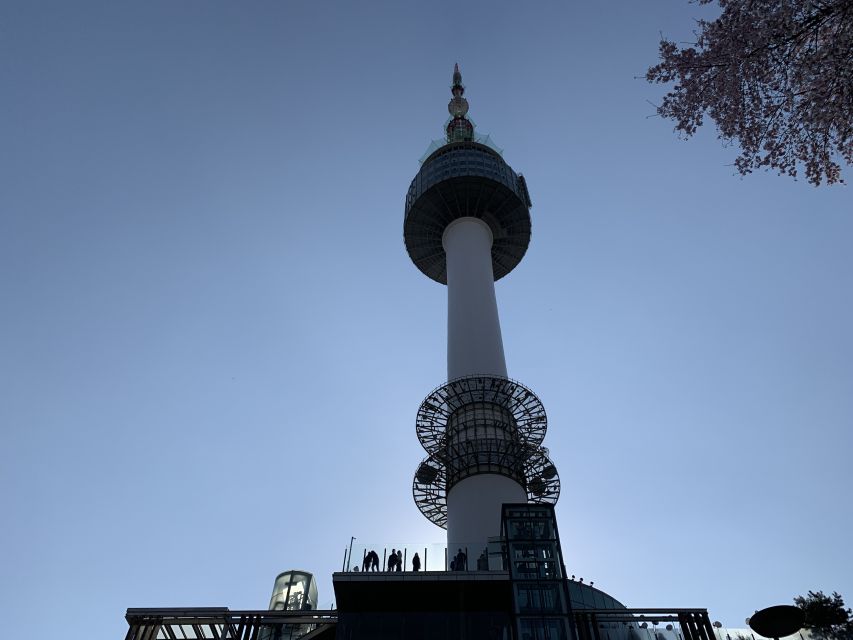
I would choose this tour for a first visit to Seoul, especially if you arrive without a firm plan for your first full day. It gives you the historical setting needed to understand later visits to markets, museums, neighborhoods, and modern attractions.
It also suits solo visitors. The small-group setup can make the morning more social, and when numbers are low, the guide can tailor the conversation and pace. Families with older children may enjoy the guard ceremony and visual palace details, though the walking and hills still need to be considered.
History fans will get the most from the palace and museum explanations. Food and shopping fans can use the final section in Insadong and ask for recommendations. Photography fans should appreciate the palace buildings, hanok lanes, and guide tips for better viewpoints.
I would be less likely to choose it if you have limited mobility, dislike hills, or want a relaxed palace visit with no fixed schedule. The supplied information does not specify accessibility arrangements, so ask the provider before booking if you need particular support.
Free cancellation is available up to 24 hours before the tour, and you can reserve now and pay later. Those terms help if your Seoul schedule is still changing, but the main decision remains the walking pace and the value you place on a guide.
Should you book the Gyeongbokgung and Bukchon tour?
Book it if you want a three-hour historical orientation with a small group, a live English-speaking guide, and practical help for the rest of your Seoul visit. The combination of palace ceremony, museum context, hanok lanes, and Insadong is well chosen.
The strongest reasons are the guides, the chance of a very personal group size, and the useful local advice. The main cautions are the $88 price, limited time at each stop, and the uphill walking in Bukchon.
For a first morning in Seoul, I think the tour earns its price if you want stories and local direction rather than simply entrance tickets. Wear good shoes, arrive at City Hall Station ready to walk, and plan to use the guide’s recommendations after the tour ends.
FAQ
Where does the tour meet?
Meet outside City Hall Station at Exit 6, next to The Plaza hotel.
How long does the tour last?
The walking tour lasts three hours. Starting times vary, so check availability for your chosen date.
What language is the tour conducted in?
The tour is conducted in English with a live English-speaking guide.
What does the price include?
The price includes the guide and the entrance ticket to Gyeongbokgung Palace. Hotel pickup and drop-off are not included.
Is the tour suitable for someone who dislikes walking uphill?
The route involves a fair amount of walking and standing, plus some climbing in Bukchon Hanok Village. Comfortable shoes and clothing are recommended.
Can I cancel or pay later?
You can cancel up to 24 hours in advance for a full refund. The reserve-now, pay-later option lets you book without paying immediately.
New routes in the world
- Baltimore Walking Foodie Tour in Fells Point★ 5.0 · 182 reviews
- Baku Oil Heritage & Old Town Walking Tour★ 5.0 · 232 reviews
- Baku Walking Tour (Old City)★ 5.0 · 127 reviews
- The Madam’s Curse Walking Ghost Tour★ 4.5 · 103 reviews
- Austin Small Group Morning Walk★ 5.0 · 412 reviews
- Austin Haunted Pub Crawl Walking Tour★ 4.5 · 232 reviews
- Austin Downtown Private Walking Food Tour With Secret Food Tours★ 5.0 · 71 reviews
- Austin Murder Walk★ 5.0 · 310 reviews
Castle and Palace Walking Tours, compared.

Edinburgh Castle: Guided Walking Tour with Entry Ticket
Read our review →
Doge’s Palace and St Mark’s Basilica Walking Tour
Read our review →
3-Hour Walking Tour of Old Town & Prague Castle
Read our review →
Walking Tour of Split and Diocletian’s Palace
Read our review →
Grand Palace and Wat Phra Kaew Guided Walking Tour
Read our review →
Imperial Palace and Shogun Historical Walking Tour
Read our review →Browse the lists this tour appears in