
Review · OLD TOWN
Sarajevo: Old Town Walking Tour with Local Guide
Sarajevo’s Old Town is where four centuries of power, faith, and conflict sit within an easy walk. This tour connects the Ottoman market, Austro-Hungarian buildings, religious landmarks, and the spot linked to the assassination of Archduke Franz Ferdinand, giving you a clear way into a complicated city.
I like the small groups of up to 10 and the chance to ask direct questions. I also like that guides often add local advice about food, shops, artisans, and everyday life, rather than stopping at dates and monuments. The main drawback is pace: 150 minutes covers a lot, so some stops are brief and the tour stays focused on the center.
Key points at a glance
- Four faith traditions in one walk: See Sarajevo’s Catholic, Orthodox, Islamic, and Jewish heritage close together.
- A strong history lesson: Move from the Ottoman period to Austria-Hungary, Yugoslavia, independence, and the Siege of Sarajevo.
- Local stories matter: Guides such as Arna, Kiki, Elma, Benjamin, and Armina are praised for adding personal views and practical city tips.
- Small-group value: A maximum of 10 people makes questions and conversation easier.
- Good first-day choice: The route gives you a map of the center and ideas for what to explore later.
- Easy to book around changing plans: Cancellation is free up to 24 hours before departure, and you can reserve now and pay later.
Why Sarajevo makes a walking tour worthwhile
Sarajevo is not a city you understand from one viewpoint. Ottoman courtyards, Austro-Hungarian facades, socialist-era memories, and modern independent Bosnia and Herzegovina all occupy the same urban space.
The most striking feature is the meeting of faiths. Within roughly 100 meters, you can encounter an Islamic mosque, an Orthodox cathedral, a Catholic cathedral, and the historic presence of Sarajevo’s Jewish community. You may hear different calls to prayer and church bells during the same walk. A guide helps you understand not only what each building is, but how these communities have shared the city.
The tour also gives useful political and historical context. Sarajevo hosted the 1984 Winter Olympics, then became a war zone only eight years later during the Siege of Sarajevo, described as the longest siege in modern history. That sharp contrast is central to understanding the city today.
I would book this early in your stay. The route is a practical orientation walk, and the local suggestions can help you decide where to eat, shop, and return for a closer look.
More Old Town Walking Tours in the world:
- Underground Vaults Walking Tour in Edinburgh Old Town
★ 4.5 · 8,506 reviews - Prague: 3-Hour Walking Tour of Old Town & Prague Castle
★ 4.7 · 5,696 reviews - Dubrovnik: Old Town Walking Tour
★ 4.8 · 5,174 reviews
Sebilj and Baščaršija, the Ottoman starting point
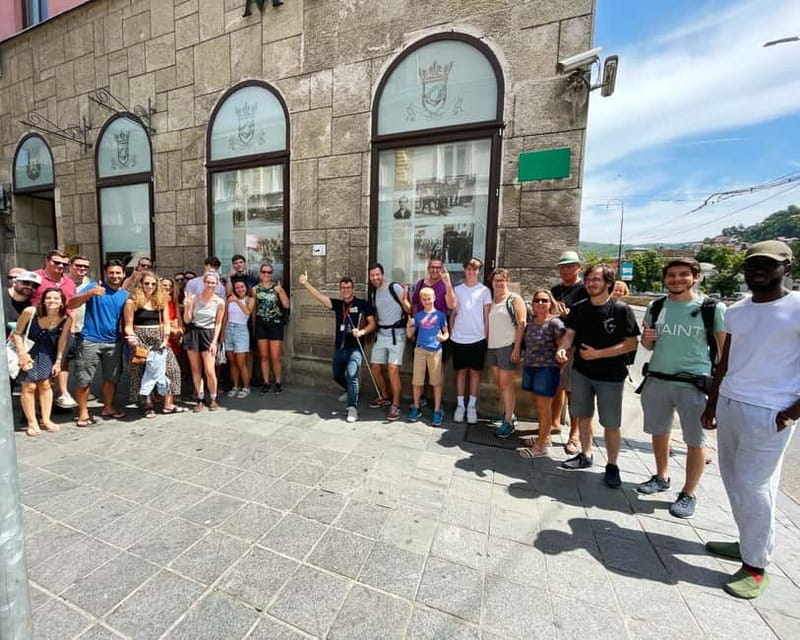
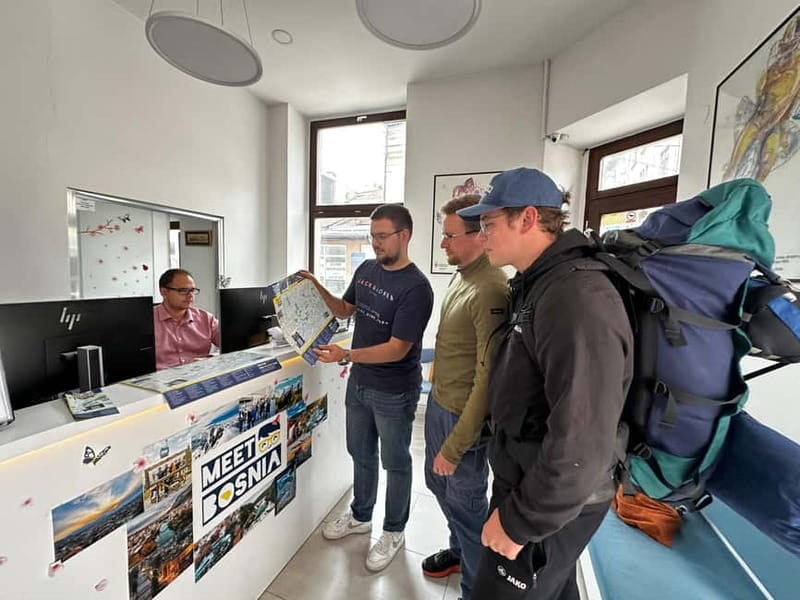
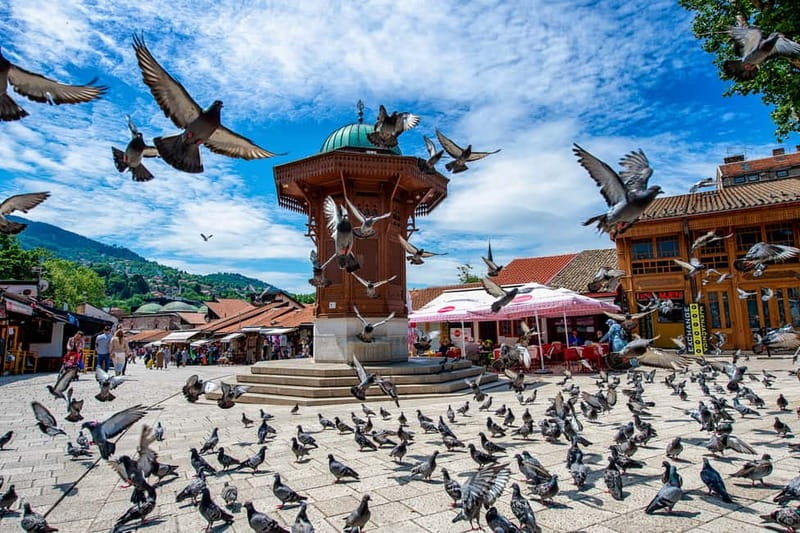
The walk begins at the Meet Bosnia Tours office and quickly reaches Baščaršija Square, the outdoor market area created in the 15th century. This is the traditional heart of Sarajevo, with small shops, craft stalls, cafés, and the familiar smell of Bosnian coffee and cooked food.
At the center is Sebilj, the wooden fountain that has become one of Sarajevo’s main symbols. The stop lasts about 10 minutes and includes a photo opportunity and an introduction to the square.
This is a short stop, but it sets the tone well. You see Sarajevo as a working market district rather than only as a collection of historic buildings. If you like photography, arrive with your camera ready, since the square can be full of visual detail even before the guide begins speaking.
Sarajevo City Hall and the Austro-Hungarian chapter
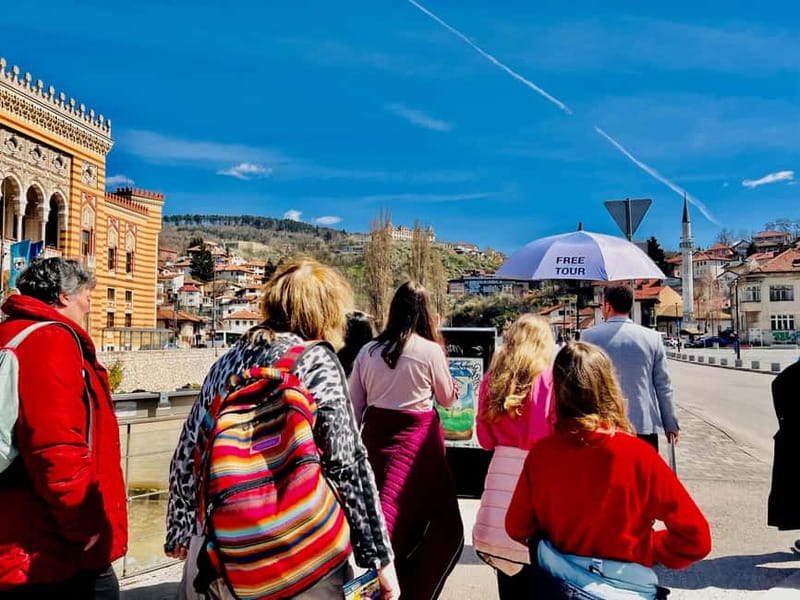
From Baščaršija, the route continues to Sarajevo City Hall, known locally as Vijećnica. The building has a strong architectural contrast with the Ottoman market nearby, and its position by the river gives the walk some attractive views.
The guide spends about 15 minutes here, explaining the building and the period when Austria-Hungary ruled Sarajevo. The city’s appearance changed sharply during this era, and City Hall helps you see that shift in physical form.
The building has also been newly renovated, which makes it one of the most impressive exterior stops on the route. The schedule lists a guided visit, but you should think of this part primarily as an exterior and contextual stop unless your guide confirms interior access on the day.
Kazandžiluk and the value of local craft stops
Kazandžiluk is the old coppersmiths’ street, where the tour pauses for around 10 minutes. This is more than a shopping stop. It shows how Ottoman-era craft traditions still shape the character of the Old Town.
Several guides have included visits to local artisans and small shops, including an unusual brush-making workshop. The useful part is the explanation of how items are made and how the craft fits into Sarajevo’s daily life. You are not required to buy anything, and the stop is intended to add local texture rather than create a sales obligation.
This is one of the tour’s better features for anyone who prefers living traditions to a parade of famous monuments. Keep in mind that shop visits can vary with the guide, opening hours, and the day’s conditions.
More Guided Walks in the world:
- Magical London: Harry Potter Guided Walking Tour
★ 4.7 · 22,044 reviews - History and Hauntings of Salem Guided Walking Tour
★ 5.0 · 14,564 reviews - Amsterdam Anne Frank: Small-Group Walking Tour & Local Guide
★ 4.8 · 12,789 reviews - Edinburgh: Harry Potter Magical Guided Walking Tour
★ 4.8 · 11,944 reviews
Morića Han and the old caravan route
Morića Han is reached on foot, with about 10 minutes set aside for the stop. A han was a roadside inn used by merchants and other travelers moving through the Ottoman world.
The site helps you picture Sarajevo as a trading center, not just a political capital. Your guide can connect the courtyard and surrounding lanes to the movement of goods, people, and ideas through the city.
This is another short stop, so you will not have unlimited time to linger. If you want a detailed architectural study, note the location and return later.
Gazi Husrev-beg’s mark on Sarajevo
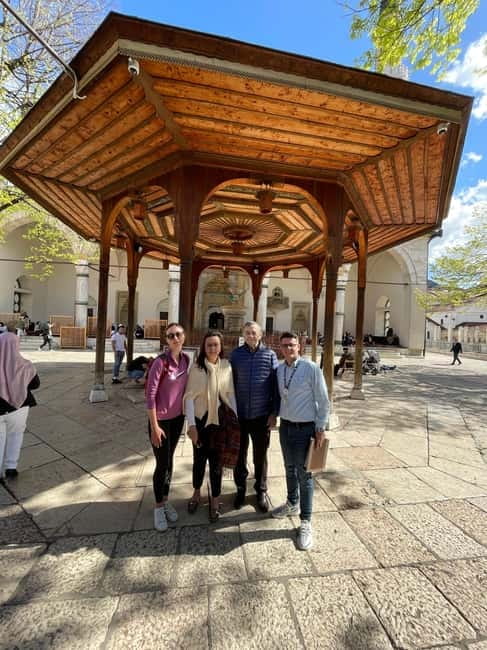
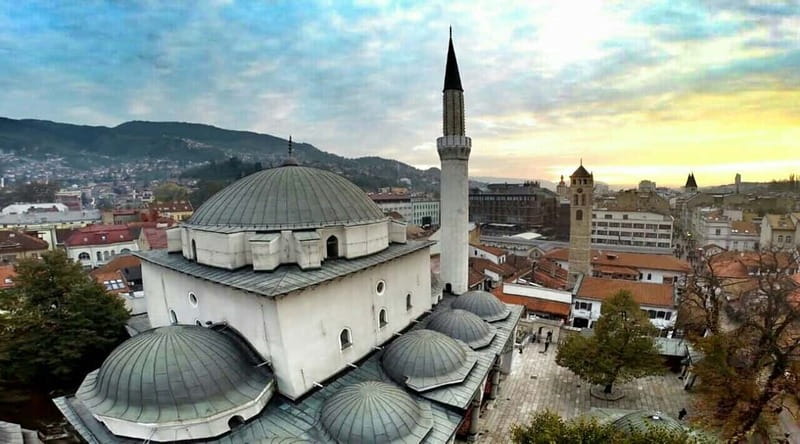
The tour then turns to Gazi Husrev-beg Mosque, one of the most important Ottoman landmarks in Sarajevo. The stop includes a guided visit and walking time, with roughly 10 minutes listed for this part of the route.
Gazi Husrev-beg was a major Ottoman governor and benefactor whose work shaped the city’s religious, educational, and public life. His legacy continues through the mosque, madrasa, library, and other institutions nearby.
You should dress respectfully for the mosque. The supplied information does not specify a dress code or clothing loan service, so comfortable modest clothing is the sensible choice. The route is wheelchair accessible overall, but historic streets and religious buildings can still require attention to surfaces and entrances.
Nearby, the tour pauses at the Gazi Husrev-beg Madrasa and the Gazi Husrev-beg Library. These are short stops, usually about five minutes each, mainly for photographs and explanation.
The library is especially useful for understanding that Ottoman influence was not limited to worship. Education, books, scholarship, and public service were part of the same network. Since these stops are brief, listen closely and mark them on your map if you plan to return.
Latin Bridge and the road to World War I
Latin Bridge is one of the tour’s most important historical points. The guide spends around 15 minutes here, explaining the assassination of Archduke Franz Ferdinand and the events that led into World War I.
The value of this stop is not simply that you stand near a famous bridge. You get a clearer sense of how a local event in Sarajevo became tied to a wider European crisis. A good guide can also separate the assassination itself from the political tensions that made Europe so unstable in 1914.
This is a place where questions are useful. The guides are used to discussing history and politics, and several have been praised for answering questions openly rather than delivering a fixed speech.
Sarajevo’s cathedrals and a city of several faiths
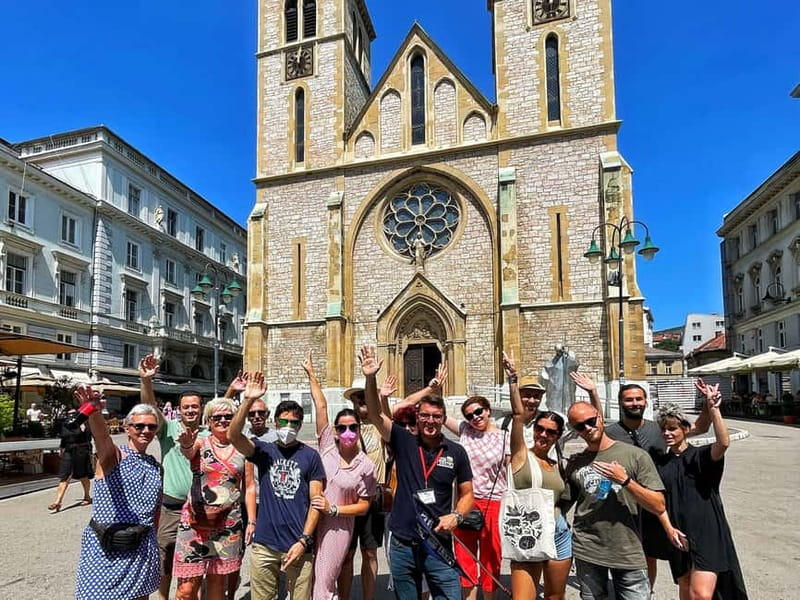
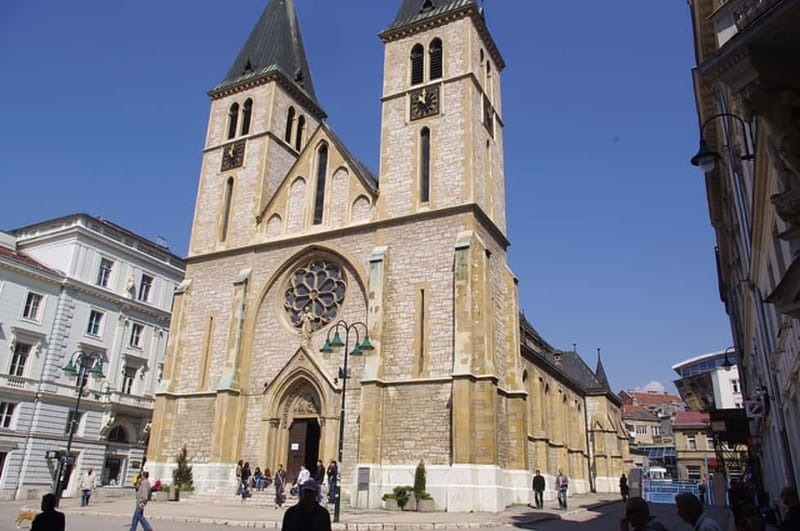
The next section of the walk visits the Cathedral Church of the Nativity of the Theotokos, an Orthodox landmark, followed by the Sacred Heart Cathedral, a Catholic landmark. Each stop lasts about 10 minutes and includes time for photographs and explanation.
Together with the mosque and the city’s Jewish heritage, these buildings make the idea of Sarajevo as a multi-confessional city easy to see. You are not simply ticking off religious buildings. You are looking at the way different communities have shaped the same center.
The tour may also explain how religious identity, politics, and daily life have changed through the Ottoman period, Austria-Hungary, Yugoslavia, and the years since independence. That broad range is one reason a local guide adds real value here.
The Eternal Flame and the modern city center
The itinerary highlights the Eternal Flame Monument, dedicated to the Yugoslav People’s Army. It is associated with remembrance and the city’s Yugoslav period, and it gives the walk a final point beyond the Ottoman quarter.
The route returns to the Meet Bosnia Tours office after the central sights. The walk does not attempt to cover every Sarajevo museum or every wartime site, but it gives you a framework for understanding the city before you explore farther afield.
If your main interest is the 1990s war, this tour offers context rather than a full specialized visit. You may want to ask the guide for suggestions on additional museums or locations after the walk.
How much history fits into 150 minutes
Two and a half hours is a sensible length for this route. It is long enough to connect the major periods of Sarajevo’s past, but short enough that you can still make other plans that day.
The tradeoff is that many stops are measured in five or 10 minutes. You will get an introduction to the madrasa, library, craft street, and han rather than an extended visit at each one.
The best guides make the schedule work by linking the sights into one story. Arna, Armina, Kiki, Elma, Benjamin, Masud, Selma, and other guides have been singled out for clear English, warmth, strong command of local history, and willingness to answer questions. Several guides also share personal memories or family stories connected to Bosnia’s recent past.
Guide quality can naturally vary from one departure to another, but the range of positive comments points to a consistent strength: the human explanation. You are not left to guess why a building matters.
Price, group size, and practical value
At $20 per person, this is good value if you want an organized introduction to Sarajevo. A two-and-a-half-hour private guide would normally cost more, while this tour keeps the price low by using a small shared group.
The group limit of 10 is important. It is small enough for a conversation, yet large enough to keep the price at $20. Some departures may be even smaller, and the tour has continued with a single participant when only one person booked. That is a useful sign if you are visiting outside the busiest season.
Meals and drinks are not included, though they can be arranged on request. I would plan to eat before or after rather than expect a food tour. The route does pass places where your guide may suggest local specialties, cafés, and shops.
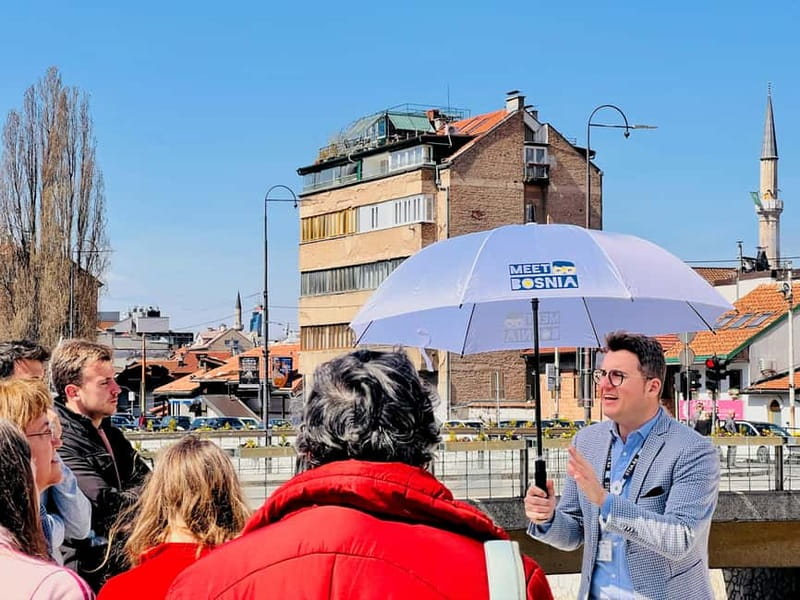
Wear comfortable shoes and clothing. You will walk on old streets and pause outdoors, so weather matters. One guide team has offered umbrellas when rain was expected, but do not assume equipment is always supplied. Bring a camera, and consider carrying water in warm weather.
The tour is offered in English, with a live guide, and is listed as wheelchair accessible. You should still tell the provider about mobility needs when booking, since historic streets and older buildings may present different conditions along the route.
Who should book this Sarajevo walking tour
I would recommend it to first-time visitors, history fans, and anyone who wants the city explained rather than simply photographed. It is particularly useful if you want to understand how Ottoman, Austro-Hungarian, Yugoslav, and modern Bosnian periods overlap.
It also suits solo visitors. The small-group format makes it easier to ask questions, and the tour can still operate with only one participant. Families and older visitors may appreciate the manageable duration, though comfortable footwear remains important.
You may want a different experience if you prefer a slow architectural tour, a dedicated war tour, or long indoor visits. This route covers many subjects and locations, so it favors breadth and conversation over detailed study of one era.
The cancellation policy adds useful flexibility: you can cancel up to 24 hours ahead for a full refund, and the reserve-now, pay-later option helps if your schedule is still changing.
Should you book it?
Book this tour if you want a clear first look at Sarajevo and prefer local explanation to wandering alone. The strongest reasons are the compact route, the four-faith perspective, the Ottoman and Austro-Hungarian contrasts, and the guide’s ability to connect World War I with Yugoslavia and the recent war.
Skip it only if you already know the Old Town well or want a narrowly focused subject. For most first visits, $20 is a sensible price for 150 minutes of orientation, especially when the group stays at 10 people or fewer.
FAQ
How long does the Sarajevo Old Town walking tour last?
The tour lasts 150 minutes, or two and a half hours.
What language is the tour offered in?
The live tour is offered in English.
How much does the tour cost?
The price is $20 per person.
What sights are included?
The route includes Baščaršija Square, Sebilj, Sarajevo City Hall, Kazandžiluk, Morića Han, Gazi Husrev-beg Mosque, the madrasa, the library, Latin Bridge, the Cathedral Church of the Nativity of the Theotokos, the Sacred Heart Cathedral, and the Eternal Flame Monument.
Does the tour visit the site connected with Franz Ferdinand’s assassination?
Yes. The route includes Latin Bridge, where the guide discusses the assassination of Archduke Franz Ferdinand and its connection to World War I.
Are meals and drinks included?
No. Meals and drinks are not included, although they can be arranged on request.
How large is the group?
The tour is limited to 10 participants.
Is cancellation available?
Yes. You can cancel up to 24 hours in advance for a full refund. You can also reserve now and pay later.
New routes in the world
- Baltimore Walking Foodie Tour in Fells Point★ 5.0 · 182 reviews
- Baku Oil Heritage & Old Town Walking Tour★ 5.0 · 232 reviews
- Baku Walking Tour (Old City)★ 5.0 · 127 reviews
- The Madam’s Curse Walking Ghost Tour★ 4.5 · 103 reviews
- Austin Small Group Morning Walk★ 5.0 · 412 reviews
- Austin Haunted Pub Crawl Walking Tour★ 4.5 · 232 reviews
- Austin Downtown Private Walking Food Tour With Secret Food Tours★ 5.0 · 71 reviews
- Austin Murder Walk★ 5.0 · 310 reviews
Old Town Walking Tours, compared.
Underground Vaults Walking Tour in Edinburgh Old Town
Read our review →
3-Hour Walking Tour of Old Town & Prague Castle
Read our review →
Old Town and Jewish Quarter Guided Walking Tour
Read our review →
Cartagena: Historic Center and Getsemaní Shared Walking Tour
Read our review →
Prague Ghost and Legend of Old Town Walking Tour
Read our review →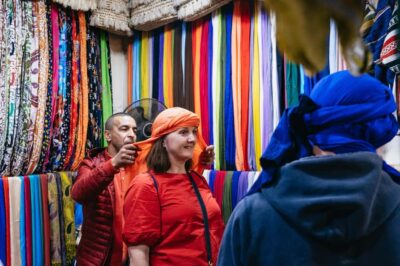
Browse the lists this tour appears in