
Review · SPAIN
Salamanca: Monuments and Landmarks Guided Walking Tour
Salamanca’s golden sandstone looks especially fine when you understand what you’re seeing. This walk takes you from the grand Plaza Mayor to the university, Casa de las Conchas, cathedral, and the little-known Sky of Salamanca, turning a pretty old center into a series of stories about students, scholars, churches, and power.
I like the small-group format, which makes it easier to ask questions and keep a sensible pace. I also like the multilingual guiding, especially the warm, well-informed work of Martoke, who speaks English, Spanish, German, and Dutch and has lived in Salamanca for many years. The main consideration is that this is a walking tour with several historic sites, so anyone with mobility concerns should check the access arrangements carefully before booking.
Key points
- Start under the clock in Plaza Mayor: The meeting point is easy to find in Salamanca’s grand central square.
- See the university from the inside: The tour includes the patios of the Hispanic world’s oldest university.
- Look for the Sky of Salamanca: This ceiling painting is one of the walk’s most unusual sights.
- Follow Salamanca’s golden-stone story: Plaza Mayor, Monterrey Palace, Clerecía, Casa de las Conchas, and the cathedrals show how the city grew.
- Choose the longer version: Add two monuments from the university buildings, St. Stephen’s Convent, cathedral towers, Monastery of the Dueñas, or Las Claras.
- Allow two to three hours: The route ends at Plaza de Anaya, leaving you well placed to continue exploring.
Starting under the clock in Plaza Mayor
I can think of few better starting points in Salamanca than Plaza Mayor. This broad Baroque square gives you an instant sense of the city’s character: formal arcades, warm sandstone, restaurants tucked along the edges, and a steady flow of people crossing the center.
You meet your guide under the clock. That detail matters because the plaza is large, and agreeing on a clear landmark saves time. From here, your guide sets the historical frame for the walk, explaining how Salamanca shifted from a powerful religious and academic center into the city you see today.
The square is not just a photo stop. Its architecture shows the confidence of 18th-century Salamanca. Look closely at the repeated arches and decorative details rather than rushing across to the next monument. A good guide helps you see how the square was designed as a unified space, not simply as an open area surrounded by buildings.
The pace is one of this tour’s strengths. The walk covers a lot, but the route is designed as an introduction rather than an exhausting architecture lecture. You should have time to take photographs and ask questions, though the exact rhythm depends on group size and the amount of discussion at each stop.
More City Highlights Walking Tours in Spain:
- Seville: Small-Group City Highlights Walking Tour
★ 5.0 · 1,204 reviews - Madrid: City Highlights Guided Walking Tour
★ 4.8 · 347 reviews - Salamanca Sightseeing Walking Tour with Local Guide. Spanish
★ 4.7 · 312 reviews
Monterrey Palace and the city’s grand sandstone
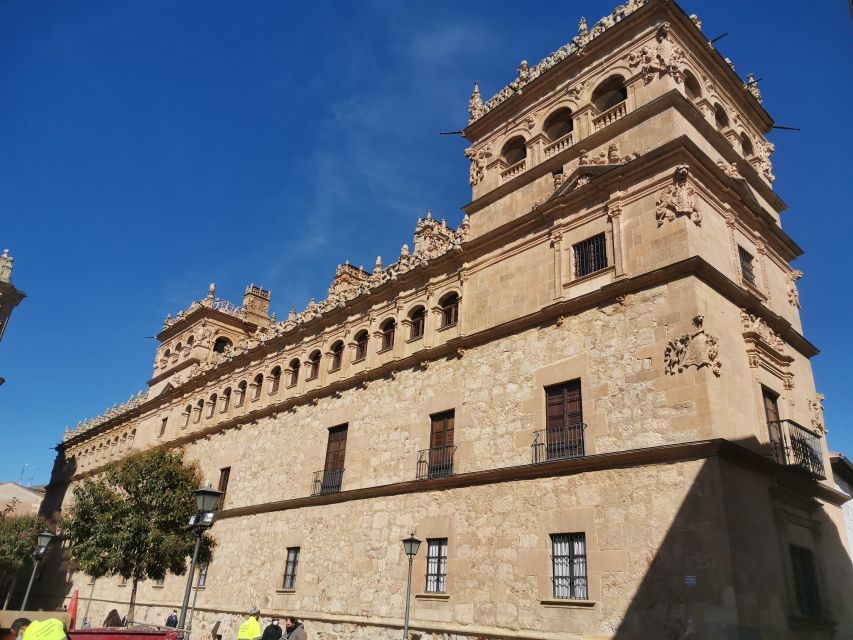
The route includes Monterrey Palace, a notable stop for understanding Salamanca’s aristocratic side. Its presence adds another layer to the city’s story. The university and cathedral show religious and academic authority, while the palace points to the wealth and status of powerful families.
Salamanca is often called a golden city because of its local sandstone. The material gives the old center a warm, honey-colored look, particularly in good light. I appreciate that this tour connects the buildings through that common material instead of treating each stop as an isolated monument.
The palace is seen as part of the guided route, so you should check the booking details if entering every site is important to you. The main value here is the explanation of what you are looking at and how it fits into the larger historic center.
Casa de las Conchas, Salamanca’s most playful facade
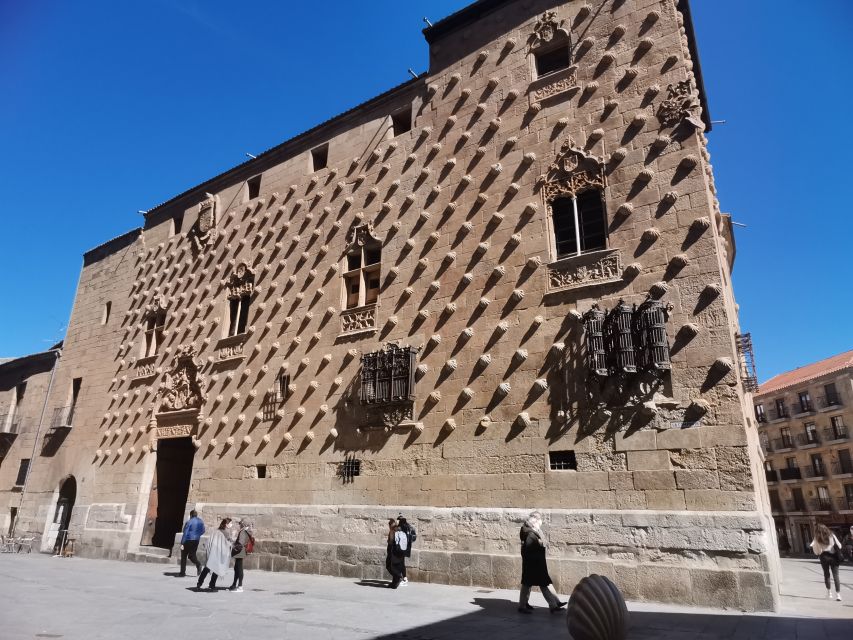
Casa de las Conchas is one of Salamanca’s easiest buildings to remember. Its Gothic facade is covered with stone shells, a design that gives the building a strange, almost storybook appearance.
Your guide explains the building’s visual details and helps separate its real history from the legends that tend to gather around famous facades. The shells are the reason most people stop, but the building also works as a lesson in how private homes once announced status, connections, and identity.
This is a particularly good stop if you like details that are easy to miss when exploring alone. You might notice the shells, take a photograph, and move on without understanding why the building matters. With guidance, the facade becomes part of Salamanca’s wider mix of Gothic, Renaissance, academic, and religious architecture.
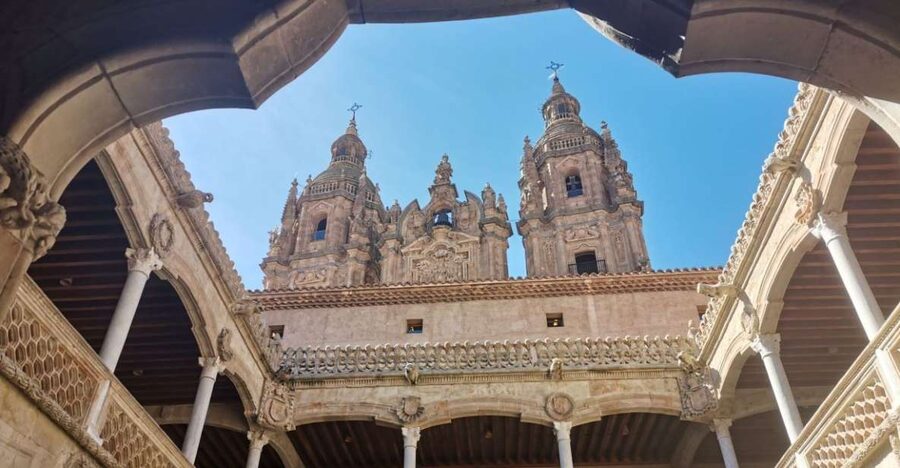
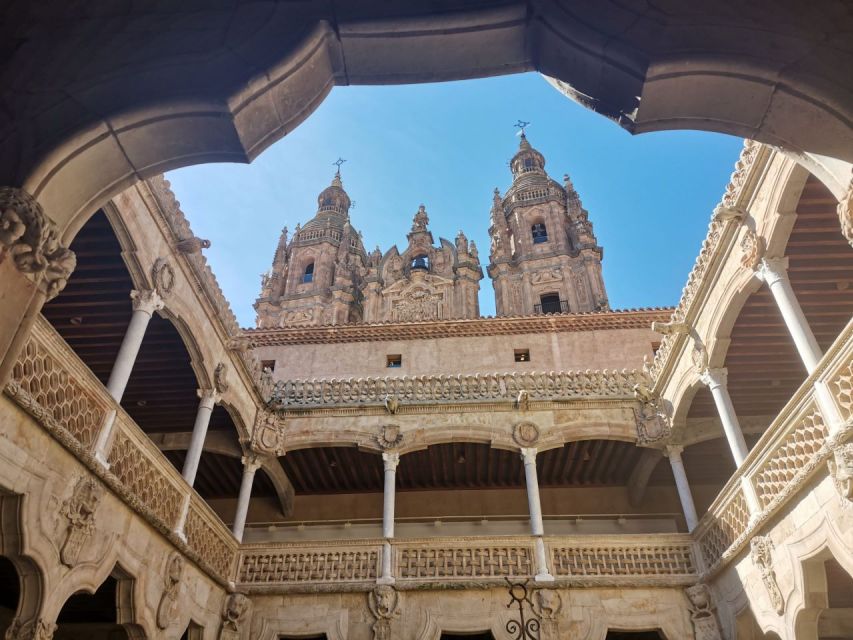
The tour also takes you toward the Clerecía, with its Baroque towers and cloisters. This adds visual variety after the more decorative Casa de las Conchas. The contrast between the shell-covered Gothic exterior and the heavy Baroque forms gives you a quick lesson in changing styles without requiring a specialist vocabulary.
Inside the university patios
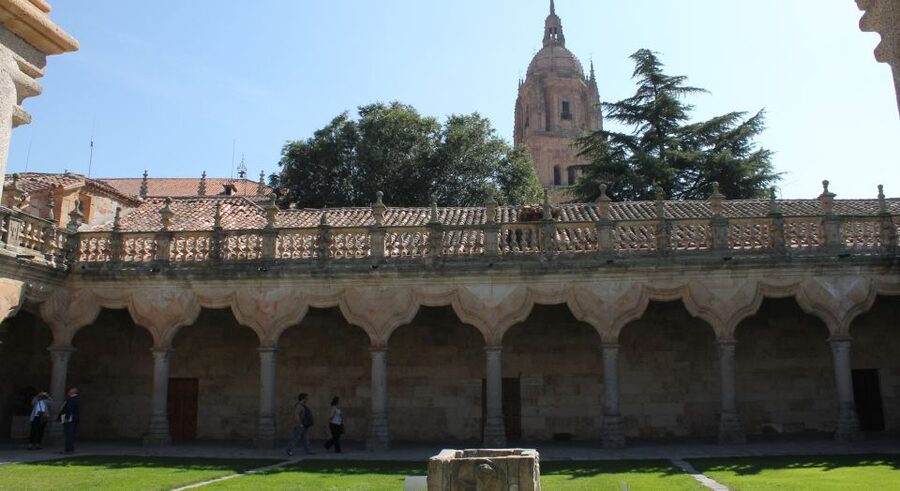
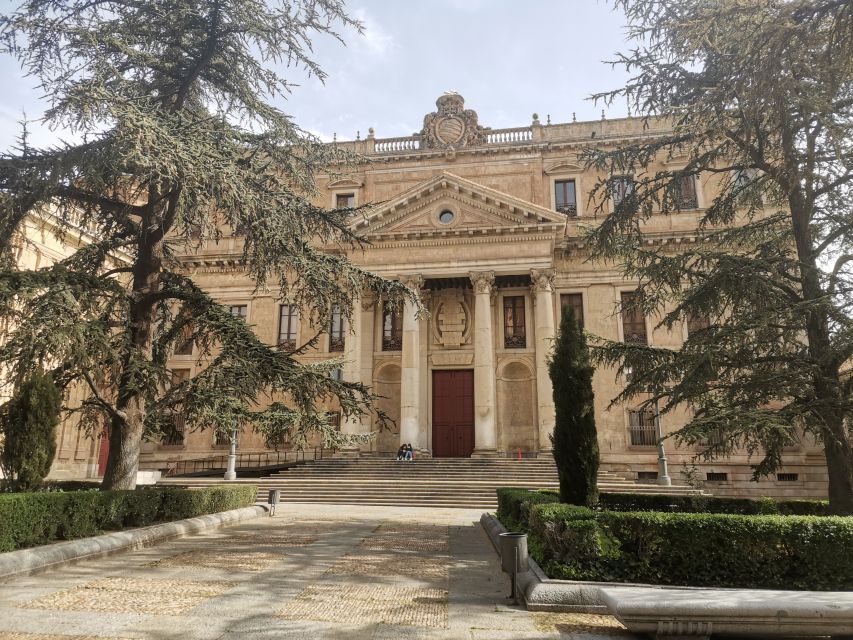
The University of Salamanca is the heart of the walk for many people. Founded in the 13th century, it is described as the oldest university in the Hispanic world, and its buildings still give the city much of its identity.
The tour includes the university patios and grounds, where your guide can explain how the institution shaped Salamanca. The point is not simply to admire an old courtyard. You are seeing the physical setting of a university that has influenced the city’s culture, buildings, and daily life for centuries.
The historic university facade is another major visual stop. It is famous for its elaborate carved decoration, including the small figure that visitors traditionally search for. The supplied information does not promise a specific scavenger-hunt-style activity, so I would treat that as something to look for rather than the main purpose of the visit.
The patios offer a calmer change from the open Plaza Mayor. They also help you understand the scale of the university complex. You move from the public grandeur of the city square into spaces designed for study, ceremony, and academic life.
Small groups make a real difference here. With six people, one guide can usually respond to individual questions without turning every pause into a long wait. Past groups have also been as small as three, which is useful if you want to ask about architecture, local customs, or Salamanca’s student life.
More Guided Walks in Spain:
- Granada: Albaicín and Sacromonte Guided Sunset Walking Tour
★ 4.9 · 2,962 reviews - Madrid: Tapas & Wine Tasting Tour with Local Guide
★ 4.8 · 2,171 reviews - Madrid: Royal Palace Skip-the-Line Guided Tour
★ 4.5 · 2,140 reviews - Madrid: Welcome to Madrid Guided Walking Tour
★ 4.9 · 1,738 reviews
The Sky of Salamanca, the tour’s most unusual stop
The Sky of Salamanca is the detail that makes this walk more than a standard list of major buildings. It is a ceiling painting in a less obvious university building, and it can be easy to miss if you explore the area without a guide.
I like this part because it rewards curiosity rather than just scale. Salamanca has enormous monuments, but a smaller painting can leave the stronger memory when it is unusual and not immediately obvious from the street.
Your guide takes you to the building and explains the painting’s place within the university setting. The name gives you a clue about its subject, but the real interest comes from seeing how art and learning were connected in the historic university.
This is also where a guided walk offers something a guidebook may not. You can find the main facade and Plaza Mayor on your own. Finding a less prominent interior or knowing when and where to look requires more local direction.
The old and new cathedrals side by side
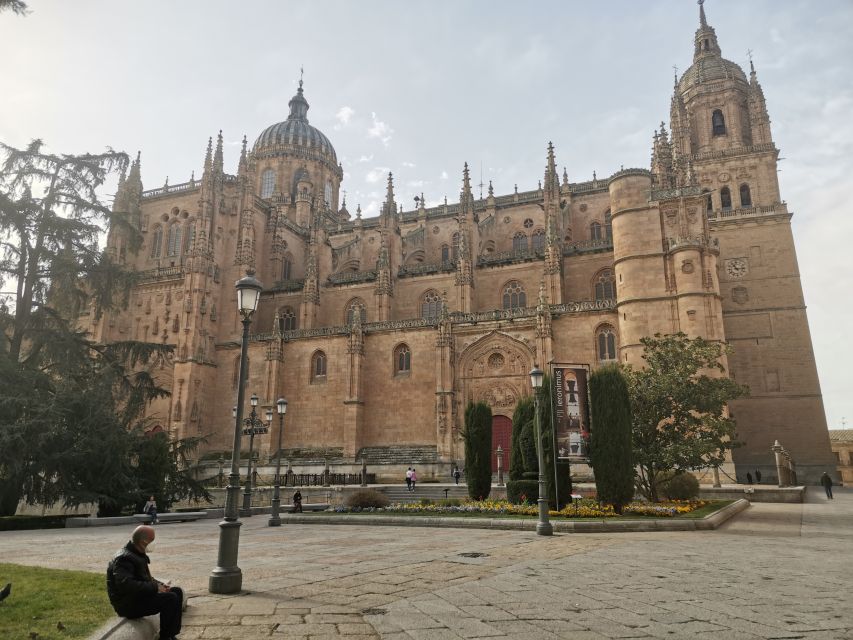
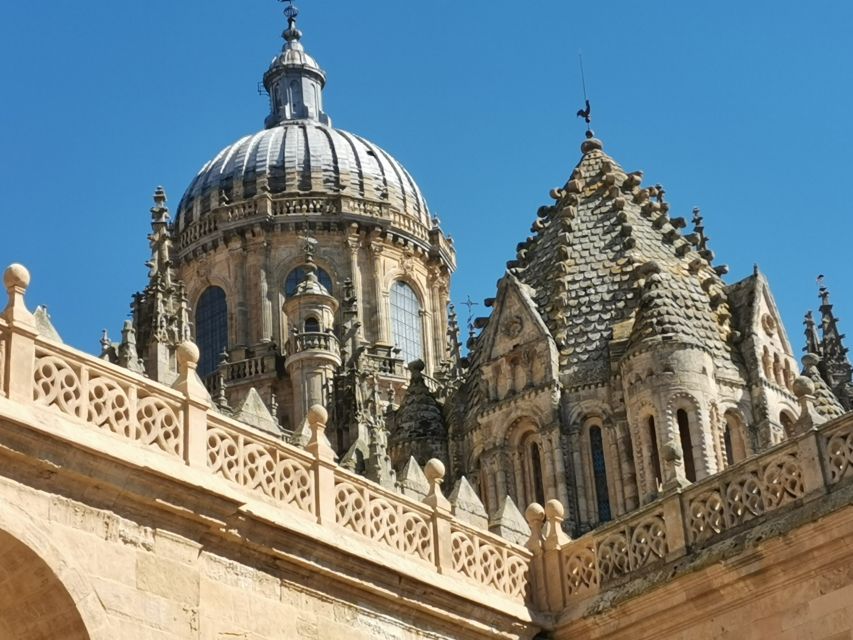
The final major section takes you to Salamanca’s old and new cathedrals. Seeing them together makes the city’s architectural timeline easier to understand. Instead of studying one church in isolation, you can compare different periods and styles within the same compact area.
The cathedrals are among Salamanca’s essential sights, but they can also be overwhelming. There are layers of decoration, chapels, facades, towers, and small details competing for your attention. A guide helps you focus on the features that best explain the buildings and their place in the city.
The standard route finishes at Plaza de Anaya. That is a practical ending because you are left near more historic buildings and can continue at your own pace. You may want to return to the cathedral, university, or Casa de las Conchas after the tour, when you can spend longer on the parts that caught your interest.
If you choose the extended version, you can add two monuments. Options include historic university buildings, St. Stephen’s Convent, the medieval cathedral towers, the Monastery of the Dueñas, or Las Claras. This is worth considering if you prefer to see fewer places in greater depth, though the extra stops may make the experience longer and more demanding on foot.
What the guide adds to the experience
The strongest part of the guiding is the connection between facts and stories. Martoke has led many of these walks and is described as fluent in English, German, Spanish, and Dutch. Her long-term connection with Salamanca gives her a useful perspective on both the monuments and present-day life in the city.
I would choose this tour if you enjoy asking questions. Previous groups valued her explanations of history, architecture, folklore, customs, food, and local goods. That range is helpful because Salamanca is not only a collection of old facades. It is also a living university city with traditions that continue beyond the monuments.
The guiding style is described as clear, friendly, humorous, and well paced. Those qualities matter on a city walk. Too much detail can make a tour feel like a lecture, while too little leaves you with attractive buildings but no sense of their importance.
The group size is another advantage. A small-group guarantee gives the walk a more personal feel than a large procession moving from square to square. It also makes it easier to hear the guide, take photographs, and pause at a stop that interests you.
Guide availability is listed in English, Spanish, Dutch, and German. Select your preferred language when checking dates and availability. The exact guide may vary, but Martoke is the name most closely associated with the experience described here.
Is $29 a fair price?
At $29 per person, the tour offers good value if you want an orientation to Salamanca in one morning or afternoon. You are paying for a live guide, access to a planned route, and explanations at several of the city’s major sights.
The value is strongest for a first visit. In two to three hours, you cover Plaza Mayor, Monterrey Palace, Casa de las Conchas, the cathedral area, the university patios, and the Sky of Salamanca. Doing this alone is possible, but you would need to research the route and decide which interiors or less obvious spots are open and worth your time.
The price is less compelling if you prefer complete independence or plan to spend hours inside every monument. This is an overview walk, even though it includes meaningful stops. The extended option may suit you better if two additional monuments are a priority.
Admission arrangements should be checked when booking, since the basic inclusions specifically identify the walking tour and guide. Do not assume that every possible interior or optional monument is included unless it is shown in your selected version.
Pace, clothing, and access
Wear comfortable shoes. The route covers the historic center on foot, and the experience depends on walking between monuments rather than riding from one place to another. Comfortable clothes are also recommended.
The tour is listed as wheelchair accessible, but the activity information also says it may not be suitable for people with mobility impairments. Because historic buildings can have uneven surfaces, steps, or limited access, I would contact the provider before booking if you need specific assistance. This is one point where the general accessibility label may not answer your personal needs.
The duration is listed as two to three hours. Starting times vary, so check availability for your date. A morning walk can help you get oriented before exploring independently, while an afternoon walk can give you a useful introduction after arriving in Salamanca.
Free cancellation is available up to 24 hours before the start time, and you can reserve now and pay later. Those terms are useful if your route through Spain is still changing.
Who should book this Salamanca walk?
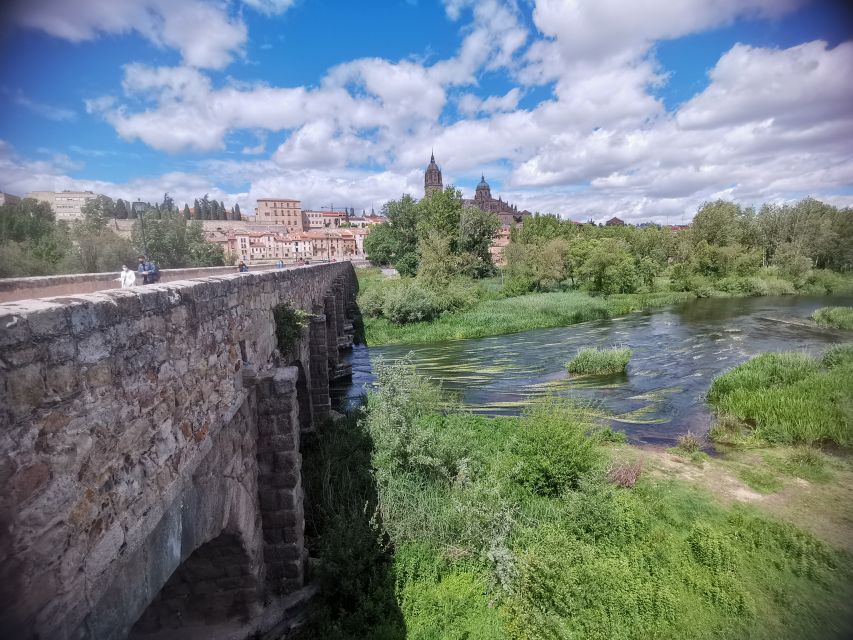
I would recommend it to first-time visitors who want the city’s main landmarks explained in a compact route. It is also a good match if you enjoy architecture but do not want to read long descriptions at every building.
You will get the most from it if you ask questions. Ask about the university, the painting, the cathedral styles, or the city’s customs. The smaller group makes that exchange easier, and the guide can adjust the amount of detail to the people present.
Families with older children may also find the range of sights helpful, especially the shell-covered Casa de las Conchas and the search for details on the university facade. The walk is less suitable if your main goal is shopping, food tasting, or a long cathedral visit.
Should you book it?
Book this tour if you want a clear first look at Salamanca, a small group, and more context than you will get from walking around with photographs alone. The best reasons are the university patios, the Sky of Salamanca, the strong route through the old center, and Martoke’s record of friendly, multilingual guiding.
Skip it if you already know Salamanca well or prefer to explore every monument at your own pace. If you do book, wear good shoes, meet under the Plaza Mayor clock, and consider the extended version if the university buildings, cathedral towers, or convents are high on your list.
FAQ
Where does the tour start?
The tour starts under the clock in Plaza Mayor, Salamanca.
Where does the tour finish?
The standard route finishes at Plaza de Anaya.
How long does the walking tour last?
The tour lasts two to three hours, depending on the selected option and starting time.
Which languages are available?
Guiding is available in Spanish, English, Dutch, and German.
What monuments are included?
The route includes Plaza Mayor, Monterrey Palace, Casa de las Conchas, the old and new cathedrals, the Patio de Escuelas Menores, the University of Salamanca, and the Sky of Salamanca.
Can I add more monuments?
The extended tour lets you choose two additional monuments from the historic university buildings, St. Stephen’s Convent, the medieval cathedral towers, the Monastery of the Dueñas, or Las Claras.
New routes in Spain
- Toledo: Guided Walking Tour with Cathedral Ticket and Tour★ 4.2 · 98 reviews
- Toledo: Guided Monument Walking Tour with Wristband Pass★ 4.5 · 487 reviews
- Valencia: Fallas Festival Walking Tour with Entry Ticket★ 4.6 · 86 reviews
- Barcelona: “The Shadow of the Wind” Literary Walking Tour★ 4.5 · 176 reviews
- Tenerife: Underwater Walk – Sea Trek Experience★ 5.0 · 237 reviews
- Tarragona: Roman Heritage Guided Walking Tour★ 4.7 · 261 reviews
- Seville: Sunset Roof Top Walking Tour★ 4.2 · 131 reviews
- Seville: Paranormal and Legends Guided Walking Tour★ 4.7 · 336 reviews
Spain Walking Tours, compared.
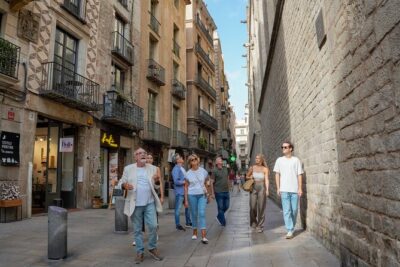
Barcelona Tapas and Wine Experience Small-Group Walking Tour
Read our review →
Tapas Walking Tour with Food, Wine, and History
Read our review →
Madrid Tapas & Wine Tasting Walking Tour – Small Group Local Bars
Read our review →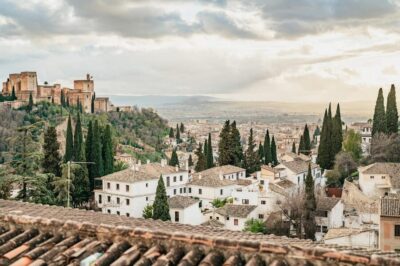
Albaicín and Sacromonte Guided Sunset Walking Tour
Read our review →
Toledo Tour & Vineyard Walk with Wine Tasting from Madrid
Read our review →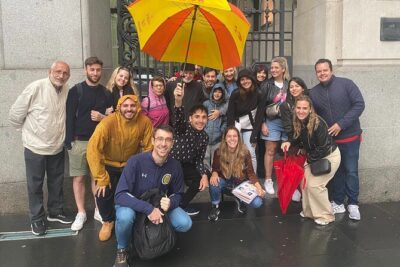
Browse the lists this tour appears in