
Review · OLD TOWN
Riga: Guided Old Town Walking Tour
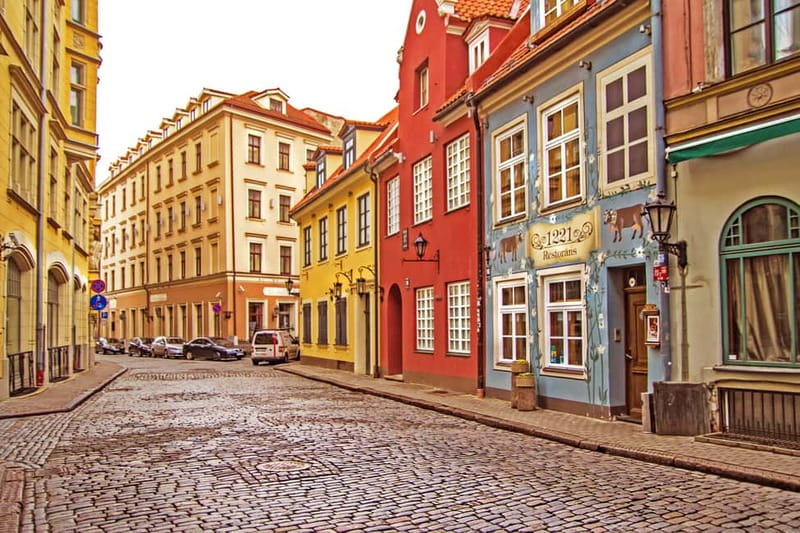
Riga’s Old Town makes the most sense when someone points out what you are looking at. This two-hour walk moves from medieval squares and churches to guild halls, the Cat House, Swedish Gate, and the Three Brothers, tying the buildings to Riga’s long, often complicated past. I especially like the local storytelling and the way guides connect architecture with daily life, politics, legends, and food.
I also like the strong value at $22, particularly if this is your first morning in Riga. Guides such as Gita, Guna, Rita, Baiba, and Carlos have been praised for clear English, humor, and useful restaurant suggestions. The main drawback is the setting itself: cobblestones, cold weather, and outdoor commentary can make the walk tiring, especially from October through March.
Key points to know before you book
- A practical first-day orientation: You see the central sights in two hours and get ideas for where to return later.
- A story-led route: Guides explain Riga’s 800-year past through buildings, legends, foreign occupations, politics, and local customs.
- The main Old Town sights are covered: Town Hall Square, St. Peter’s Church, the Great and Small Guild Halls, Swedish Gate, the Three Brothers, and St. James’s Cathedral.
- Good guide feedback: Gita, Guna, Rita, Carlos, Baiba, and other guides are praised for humor, clear delivery, and strong local knowledge.
- Prepare for outdoor conditions: Wear warm layers and shoes with a firm grip. Winter cobblestones can be slippery.
- Flexible booking: You can cancel up to 24 hours ahead for a full refund and reserve without paying immediately.
Why a guided walk helps you read Riga
Riga’s center is compact, but it is not simple. A pretty facade may reflect German merchant power, Swedish rule, Russian influence, Soviet occupation, or Latvia’s renewed independence. Without context, you can admire the streets and miss the story.
This walk gives you that framework while you move between the sights. You are not sitting in a museum listening to dates. You are standing in squares, looking up at towers, and hearing why a building matters right where it appears.
The tour covers roughly the core of the Old Town rather than trying to include every corner of the city. That is a sensible choice for two hours. You get a useful first look, then you can decide which churches, museums, cafes, or streets deserve more of your own time.
I would book it near the start of your stay. Several guides give practical suggestions about food and places to visit, and that advice is more useful before you have already made all your plans.
More Old Town Walking Tours in the world:
- Underground Vaults Walking Tour in Edinburgh Old Town
★ 4.5 · 8,506 reviews - Prague: 3-Hour Walking Tour of Old Town & Prague Castle
★ 4.7 · 5,696 reviews - Dubrovnik: Old Town Walking Tour
★ 4.8 · 5,174 reviews
Starting at Mentzendorff Museum
The meeting point is at Grēcinieku iela 18, close to the museum of Mentzendorff. Look for the transparent door and the guide holding a Riga city guide sign.
That detail matters. Old Riga has narrow streets and several nearby meeting points, so do not simply wait in the middle of a square. Give yourself enough time to locate the transparent entrance and check that you are in the right place.
From here, the group heads into the historic center on foot. There is no transport between stops, and the walking pace is designed to cover a lot without becoming a full-day march. You should still expect uneven paving and occasional pauses while the guide gathers the group.
The group size can be fairly large. One account described more than 30 people, yet the guide’s voice remained easy to hear. No headsets are provided, so your position matters. Stay reasonably close, particularly near traffic, passing groups, or noisy streets.
Town Hall Square and the House of Blackheads
Town Hall Square is one of the natural starting points for understanding Riga. Its origins reach back to the 13th century, and it brings together several of the city’s central themes: trade, public power, religion, and grand civic architecture.
The House of Blackheads is one of the square’s most recognizable buildings. Your guide explains its connection with merchant life and the trading culture that helped shape Riga. This is a good place to listen for the difference between a medieval trading city and the modern capital you see today.
The square is also a useful lesson in Riga’s complicated past. The buildings you see today do not simply represent an untouched medieval town. Riga has endured war, occupation, destruction, restoration, and political change. A good guide helps you understand that layers rather than presenting the Old Town as a stage set.
You will have time to look around, but this is a guided stop rather than a ticketed interior visit. The focus is on the outside architecture and the stories connected with it.
St. Peter’s Church and Riga’s vertical marker
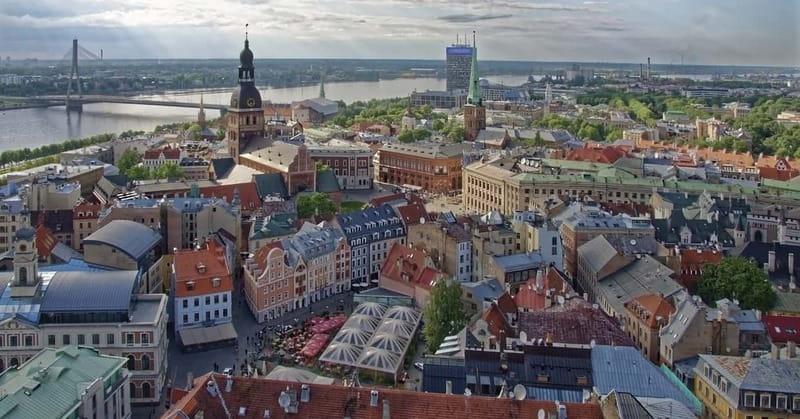
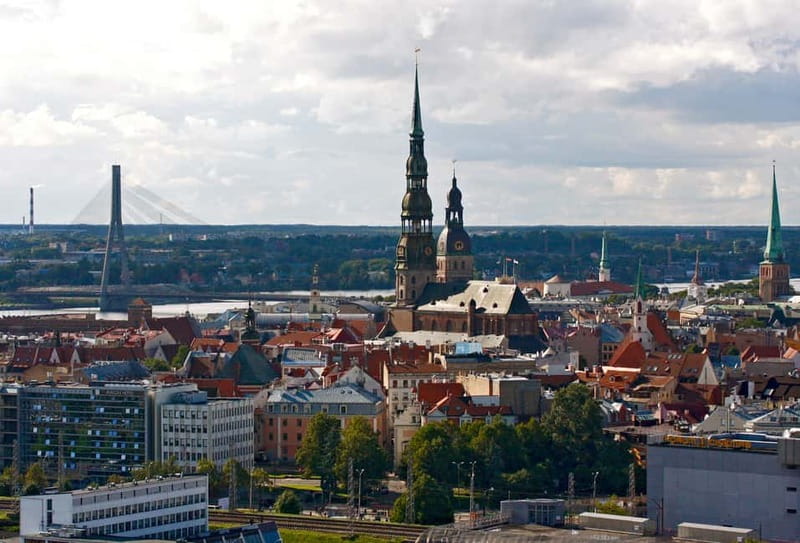
St. Peter’s Church is hard to miss. Its tower rises above the Old Town and helps you orient yourself as you walk. The tour pauses here for about 10 minutes, giving the guide time to explain the church and its place in the city.
The church is one of the route’s strongest visual stops. You get a sense of how Riga’s towers, roofs, and narrow streets fit together. Even if you later return to explore the church on your own, the guide’s explanation gives the building more meaning than a quick photograph would.
This stop also shows why comfortable shoes are important. You may spend several minutes standing on uneven stone while looking upward or turning to follow the guide’s explanation. In dry weather, that is easy. In winter, the same paving can be slick.
More Guided Walks in the world:
- Magical London: Harry Potter Guided Walking Tour
★ 4.7 · 22,044 reviews - History and Hauntings of Salem Guided Walking Tour
★ 5.0 · 14,564 reviews - Amsterdam Anne Frank: Small-Group Walking Tour & Local Guide
★ 4.8 · 12,789 reviews - Edinburgh: Harry Potter Magical Guided Walking Tour
★ 4.8 · 11,944 reviews
St. James’s Cathedral and the medieval center
The walk continues to St. James’s Cathedral, another major religious building in the Old Town. The guide uses the cathedral to explain Riga’s religious and civic development, along with the way different periods shaped the city.
This is one of the places where the tour’s broad approach works well. You are not only ticking off churches. You are comparing buildings, hearing how they fit into Riga’s story, and learning to notice the relationship between religious structures and the streets around them.
The stop is relatively short, so do not expect a full architectural lecture or an extended interior visit. You will get the main context and then continue through the medieval center.
The Great and Small Guild Halls
The Great Guild and Small Guild are reminders that Riga was a city organized around trade and professional groups. The guide explains the role of merchant and craft associations and how those groups influenced public life.
These buildings are useful for readers who want more than a list of old facades. They show that Riga’s wealth and identity were built through commerce, not only through royal or religious power. The guild halls also help explain why the Old Town contains so many substantial public buildings in such a compact area.
The tour pauses for about 10 minutes here. You will hear the main story from the street, with time to take photographs and compare the buildings with the surrounding medieval architecture.
The guide’s delivery makes a difference at this point. Dates and institutional history can feel dry when read from a plaque. Guides such as Gita and Rita have been praised for adding humor and clear explanations, which helps the information stay with you.
Swedish Gate and the character of the cobblestones
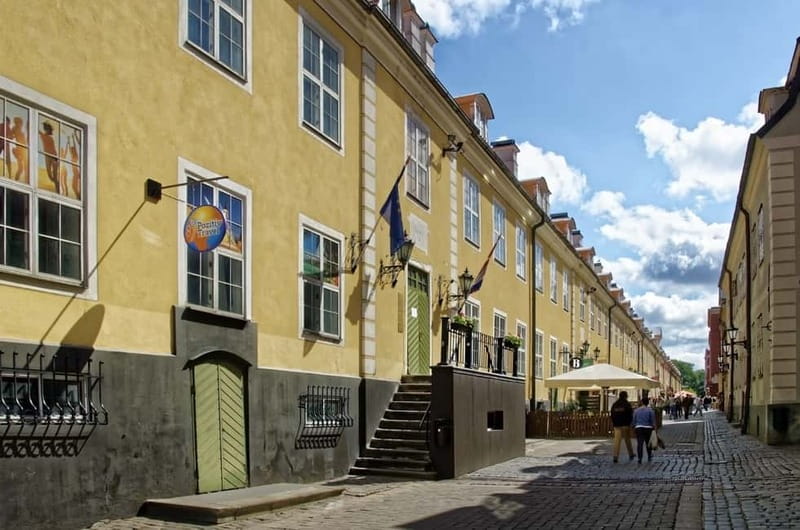
Swedish Gate is one of the more atmospheric sections of the route. It is a surviving passage through the old city walls, and the narrow setting gives you a feel for how Riga once controlled movement through its fortified center.
This is where the walk feels most like a journey through an old city rather than a standard sightseeing loop. You pass under the gate, follow cobbled streets, and hear about Riga’s connection with Swedish rule and the changing powers that controlled the region.
The narrow streets can also slow the group. People stop for photographs, other groups pass through, and the paving is not smooth. I would not choose this tour in thin-soled fashion shoes, especially in wet or icy weather.
From early October through the end of March, the operator warns of limited accessibility because of slippery cobblestones. The tour is listed as wheelchair accessible, but wheelchair users joining in the colder months should bring someone who can assist.
The Three Brothers and the Cat House
The Three Brothers are a memorable cluster of historic buildings. Their different shapes and ages make them useful for seeing how home design changed over time. Rather than viewing one grand monument, you get a small lesson in ordinary urban architecture.
The guide also points out the Art Nouveau Cat House. Riga is famous for this style, and the stop helps explain how Art Nouveau entered the city’s architecture scene. The route does not spend the entire tour in the later Art Nouveau district, but it gives you a starting point for noticing the style elsewhere.
This is one of the tour’s more rewarding features because the guide trains your eye. After hearing how decorative forms, curves, and symbols appear on Riga’s buildings, you will likely pay closer attention as you walk on your own.
The Three Brothers and Cat House also keep the route from becoming only a parade of churches and civic buildings. You see how people lived, worked, traded, and decorated their surroundings.
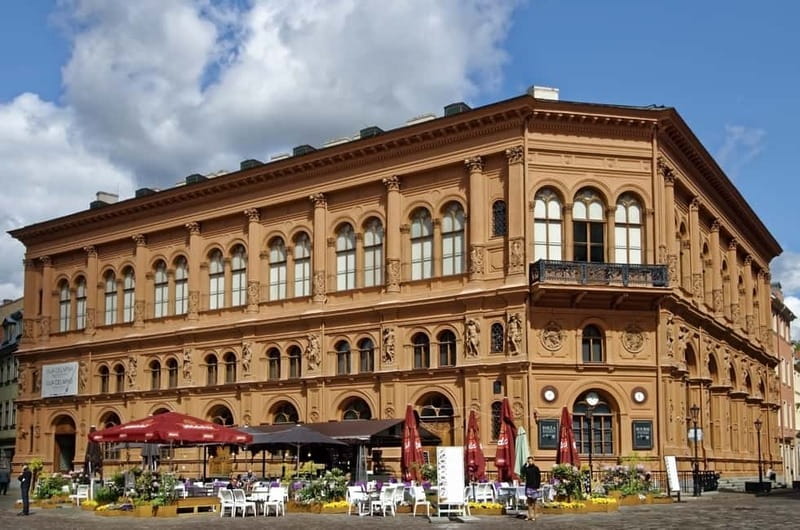
The final Old Town circuit and Dome Square
The last part of the walk continues through the Old Town for about 20 minutes before ending at one of two drop-off points, including Dome Square. This final stretch gives the guide room to connect the separate stops.
It is also where questions can be especially useful. Guides have explained architecture, local politics, foreign occupations, food, legends, and daily life during the tour. If you want clarification, ask while the group is still together rather than waiting until the end.
Dome Square is a practical finish. From there, you can continue exploring the Old Town, stop for a meal, or return to a building that caught your attention earlier. The tour does not include a formal meal or attraction admission, so plan to pay separately for anything you choose to visit afterward.
What the guides do especially well
The guide is the heart of this experience. The strongest pattern is clear, engaging delivery rather than a rigid script.
Gita is repeatedly praised for making complex material understandable and mixing history with humor. Guna is noted for giving a broad picture of Riga and Latvia, including architecture, politics, foreign occupations, and local tales. Rita is praised for being articulate, witty, and helpful with onward suggestions.
Carlos has been singled out for clear explanations and an easy sense of humor. Baiba is praised for speaking loudly enough for a group to follow and for encouraging questions. Other guides, including Diana, Normunds, and Carlis, have also been described as warm and effective storytellers.
Guide assignments can change, so you should not book on the assumption that one particular person will lead your departure. Still, the repeated pattern is encouraging: the experience depends on local guides who can make the material personal and approachable.
Language options are English, German, French, and Spanish. If you need a specific language, check the available departure before paying.
Cold weather, group size, and walking comfort
Riga can be very cold in winter. One January group faced temperatures that felt close to minus 17 degrees Celsius, while other tours dealt with cold rain. The walk continued, but the weather clearly affected comfort.
The good news is that guides sometimes build in brief warm-up opportunities when conditions are rough. Still, you should treat this as an outdoor activity. Wear a proper coat, gloves, a hat, and shoes with good traction. Do not rely on a quick cafe stop to keep you warm.
Summer and early autumn should be easier, though the same cobblestones remain. Rain can also affect how well you hear the guide and how long you want to linger at each stop.
Large groups are possible. The best guides project their voices well, but you may need to stay near the front if hearing is important to you. One person suggested earpieces for noisy streets and groups of around 20 people. Since headsets are not included, that is a fair consideration for anyone with hearing difficulties.
Smoking, food, drinks, alcohol, drugs, littering, large bags, and party-group behavior are not allowed during the activity. Travel light and keep the focus on walking and listening.
Is $22 a fair price?
At $22 per person, this is a good-value introduction to central Riga. You receive two hours with a live local guide and cover several of the city’s most important outdoor sights without paying for separate attraction admissions.
The value comes mainly from context. You can walk through the same streets for free, but it is easy to miss why the Swedish Gate matters, how the guilds shaped public life, or what the Three Brothers reveal about changing home design.
It is not a deep visit to every building. The tour does not include a meal, transport, or a long stop inside each church. If you want extensive museum time or a private guide, you will need a different format.
For a first visit, though, the price is modest for a well-paced orientation. I would especially consider it if you have only a short stay or want help deciding where to spend your second day.
Who should book this Riga walking tour?
This walk suits first-time visitors, couples, solo visitors, families with older children, and anyone who likes to understand a city before exploring it independently. It also works well for people arriving by cruise or taking a short city break, since the route focuses on the central Old Town.
It is a good match if you enjoy architecture but do not want a long academic lecture. The guides bring in legends, food suggestions, humor, and local perspective, which keeps the two hours moving.
You may want another option if you dislike outdoor walks, have difficulty on uneven ground, or need a very small group. Winter requires extra care, and a group of 30 or more may not suit everyone.
Should you book it?
I would book this tour, ideally near the beginning of your Riga stay. The route covers the major Old Town sights, the guides explain the city in a lively way, and the local food tips can help shape the rest of your visit.
Go in prepared for cobblestones, cold weather, and a possible large group. If you wear sensible shoes, stay close enough to hear, and dress for the forecast, this two-hour walk gives you a useful map of Riga’s buildings, stories, and character for $22.
FAQ
How long is the Riga Old Town walking tour?
The tour lasts two hours and includes guided stops at the main Old Town sights.
What sights are included on the route?
The route includes Riga Town Hall Square, St. Peter’s Church, St. James’s Cathedral, the Great Guild, the Small Guild area, Swedish Gate, the Three Brothers, the Cat House, and other parts of the Old Town.
Where does the tour meet?
Meet at Grēcinieku iela 18, near the museum of Mentzendorff. Look for the transparent door and a guide holding a Riga city guide sign.
Which languages are available?
Live guides are available in English, German, French, and Spanish.
Is the tour wheelchair accessible?
The tour is listed as wheelchair accessible, but accessibility is limited from the beginning of October through the end of March because the cobblestones can become slippery. Wheelchair users joining during that period should bring someone to assist.
Can I cancel or pay later?
You can cancel up to 24 hours before the tour for a full refund. You can also reserve your place and pay later.
New routes in the world
- Baltimore Walking Foodie Tour in Fells Point★ 5.0 · 182 reviews
- Baku Oil Heritage & Old Town Walking Tour★ 5.0 · 232 reviews
- Baku Walking Tour (Old City)★ 5.0 · 127 reviews
- Austin Small Group Morning Walk★ 5.0 · 412 reviews
- The Madam’s Curse Walking Ghost Tour★ 4.5 · 103 reviews
- Austin Haunted Pub Crawl Walking Tour★ 4.5 · 232 reviews
- Austin Downtown Private Walking Food Tour With Secret Food Tours★ 5.0 · 71 reviews
- Austin Murder Walk★ 5.0 · 310 reviews
Old Town Walking Tours, compared.
Underground Vaults Walking Tour in Edinburgh Old Town
Read our review →
3-Hour Walking Tour of Old Town & Prague Castle
Read our review →
Old Town and Jewish Quarter Guided Walking Tour
Read our review →
Cartagena: Historic Center and Getsemaní Shared Walking Tour
Read our review →
Prague Ghost and Legend of Old Town Walking Tour
Read our review →
Browse the lists this tour appears in