
Review · PARIS
Paris: Montmartre Must-See Walking Tour with a Local Guide
Montmartre is best understood on foot, one steep street and one good story at a time. This 150-minute walk moves from the steps of Sacré-Cœur through artists’ squares, old cabarets, a working vineyard, and quiet lanes that many first-time visitors miss. Guide Jean-Baptiste, often called JB or Ratatouille because of the meeting-point sign, brings plenty of humor and local color.
I like the small-group feel, which allows the guide to stop for questions, photos, and breathers on the hills. I also like the useful local advice, including restaurant and bakery suggestions such as Le Poulbot. The main drawback is the terrain: stairs, cobbles, and uphill paths make this a poor choice for anyone with limited mobility.
Key points to know before booking
- Jean-Baptiste is the guide to hope for: He is lively, funny, attentive, and especially good at turning Montmartre’s past into memorable stories.
- The route covers more than Sacré-Cœur: You’ll see La Maison Rose, the Clos Montmartre vineyard, Dalida’s neighborhood, Moulin de la Galette, Bateau-Lavoir, and the Wall of Love.
- Expect a real uphill walk: The tour includes stairs, slopes, and uneven ground, so wear proper shoes and bring water.
- The $29 price is strong value: You get 2.5 hours with a live English-speaking guide, landmark stops, local tips, and no transport costs.
- Rain does not cancel the walk: Bring a coat or umbrella, since the tour runs in wet weather as well as sunshine.
- The tour ends at Place des Abbesses: That leaves you near cafés, shops, and Metro Line 12 for an easy next stop.
Starting below Sacré-Cœur at Place Saint-Pierre
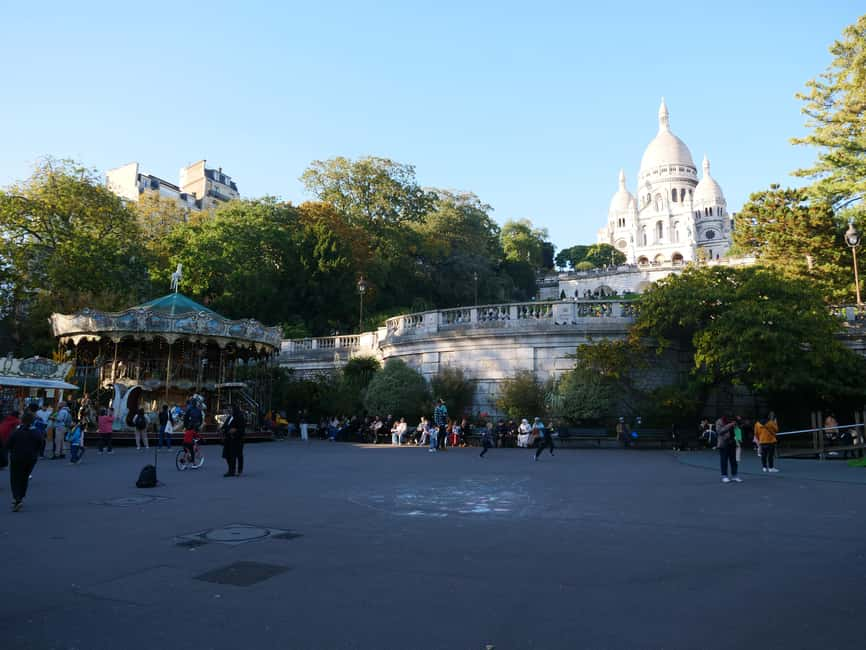
Meet 15 minutes early at Place Saint-Pierre, at the bottom of Square Louise Michel. The guide waits in front of Café Le Ronsard, a café with a red storefront, near the carousel. Look for the French Tales sign and the stick with Disney’s Ratatouille character.
The meeting point is simple to reach. Anvers on Metro Line 2 is about a five-minute walk away. Abbesses on Line 12 takes roughly seven to ten minutes, but use the elevator rather than the long stairway. That small detail matters, especially before a tour that already asks your legs to work.
The opening stop at Carrousel de Saint-Pierre gives you a chance to get oriented. From here, Montmartre rises ahead, and the guide begins setting up the neighborhood’s story as a former village that eventually became part of Paris. This is not just a march toward the basilica. The early explanation helps you understand why Montmartre feels different from the grand boulevards below.
More City Highlights Walking Tours in Paris:
- Montmartre Hidden Gems and Scenic Highlights Walking Tour
★ 5.0 · 2,684 reviews - Paris: Montmartre Highlights Walking Tour with a Local Guide
★ 4.9 · 2,318 reviews - Paris: Montmartre Hidden Gems and Highlights Walking Tour
★ 4.7 · 378 reviews
Square Louise Michel and the climb to Sacré-Cœur
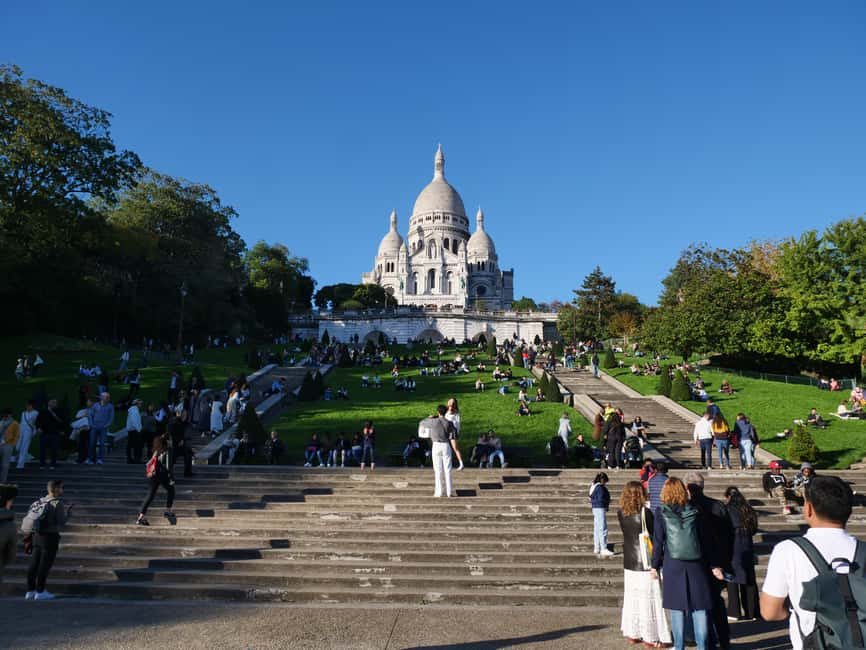
Square Louise Michel forms the first major stretch of the walk. The garden sits at the foot of the hill, with broad views toward the white basilica above. It is a good place for photos, but it also gives the guide room to explain the layout before the climb begins.
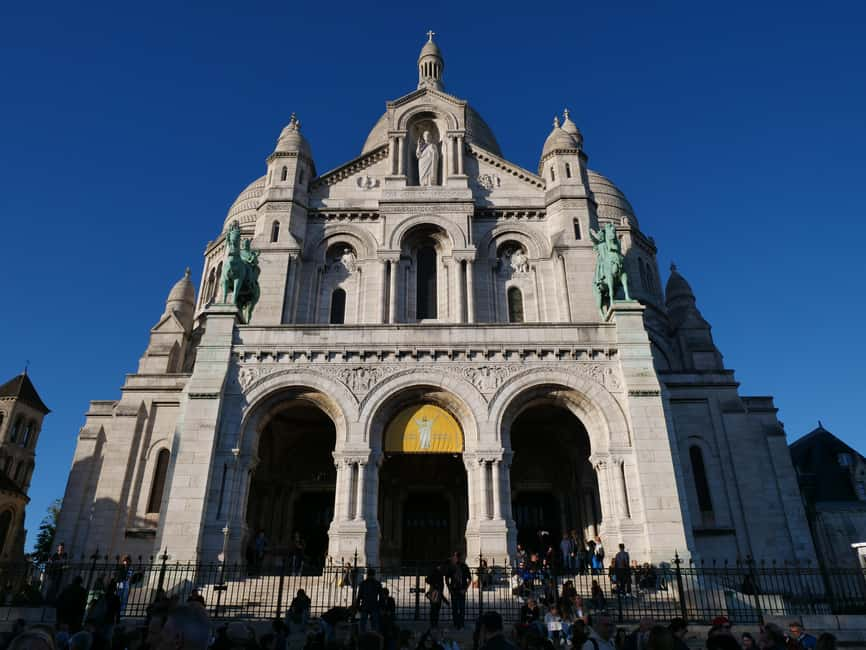
The route then heads up toward Sacré-Cœur. You can expect around 30 minutes here, including the approach, photo time, and a guided visit inside. The steps are the first clear test of fitness. The guide usually builds in pauses, and that makes a difference, but you should still arrive ready for a steady uphill walk.
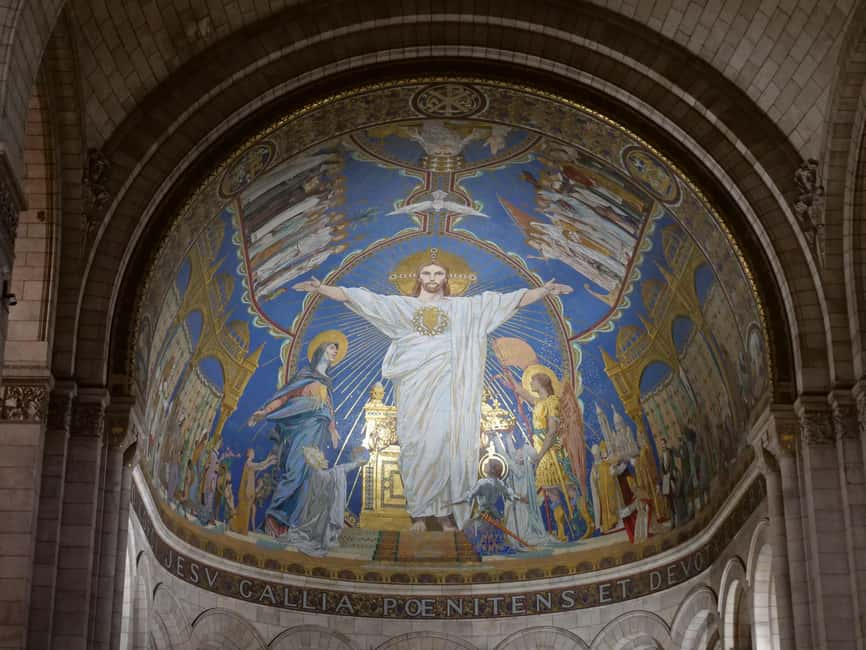
Sacré-Cœur is the tour’s grandest stop. Inside, look up at the large mosaics and take in the solemn interior. Outside on the parvis, Paris spreads below you from one of the city’s highest points. The view is a major reward, though crowds can make this section feel less calm than the quieter streets later on.
If you want the best photographs, keep your phone ready before reaching the top. The guide also takes pictures for people at times, a thoughtful touch if you are traveling alone or want a photo with your group.
Place du Tertre and Montmartre’s working artists
From the basilica, the route reaches Place du Tertre, the famous square lined with painters, caricaturists, and cafés. It is one of Montmartre’s most recognizable scenes, and it can also be crowded and commercial. The guide helps give the square context, so you see more than easels and souvenir shops.
This is a short stop, about ten minutes, but it gives you a feel for the neighborhood’s artistic identity. You may want to return later for a drink or a closer look at the artwork. The tour is not designed for long shopping stops, so save detailed browsing for after the walk.
Nearby, Le Poulbot connects the present-day restaurant scene with Montmartre’s old illustrated image. The name refers to Francisque Poulbot, known for drawings of street children. The guide uses places like this to link food, art, and local memory rather than treating each stop as an isolated photo opportunity.
Le Poulbot is also one of the most useful food suggestions along the route. If you want a traditional meal after the tour, the restaurant is an easy option to consider. Duck confit and crème brûlée have been singled out as good choices, though food and drinks are not part of the tour price.
The Clos Montmartre vineyard and La Maison Rose
The Vignes du Clos Montmartre is one of the tour’s most pleasing surprises. Paris is not the first place you think of for vineyards, yet this small patch of vines preserves an old part of Montmartre’s identity. It is not a grand wine estate, and you should not expect a tasting, but it offers a welcome change from the main tourist streets.
The guide explains how winemaking fits into the area’s past. This stop is especially worthwhile because it shows why Montmartre feels like a former village rather than just another Paris district. It also provides a quieter photo stop.
La Maison Rose comes next, or close to this part of the route depending on the group’s pace. The pastel-pink building is one of the neighborhood’s most photographed façades. Expect a short stop for pictures and a little context rather than a long interior visit.
This is where the tour’s pace works well. You see the famous exterior, hear why it matters, and move on before the crowd and camera lines take over. If you want a picture without rushing, return later when you have more time.
More Guided Walks in Paris:
- Paris Top Sights Half Day Walking Tour with a Fun Guide
★ 5.0 · 2,893 reviews - Paris: Montmartre Cheese, Wine & Pastry Guided Walking Tour
★ 4.8 · 2,255 reviews - Paris: Dark History and Ghostly Guided Walking Tour
★ 4.7 · 1,000 reviews - Paris: Montmartre Guided Walking Tour
★ 4.8 · 661 reviews
Dalida, quiet gardens, and the stories between stops
The route includes Place Dalida and Dalida’s former home. Dalida, the French-Italian singer, remains one of Montmartre’s best-known modern figures. Her statue is a popular photo stop, and the guide adds a human connection to the streets rather than focusing only on painters from the early 20th century.
You also visit Square Suzanne Buisson, a calmer garden away from the main flow. This pause is useful after the crowds around Sacré-Cœur and Place du Tertre. The route is not just a list of major sights. These smaller spaces show how local life continues between the famous addresses.
The exact timing of these stops can vary with the group and weather. The published route includes guided photo stops at several locations, and one or two itinerary entries do not name the site. That means you should think of the walk as a guided circuit through Montmartre rather than a timed entrance schedule.
The strongest guides use these in-between minutes well. Jean-Baptiste is repeatedly praised for keeping people interested with stories, small facts, and jokes. One memorable fact shared on the route is that Salvador Dalí designed the Chupa Chups logo. Details like that help the neighborhood’s artists feel like real people with surprising side projects.
Moulin de la Galette and the bohemian past
Moulin de la Galette is an important stop for understanding Montmartre’s social life. The old windmill recalls the days when this hilltop area had a village character, mills, dance halls, and gathering places. Artists later turned those settings into part of Montmartre’s enduring image.
The guide explains the windmill’s role in the area’s artistic and social story. You do not simply photograph the structure and leave. You learn how places connected to ordinary entertainment became part of the neighborhood’s legend.
This section also shows why a walking tour is more useful than a quick taxi ride between Sacré-Cœur and the main square. Montmartre’s appeal lies in the links between its streets. A guide can point out how artists, singers, restaurants, cabarets, and residents shaped the same small area over time.
The streets here are uneven, and you may need to slow down. That is not a flaw in the tour so much as a basic fact of Montmartre. Wear shoes with firm soles, not thin fashion trainers or slippery sandals.
Bateau-Lavoir and the artists who changed modern art
Bateau-Lavoir is another key stop. This former workshop hosted artists including Picasso and Modigliani. The building is tied to the period when Montmartre attracted painters who were testing new ideas and working outside the traditional art world.
You will not get a museum visit here, so set your expectations correctly. The value comes from the guide’s explanation of the people and place. With a good storyteller, an ordinary-looking building becomes a doorway into the artistic changes that made Montmartre famous.
This is one of the tour’s better stops for art lovers, but it also works for people who know little about art. You do not need to recognize every artist or movement. The guide gives you enough background to understand why this workshop matters and why Montmartre became associated with creative risk.
Au Lapin Agile and the neighborhood’s cabaret spirit
The route also passes Cabaret Au Lapin Agile, one of Montmartre’s legendary entertainment venues. The guide tells stories about the writers and artists connected with the cabaret and explains its place in the area’s cultural life.
Au Lapin Agile helps balance the tour. Montmartre was not only a place of studios and paintings. It was also a district of music, performance, food, nightlife, and conversation. That mix is part of what makes the area feel more personal than a collection of monuments.
You may be tempted to stop for a drink during this portion, but the schedule is fairly full. Save that plan for after the walk, when you can explore without watching the clock.
Finishing at the Wall of Love and Place des Abbesses
The Wall of Love, or Le Mur des Je T’aime, provides the final major stop. The phrase I love you appears in more than 250 languages, making this a popular place for couples, families, and anyone looking for a cheerful final photograph.
The tour finishes at Place des Abbesses. This is a useful ending point, not a random corner of the district. You are close to Metro Line 12, along with cafés and more streets to explore. If you still have energy, you can continue wandering. If the hills have done enough, you can head back toward central Paris.
The ending also gives the route a good emotional shape. It begins with the huge view from Sacré-Cœur and closes with a small, human message. Montmartre can be grand, theatrical, silly, and tender within the same few blocks.
Is $29 good value for 150 minutes?
At $29 per person, this is a reasonable price for a 2.5-hour guided walk in Paris. The fee includes a live English-speaking guide, landmark stops, photo opportunities, and suggestions for cafés and restaurants. It does not include food, drinks, or transport, but those exclusions are easy to understand for a walking tour.
The value depends mainly on how much context you want. You can visit Sacré-Cœur and Place du Tertre without paying for a guide. What you cannot easily recreate is the sequence of stories connecting the vineyard, Dalida, Poulbot, the cabaret, Bateau-Lavoir, and the smaller squares.
There is also some flexibility in the group experience. When bookings are light, the walk may feel almost private. Jean-Baptiste has continued with very small groups, even when only one person was booked. That can make the price particularly attractive, though group size is not guaranteed.
Free cancellation up to 24 hours before the start and a reserve-now, pay-later option reduce the risk when your Paris plans are still shifting.
Who should take this Montmartre walk?
I would choose this tour for a first visit to Montmartre, especially if you want the main sights plus a stronger sense of the neighborhood. It also suits solo visitors who want a clear route and someone to take an occasional picture.
Families can enjoy it too. Jean-Baptiste has kept teenagers involved, and one guide used a street game to include a child in the group. Still, children under 12 must have an adult with them, and the hills may test younger legs.
Art lovers, history fans, and food-focused visitors all get something useful here. The guide’s restaurant recommendations can help you plan the hours after the tour, while the route gives you a better idea of where to return.
I would skip it if stairs and uneven paths are difficult for you. The walk is not wheelchair accessible and is not suitable for people with mobility impairments. It also may not suit anyone over 95, according to the activity guidance.
Practical tips for a better walk
Arrive 15 minutes early. Place Saint-Pierre is easy to find once you identify Café Le Ronsard and the carousel, but rushing into the group can make the start stressful.
Wear comfortable walking shoes. You will deal with slopes, stairs, cobbles, and a fair amount of standing. Bring water, and dress for the weather because the tour operates rain or shine.
Bring a light rain layer in uncertain weather. A wet day does not necessarily ruin the experience, but the exposed viewpoints and stone streets are less pleasant without protection.
Use the audio guide only as a support. The main experience is the live English presentation, with questions, stories, and local recommendations. Stay close enough to hear clearly, especially on crowded streets.
Should you book it?
Book this Montmartre walk if you want more than a quick photo at Sacré-Cœur. The route covers the essential sights but gives equal attention to artists, singers, cafés, gardens, cabarets, and the small details that make the neighborhood memorable.
The strongest reason to book is the guide. Jean-Baptiste has a warm, playful style, takes care with group safety, and knows how to keep the pace moving without making the walk feel rushed. Other French Tales guides, including Marcella, have also led engaging walks.
Skip it only if you need step-free access or prefer to explore entirely at your own pace. For most able walkers, $29 buys a useful introduction to Montmartre, with enough local advice to keep exploring after the group says goodbye at Place des Abbesses.
FAQ
How long does the Montmartre walking tour last?
The tour lasts 150 minutes, or two and a half hours.
Where does the tour begin?
It begins at Place Saint-Pierre, at the bottom of Square Louise Michel, near Café Le Ronsard and the carousel.
Where does the tour finish?
The walk finishes at Place des Abbesses.
Which language is the tour conducted in?
The live tour guide and included audio guide are in English.
What landmarks are included?
The route includes Sacré-Cœur Basilica, Square Louise Michel, Place du Tertre, Le Poulbot, the Clos Montmartre vineyard, La Maison Rose, Moulin de la Galette, Bateau-Lavoir, the Wall of Love, and other Montmartre locations.
Is food included?
No. Food and drinks are not included, but the guide provides recommendations for cafés and restaurants.
Is the tour suitable for wheelchair users?
No. The route includes stairs, uphill paths, cobblestones, and uneven ground, and it is not wheelchair accessible.
What should I bring?
Wear comfortable walking shoes and bring a bottle of water. Dress for the weather because the tour operates in rain or sunshine.
Can I cancel the booking?
Yes. You can cancel up to 24 hours before the tour for a full refund. You can also reserve now and pay later.
New routes in Paris
- The Official Emily in Paris Locations Walking Tour★ 4.9 · 383 reviews
- Paris: Montmartre Food Tasting Walking Tour with Secret Dish★ 4.8 · 107 reviews
- Paris: Emily Inspired Walking Tour★ 4.9 · 312 reviews
- Saint-Germain: Gourmet Chocolate & Pastry Walking Food Tour★ 4.8 · 495 reviews
- Paris: Walking Tour with Notre Dame or Ste-Chapelle Access★ 4.4 · 198 reviews
- Paris Uncovered: Unique Guided Walking Tours with a Twist★ 4.8 · 582 reviews
- Paris Top Sights Half Day Walking Tour with a Fun Guide★ 4.9 · 92 reviews
- Paris: Ghosts, Legends & Mysteries Evening Walking Tour★ 4.5 · 241 reviews
Paris Walking Tours, compared.

Authentic Parisian Gourmet Food Tour with 10 Local Dishes & Wines
Read our review →
Paris Top Sights Half Day Walking Tour with a Fun Guide
Read our review →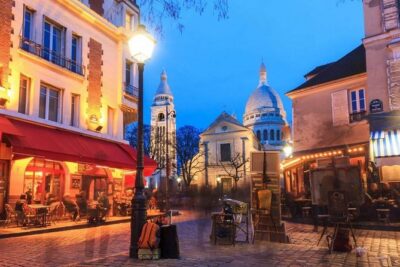
Montmartre Hidden Gems and Scenic Highlights Walking Tour
Read our review →
Montmartre Hill French Gourmet Food and Wine Tasting Walking Tour
Read our review →
Montmartre Highlights Walking Tour with a Local Guide
Read our review →
Paris Île de la Cité and Notre-Dame Walking Tour With Crypt
Read our review →
Montmartre Cheese, Wine & Pastry Guided Walking Tour
Read our review →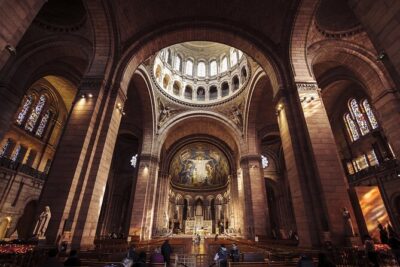
Paris in a Day: Louvre or Orsay, Eiffel Tower, City Walk & Cruise
Read our review →Browse the lists this tour appears in