
Review · PARIS
Paris: Montmartre Guided Walking Tour
Montmartre is at its best when you stop treating it as a hilltop photo stop and start seeing it as a village with an unruly past. This 90-minute walk links Moulin Rouge, Sacré-Coeur, and the artists’ Montmartre with quieter streets, local cafés, the old vineyard, and stories that explain why the neighborhood still feels different from the rest of Paris.
I like two things right away: the guide works to avoid the thickest crowds, and the storytelling goes well beyond dates and buildings. You hear about Renoir, Van Gogh, Picasso, Impressionism, the Cabaret of the Assassins, and even the local dislike of Sacré-Coeur. Guides including Anaelle, Mathieu, Anna, Nema, Yago, and Elise have brought a mix of humor, art, politics, and practical restaurant tips.
The main drawback is physical: Montmartre is hilly, and the tour runs rain or shine. Ninety minutes is enough for a strong introduction, not a full visit to every corner or an interior tour of Sacré-Coeur. People with mobility impairments or wheelchair users should choose a different way to see the district.
Key points to know before booking
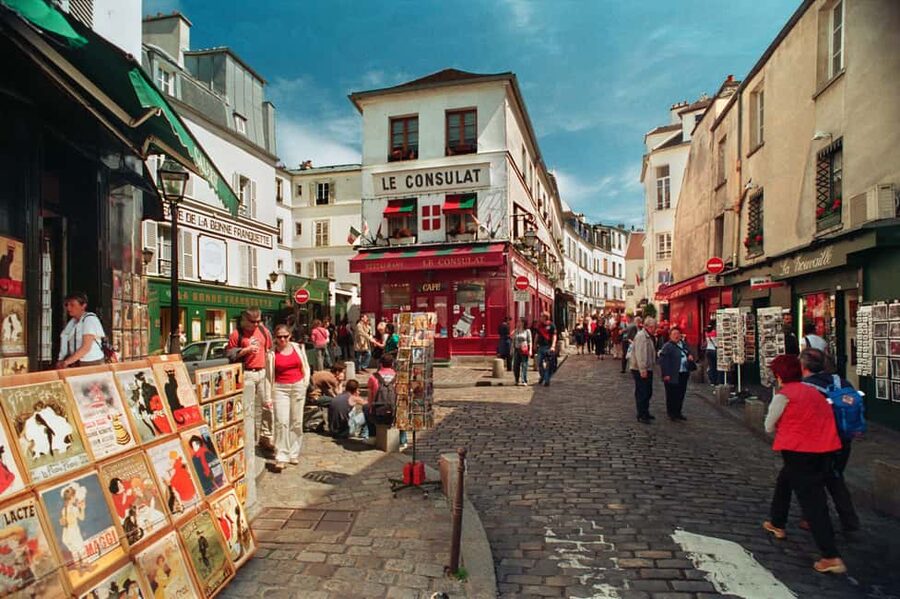
- A local view of Montmartre: The walk covers famous sights but also uses quieter streets and neighborhood corners.
- Art is central: Renoir, Van Gogh, Picasso, Impressionism, and film locations all help explain the area.
- Small English-only groups: The usual group has about 12 people, with a second guide added if numbers reach 20.
- A useful first-day activity: The route helps you get your bearings before returning on your own for cafés, photos, or museums.
- The 6:30 PM option changes the mood: Daytime crowds begin to thin, and the neighborhood enters its twilight hour.
- Good value at $17: You get a live local guide for 90 minutes, but food, drinks, transport, and entry fees are extra.
Why Montmartre works best as a walking story
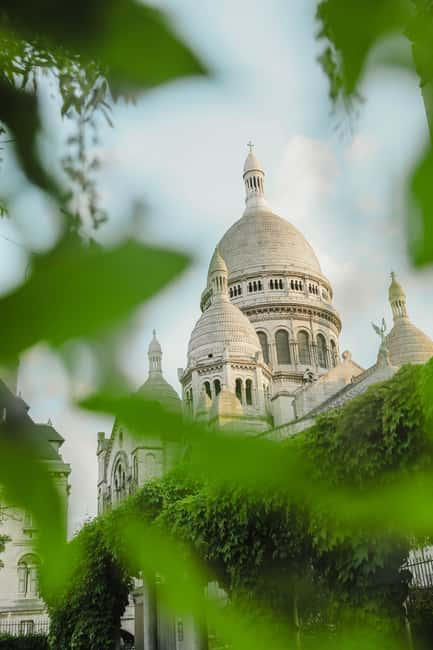
Montmartre can look simple on a map: start near Place Blanche, climb toward Sacré-Coeur, and finish at the basilica. The real pleasure is in the connections between those places. The hill was not only a postcard setting. It became a meeting place for artists, performers, workers, political movements, cafés, and people who wanted to live outside the formal Paris of grand avenues.
A guide gives those streets a human scale. Instead of seeing only a red windmill or a white church, you learn what kind of life gathered around them. That is useful because Montmartre has layers that are easy to miss when you explore alone. One lane may look merely pretty until you learn which painter worked nearby, which restaurant appeared in Amélie, or why residents have complicated feelings about the basilica above them.
The tour is conducted in English and designed as a small-group walk. Around 12 people is a comfortable size for a street tour. You can hear the guide, ask questions, and stay together without feeling like part of a large procession. Groups can reach 20, but a second guide is added at that point.
More Guided Walks in Paris:
- Paris Top Sights Half Day Walking Tour with a Fun Guide
★ 5.0 · 2,893 reviews - Paris: Montmartre Highlights Walking Tour with a Local Guide
★ 4.9 · 2,318 reviews - Paris: Montmartre Cheese, Wine & Pastry Guided Walking Tour
★ 4.8 · 2,255 reviews
From Place Blanche to the Moulin Rouge
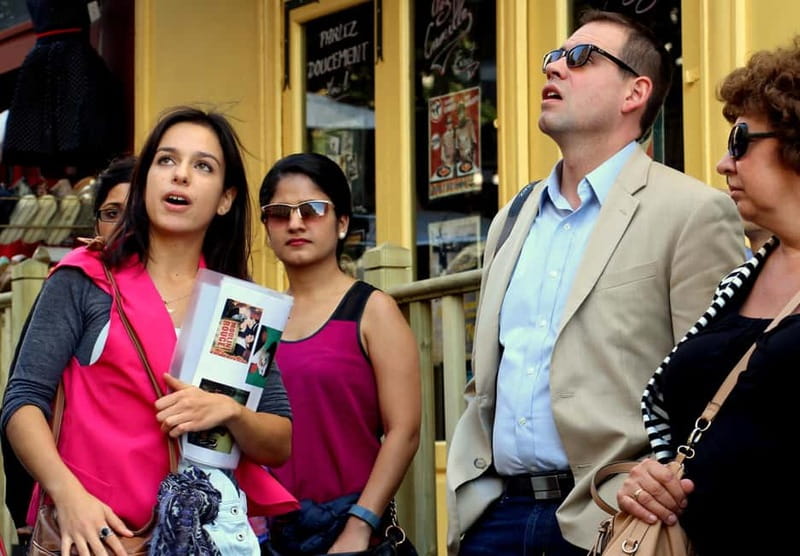
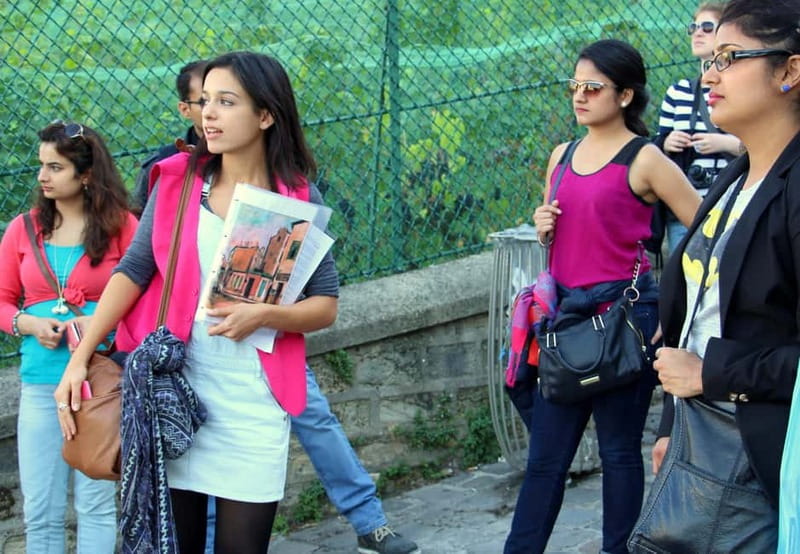
The meeting point is at street level outside the Blanche Metro station on Line 2. Look for the guide in a pink vest. This is a practical start because Place Blanche puts you directly beside the Moulin Rouge and at the lower edge of Montmartre.
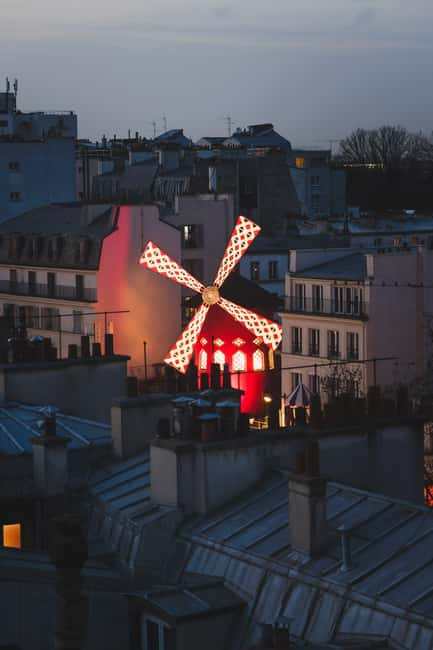
The Moulin Rouge stop lasts about 10 minutes and sets up one of the neighborhood’s key themes: performance. You get a guided explanation and time for sightseeing and photographs. The red windmill is famous, but the useful part is learning how cabaret culture fits into Montmartre’s wider story of artists, nightlife, and outsiders.
This area can be crowded, especially around the entrance and roundabout. The guide may not linger in the busiest patch longer than needed. If you arrive late, the instructions suggest trying to catch the group about 15 minutes after departure at the roundabout in front of the Moulin Rouge. Still, I would arrive early. The walk starts on time, and a moving group can be hard to locate once it turns into side streets.
Climbing toward Sacré-Coeur
The route then works uphill through Montmartre. This is where comfortable shoes matter. The walk is not described as a strenuous hike, but you should expect slopes, steps or inclines, and the general effort of reaching the summit area.
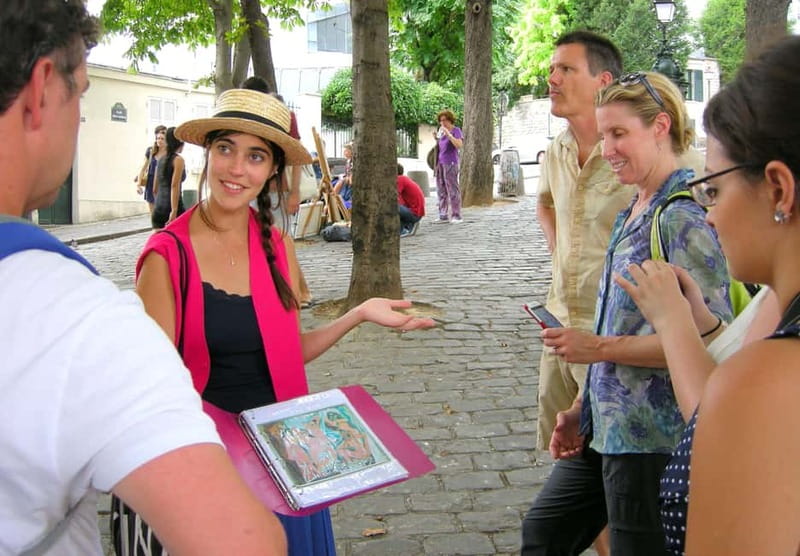
Sacré-Coeur receives about 10 minutes of guided attention. You will get the church, its setting, and broad views across Paris. This is one of the tour’s major photo moments, especially when the light is soft. The late 6:30 PM departure can be a smart choice if you prefer cooler air, gentler light, and fewer daytime crowds.
The basilica is also treated as a subject of local debate rather than a flawless symbol. The tour explains why some Montmartrois dislike their church, which adds needed context to a monument often presented only as a beautiful white landmark. The church remains the end point, so you can spend more time there afterward if you want to enter or enjoy the view at your own pace. Entry fees are not included.
One practical point: the route may avoid the steepest-feeling approach in places, but no route can remove Montmartre’s hills entirely. If you find uphill walking difficult, this is a real consideration, not a minor footnote.
Moulin de la Galette and the artists’ neighborhood
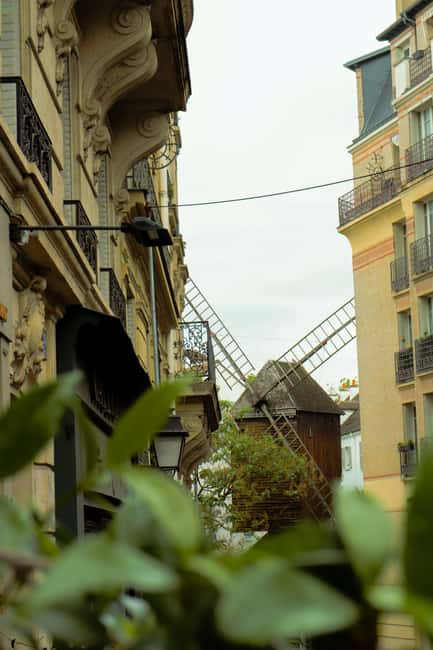
Moulin de la Galette is another roughly 10-minute stop. The name links Montmartre’s rural past with its period as an artists’ quarter. Here, the guide connects the setting to painters and to the scenes that made the area famous.
Renoir is especially important. The route includes the mill restaurant associated with one of his well-known paintings, helping you see how ordinary social life became art. The value is not just in recognizing a name. You begin to understand why cafés, dance halls, restaurants, and streets mattered so much to the painters who gathered here.
Van Gogh and Picasso also enter the story, along with the rise of Impressionism. A guide with an art background can make this section especially rewarding. One guide was described as a Sorbonne history graduate, while another was praised for an artistic focus. The experience does not promise a formal museum lecture, but it gives you a clear street-level account of why Montmartre attracted so many artists.
If art is the main reason you want to see the district, this tour is a strong introduction. If you want to spend long periods studying paintings, you will need to add a museum visit elsewhere. The walk shows locations and explains their meaning, but it does not replace time with original works in a gallery.
More Walking Tours in Paris:
- Authentic Parisian Gourmet Food Tour with 10 Local Dishes & Wines
★ 5.0 · 4,754 reviews - Montmartre Hidden Gems and Scenic Highlights Walking Tour
★ 5.0 · 2,684 reviews - Montmartre Hill French Gourmet Food and Wine Tasting Walking Tour
★ 5.0 · 2,588 reviews - Paris Île de la Cité and Notre-Dame Walking Tour With Crypt
★ 5.0 · 2,272 reviews
Place du Tertre without losing the local feel
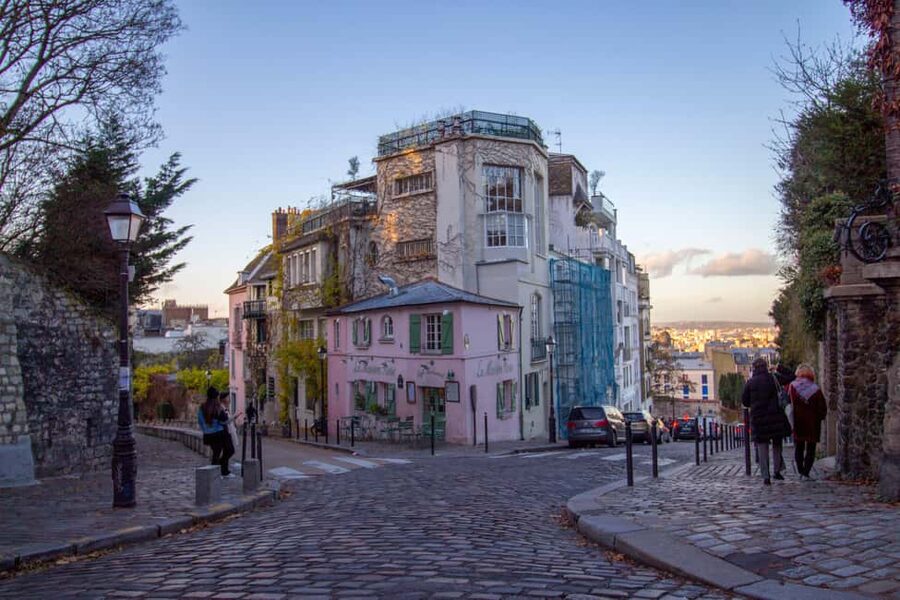
Place du Tertre is one of Montmartre’s most recognizable squares. It is associated with artists, portrait painters, restaurants, and the classic image of the neighborhood. The tour gives it about 10 minutes, enough for an explanation and a look around.
This is also one of the more tourist-focused parts of the route. That is not a flaw, because the square belongs to Montmartre’s identity, but it can feel more commercial and crowded than the side streets. I like that the guide does not pretend the popular places are the whole story. You see Place du Tertre, then move beyond it instead of treating it as the final word on the neighborhood.
The guide’s role is useful here. You can learn how to read the square, then decide later if you want to return for a meal, a sketch, or a closer look at the artists. Several guides also offer suggestions for places to eat, though meals are not part of the tour.
The Clos Montmartre vineyard and village lanes
The Vigne du Clos Montmartre gives the walk a different texture. This small vineyard is a reminder that Montmartre was once more village than city. The stop is listed as sightseeing rather than a formal guided visit, so expect to view and discuss the site from the route, not to take part in wine tasting.
That distinction matters. The tour shows you the vineyard as part of the neighborhood’s character, but food and drinks are excluded. If you were hoping for a winery experience, this is not that. If you want to understand why Montmartre still feels like a village in places, it is a valuable stop.
The walk also uses quieter streets and traditional village areas. This is where the experience earns its modest price. You could see Sacré-Coeur and the Moulin Rouge alone, but it is harder to know which side lanes matter, where locals still spend time, and how the district’s old identity fits around the crowds.
The exact description includes a further 10-minute guided section before the finish, without naming a separate attraction. That likely allows the guide to shape the route around the group, street conditions, and the best available quiet corners. You should think of the itinerary as a guided neighborhood walk rather than a fixed museum-style sequence.
The stories that make the route worth your time
The best part of this experience is the range of stories. You hear why Montmartre became linked to Impressionism, how Van Gogh and Picasso fit into its artistic history, and what happened around the Cabaret of the Assassins. The stories also reach into politics and everyday life.
One particularly useful example is the explanation of why Paris was briefly a country for a few months. That kind of detail gives you a better sense of the district’s political past and its independent streak. It is the sort of fact that turns a pretty street into a place with arguments, loyalties, and memory.
The guides also connect old Montmartre to modern Paris. Film locations such as the grocery and restaurant associated with Amélie may appeal to movie fans. Food tips, local customs, and present-day neighborhood life keep the tour from becoming only an art-history lesson.
Guide quality will always vary by person, but the names attached to especially strong experiences include Anaelle, Mathieu, Anna, Nema, Yago, Elise, Maria, Mariam, and Leonie. The repeated strengths are easy to identify: clear English, warmth, humor, steady pacing, and real affection for the area. One guide also made a point of engaging children, which helps families with older kids stay involved.
What the 90-minute format gives you
Ninety minutes is a good length for a first look at Montmartre. It is long enough to connect the major sights without consuming half your day, and short enough to fit before dinner or another Paris activity.
The tradeoff is limited time at each stop. Moulin Rouge, Sacré-Coeur, Moulin de la Galette, Place du Tertre, and the vineyard each receive roughly 10 minutes in the planned route. That gives you orientation and stories, but not extended exploration.
I would book this early in your Paris stay if you plan to return to Montmartre. The walk helps you decide where to spend more time later. You might revisit the basilica, sit in a café, browse the square, or seek out a street the guide pointed out. Several people used it as a first-day activity for exactly this reason: it made the area easier to navigate afterward.
The 6:30 PM departure deserves special attention. The neighborhood does not become empty, but the timing can make the experience calmer than a midday visit. You also gain softer light for Sacré-Coeur and city views. In hot weather, the cooler hour can make the uphill walking easier.
Is $17 a fair price?
At $17 per person, this is inexpensive for a live, English-language walking tour in Paris. The price is especially fair if you want context rather than just directions. A local guide can point out art connections, neighborhood customs, film sites, restaurants, and political stories that you would probably miss on a self-guided stroll.
You are paying for guidance, not admissions or refreshments. Transportation, food, drinks, and entry fees are separate. You should also know that one participant felt the guides depend heavily on tips and wished more of the ticket price went directly to them. If you value the guide’s work, budget for a tip in addition to the ticket.
The low price also means you should set realistic expectations. This is not a private tour, a basilica interior visit, or an art museum program. It is a brisk neighborhood walk with a local voice. For that purpose, the value is strong.
Weather, footwear, and group comfort
The tour runs rain or shine. Bring weather-appropriate clothing and a reusable water bottle. A rain jacket is more useful than an umbrella in a compact walking group, though the provided instructions simply call for suitable clothing.
Wear shoes you can comfortably use on slopes and uneven urban surfaces. The route includes uphill walking, and several guides have adjusted their pace or sought shade during hot weather. Still, comfort depends on your own fitness, and the walk is not suitable for people with mobility impairments or wheelchair users.
Small groups help with questions and listening, but they do not remove the need to stay alert at busy crossings and crowded sights. The guide in a pink vest makes the start easier to identify.
Free cancellation is available up to 24 hours before departure, and you can reserve now and pay later. Those terms are useful if your Paris schedule is still shifting, but check the available start time before booking.
Who should book this Montmartre walk?
I would choose this tour if you want a well-paced introduction to Montmartre, especially on your first or second day in Paris. It suits adults interested in art, history, film, local life, and city views. Families can enjoy it too, particularly with children old enough to handle the uphill streets and listen to stories.
It is also a good fit if crowded attractions make you uneasy. The guide aims to use quieter routes whenever possible while still showing the famous places. You will not avoid every crowd, especially near Moulin Rouge, Place du Tertre, and Sacré-Coeur, but the route is not limited to the busiest postcard spots.
I would skip it if you want extensive free time, a long museum-style explanation, or a fully accessible route. The 90-minute format moves along, and the hills are part of the experience.
Should you book it?
Book this walk if you want Montmartre to feel like a lived-in neighborhood rather than a checklist of Moulin Rouge and Sacré-Coeur. The strongest reasons are the local guides, the art connections, the quieter streets, and the way the stories explain both the charm and the tensions of the area.
Choose the 6:30 PM start if you like gentler light and a calmer mood. Arrive early at Blanche, wear solid shoes, and allow for a tip if your guide gives you a good evening. At $17, this is a practical way to get your bearings and find the parts of Montmartre you will want to explore on your own afterward.
FAQ
How long does the Montmartre walking tour last?
The tour lasts 90 minutes.
What language is the tour conducted in?
The tour is conducted in English, with a live English-speaking guide.
Where does the tour begin?
Meet the guide in a pink vest at street level outside the Blanche Metro station exit on Line 2, near Place Blanche.
Where does the tour finish?
The walk finishes at the Basilica of the Sacred Heart of Paris, also known as Sacré-Coeur.
What should I bring?
Bring comfortable shoes, weather-appropriate clothing, and a reusable water bottle. The tour runs in rain or shine.
Is the tour suitable for wheelchair users?
No. The experience is not suitable for wheelchair users or people with mobility impairments because it involves walking through hilly Montmartre.
New routes in Paris
- The Official Emily in Paris Locations Walking Tour★ 4.9 · 383 reviews
- Paris: Montmartre Food Tasting Walking Tour with Secret Dish★ 4.8 · 107 reviews
- Paris: Emily Inspired Walking Tour★ 4.9 · 312 reviews
- Saint-Germain: Gourmet Chocolate & Pastry Walking Food Tour★ 4.8 · 495 reviews
- Paris: Walking Tour with Notre Dame or Ste-Chapelle Access★ 4.4 · 198 reviews
- Paris Uncovered: Unique Guided Walking Tours with a Twist★ 4.8 · 582 reviews
- Paris Top Sights Half Day Walking Tour with a Fun Guide★ 4.9 · 92 reviews
- Paris: Ghosts, Legends & Mysteries Evening Walking Tour★ 4.5 · 241 reviews
Paris Walking Tours, compared.

Authentic Parisian Gourmet Food Tour with 10 Local Dishes & Wines
Read our review →
Paris Top Sights Half Day Walking Tour with a Fun Guide
Read our review →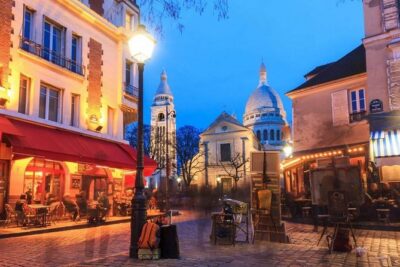
Montmartre Hidden Gems and Scenic Highlights Walking Tour
Read our review →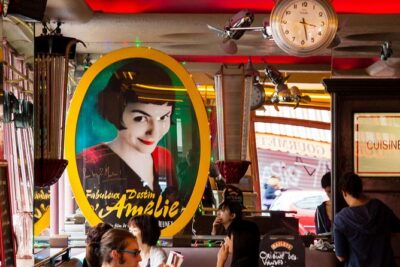
Montmartre Hill French Gourmet Food and Wine Tasting Walking Tour
Read our review →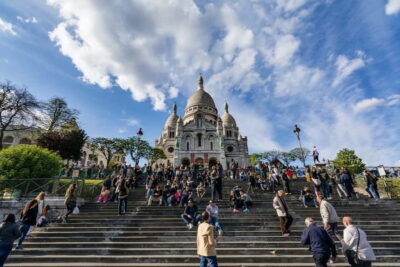
Montmartre Highlights Walking Tour with a Local Guide
Read our review →
Paris Île de la Cité and Notre-Dame Walking Tour With Crypt
Read our review →
Montmartre Cheese, Wine & Pastry Guided Walking Tour
Read our review →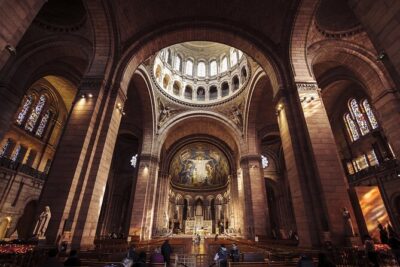
Paris in a Day: Louvre or Orsay, Eiffel Tower, City Walk & Cruise
Read our review →Browse the lists this tour appears in