Review · GUIDED
Buenos Aires: La Boca Guided Walking Tour in English
La Boca is more than a few colorful streets made for photographs. This two-hour walk connects the painted conventillos, tango performances, fileteado art, the old riverside setting, and Boca Juniors into one clear story. I especially like that guides such as Santiago, Victoria, Vito, Maria, and Juan explain what you are seeing instead of leaving you to wander past it. The tour also offers excellent value at $13, though the short walk can feel busy and touristy around Caminito.
I like the street-level storytelling and the way the tour finishes at La Bombonera, giving football fans a natural next step. The main thing to plan for is timing: traffic can be heavy, and the guide waits only 10 minutes at Magallanes 808 before moving to the first stop.
Key points
- Colorful conventillos: Learn why La Boca’s painted homes became a defining part of the district.
- Street tango: You may encounter dancers performing in the open air and hear how tango began.
- Fileteado art: Spot this decorative Buenos Aires art and learn how it developed.
- Puente Transbordador: See the old riverside transport structure and place La Boca in its port setting.
- La Bombonera finale: Finish outside Boca Juniors Stadium with the story of Argentina’s most popular football club.
- Useful local guidance: Guides often share recommendations for food and further exploring after the walk.
Why La Boca makes a strong first walking tour
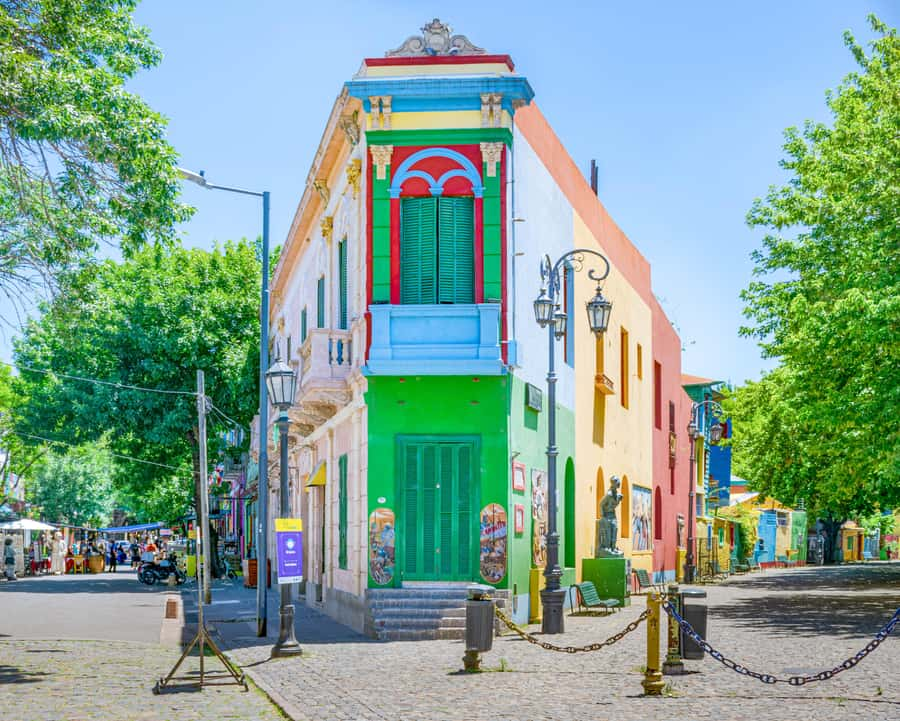
La Boca is one of the easiest Buenos Aires neighborhoods to recognize. Its corrugated walls, bright paint, tango poses, football colors, and narrow tourist streets give it an immediate visual punch. Yet the postcard surface only tells part of the story.
This district grew from its connection to the port and from the many communities that shaped life here. That is why a guide adds real value. You can see a colorful house on your own, but you may not understand what the conventillo was, why the colors matter, or how art, migration, tango, and football became linked with La Boca.
The tour lasts two hours, which is enough time to get a strong introduction without turning into an all-day walk. Several people praised the way the guides filled those two hours with stories, humor, and context. Santiago was especially often singled out for an engaging delivery, while Victoria, Vito, Maria, Juan, Maru, Marianne, and others were also praised for clear explanations and a friendly approach.
You should not expect a quiet architectural stroll. Caminito and the nearby streets are popular, colorful, and geared in part toward sightseeing. That is not a flaw, but it is worth knowing. This tour works best when you want to understand the neighborhood behind the photographs.
More Guided Walks in the world:
- Magical London: Harry Potter Guided Walking Tour
★ 4.7 · 22,044 reviews - History and Hauntings of Salem Guided Walking Tour
★ 5.0 · 14,564 reviews - Amsterdam Anne Frank: Small-Group Walking Tour & Local Guide
★ 4.8 · 12,789 reviews
Meeting at Caminito and Magallanes Street
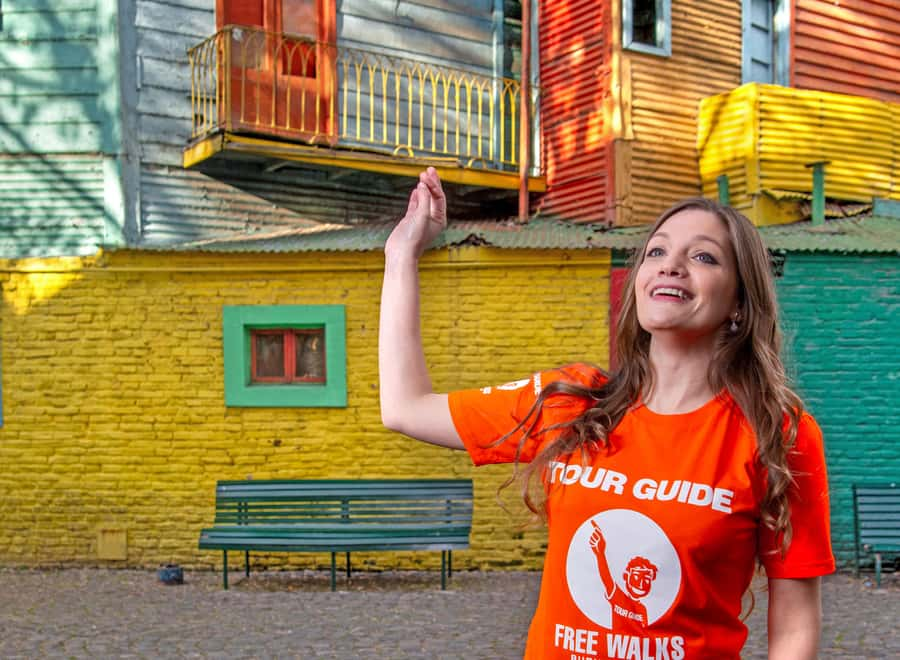
The meeting point is on the corner of Caminito and Magallanes Street, at Magallanes 808, near the entrance of the Cachafaz shop. Look for the guide wearing an orange shirt or holding an orange umbrella.
This is a practical meeting point because it places you right beside the heart of the colorful district. It also means you should allow extra time to arrive. Traffic in Buenos Aires can be heavy, and the guide waits for 10 minutes only. After that, the group moves one block away toward the riverside for the first stop.
I would arrive early rather than try to cut it close. The area can be visually crowded, and finding a small shop entrance on a busy corner is easier when you are not rushing. If you miss the group, the first stop is nearby, but it is far better to begin with the guide than to chase the walk after it has started.
The tour is offered in English with a live guide. It is also listed as wheelchair accessible. Since the walk takes place outdoors, you should bring protection from sun or rain. The tour continues if it rains, so a light waterproof layer is sensible.
Colorful conventillos and the human side of La Boca
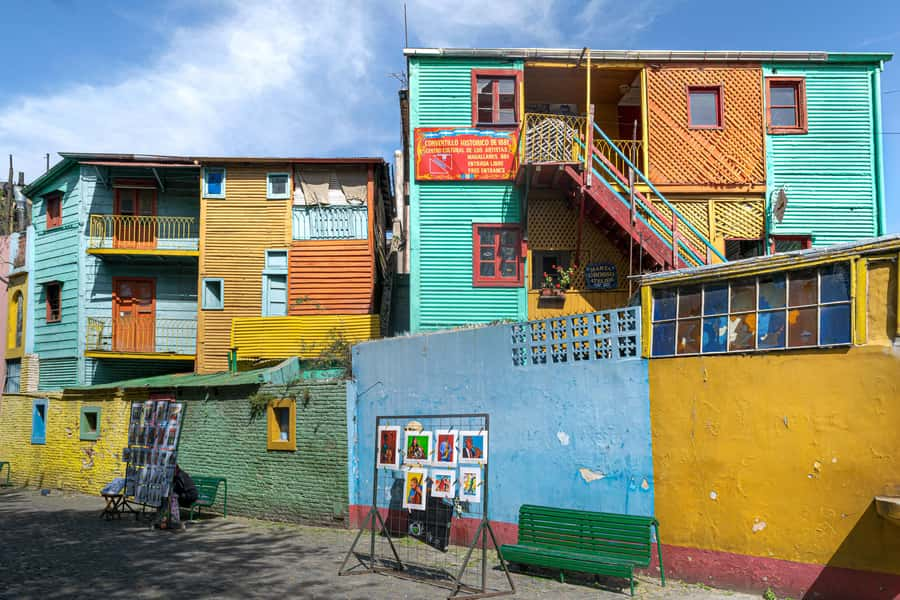
The conventillos are among the main reasons people come to La Boca. These colorful homes are not simply decorative backdrops. They reflect the crowded, shared way many working families lived in the district, and they help explain why La Boca developed such a distinct visual character.
Your guide points out the buildings and explains their place in local life. This is where the walk moves beyond quick photographs. Paint, balconies, worn surfaces, and narrow passages become clues to the neighborhood’s past and its changing role in Buenos Aires.
The guides bring different personalities to the walk. Santiago is repeatedly praised for his humor, theatrical delivery, and ability to keep a large group involved. One particularly useful detail is his attention to shade during hot hours. Victoria was also praised for managing time and keeping the group comfortable, while Maria was noted for pointing out small details that are easy to miss.
That kind of guiding matters in La Boca. The most memorable parts may not be the biggest buildings. They may be a detail in a wall, an explanation of how the district changed, or a story about the people who shaped it. A guide gives those details a place in the larger picture.
Puente Transbordador and the riverside setting
The route includes a guided stop at Puente Transbordador, the old transport structure near the river. It gives you a different view of La Boca, away from the tight concentration of painted façades around Caminito.
This stop helps explain the district’s working connection to the water. La Boca’s identity did not appear from nowhere. Its port setting, industry, and immigrant communities all helped shape the local culture. The bridge is a useful visual reminder that you are in a historic riverside district, not simply an open-air art street.
The riverside can also bring wind and cooler conditions. One person found the weather cold and windy during a visit, while other feedback praised guides for finding shade during hot periods. The lesson is simple: Buenos Aires weather can change the feel of the walk, so dress for the forecast rather than only for the photographs you expect to take.
The route is not described as a strenuous hike. One recent participant specifically noted that there was not a great deal of walking. Still, you will be on your feet for two hours, with outdoor stops and time spent listening. Comfortable shoes remain the right choice.
More Walking Tours in the world:
- Reykjavik Food Walk – Local Foodie Adventure in Iceland
★ 5.0 · 18,952 reviews - New Orleans Premier Ghost, Voodoo and Vampire Walking Tour
★ 4.5 · 12,856 reviews - Edinburgh: Harry Potter Magical Guided Walking Tour
★ 4.8 · 11,944 reviews - Edinburgh Castle: Guided Walking Tour with Entry Ticket
★ 4.7 · 11,699 reviews
Tango in the streets of La Boca
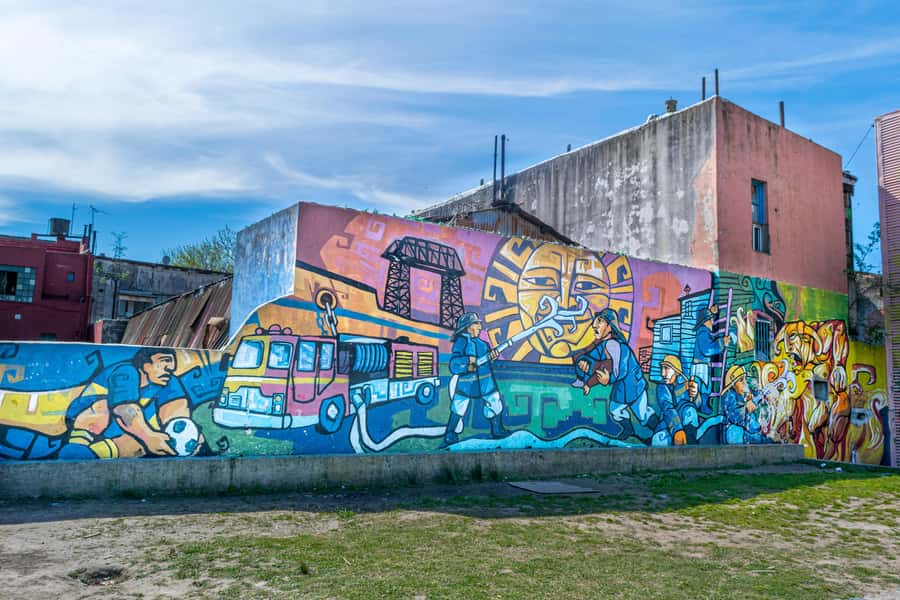
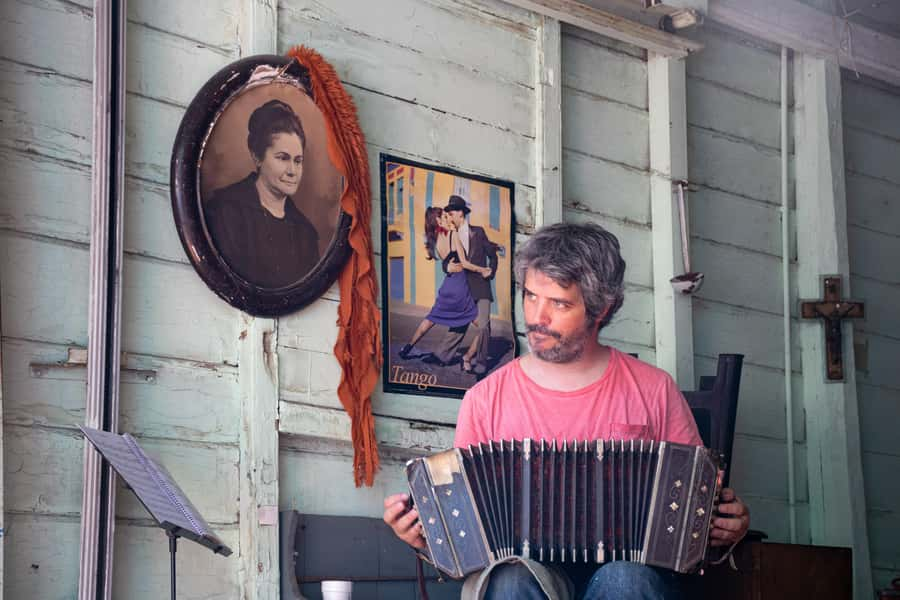
Tango is one of the tour’s central themes, and you may see dancers performing on the streets during the walk. These performances add a little theater to the route, but the guide also explains the cultural background of tango and its connection to Buenos Aires.
That context is important. A street performance can be fun to watch, yet without explanation it is easy to treat tango as just another tourist attraction. The tour links the dance to the neighborhood’s past and to the wider culture of Argentina.
You should keep your expectations sensible. The information promises that you will likely encounter live performances, not that a private dance show is arranged exclusively for your group. If dancers are performing, you get a lively visual moment. If the timing does not line up, the guide still covers tango’s origins and role in the district.
For me, this is one of the tour’s strongest combinations: something you can see immediately, paired with an explanation that gives it meaning. The same approach applies to the painted buildings and the street art.
Fileteado, the decorative art of Buenos Aires
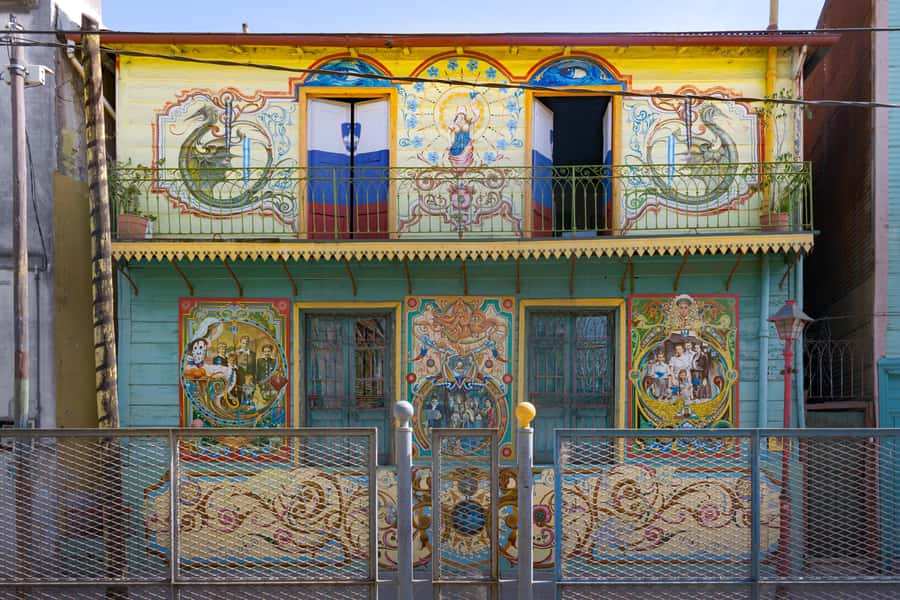
As you move through La Boca, watch for fileteado. This decorative art style is known for ornate lines, strong colors, lettering, and detailed designs. The guide introduces its origins and points out examples along the route.
You may have walked past this kind of artwork without knowing its name. That is exactly why the stop earns its place. Once you learn what to look for, the walls, signs, and painted details become more than background color.
Fileteado also fits the character of La Boca because it combines design with everyday public spaces. It appears in the same visual world as the conventillos and tango signs, but it has its own history and style. The guide’s role is to separate these elements so the neighborhood does not blur into one bright photograph.
If you enjoy street art, lettering, or urban design, pay close attention here. This part is easy to overlook if you are focused only on the famous Caminito façades.
La Bombonera and the Boca Juniors story
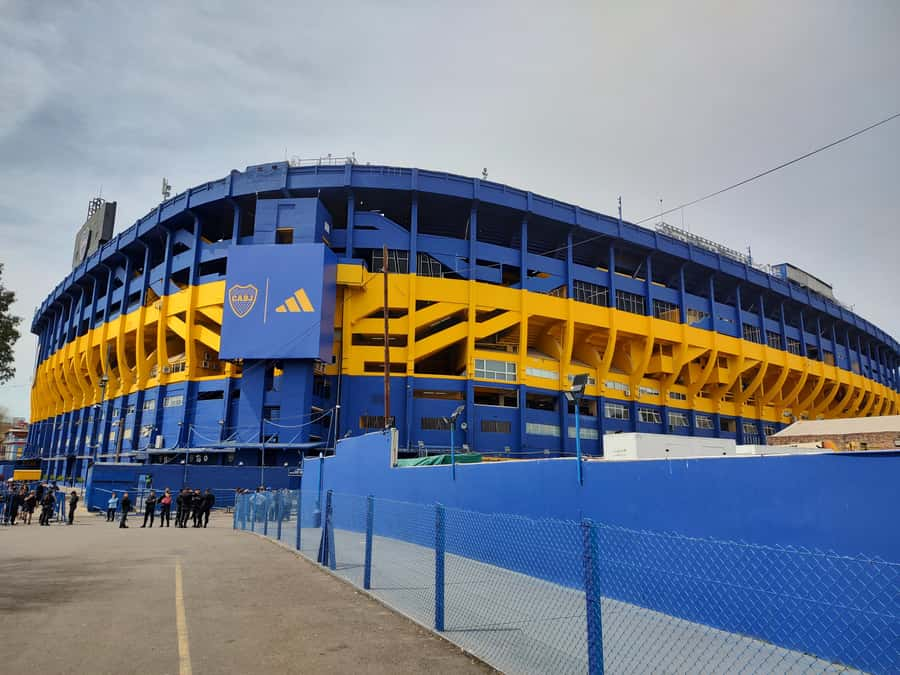
The tour ends outside La Bombonera, the stadium of Boca Juniors. The guide explains the history of the club and its place in Argentine football. You do not need to be a serious football fan to understand why this matters. Boca Juniors is woven into the identity of La Boca, and the club gives the neighborhood another powerful symbol alongside tango and painted homes.
The stadium stop rounds out the tour nicely. You begin with the district’s buildings and street life, then finish with an institution that continues to shape how people see La Boca today.
The tour includes an explanation outside the stadium, but admission is not included. Afterward, you can enter the stadium and Boca Juniors Museum by purchasing a separate ticket. That gives you flexibility. If football is central to your trip, you can continue with the museum. If not, you can finish after the guided walk without paying for an attraction you do not want.
I would plan the stadium visit separately rather than assume it forms part of the two-hour experience. The walking tour ends at Brandsen 801 to 831, close to La Bombonera, so you have a clear place to decide what to do next.
What the guides add to the experience

The strongest feature of this tour is the guide’s delivery. The feedback is unusually consistent on this point, with praise for clear English, humor, local insight, and strong storytelling.
Santiago is often described as animated and theatrical. One person compared his approach to watching an actor on stage, while another appreciated how he mixed history with information about food, art, football, and daily life in Argentina. He also gave useful recommendations for further exploring and dining.
Victoria is praised for being a strong storyteller and for handling the group carefully. Vito is described as lively, funny, and well informed about local culture. Maria is praised for adding context to details that would otherwise pass unnoticed. Juan is described as friendly, attentive, and able to explain the area clearly. Maru and Marianne also received warm comments for making the neighborhood easier to understand.
Guides can vary, of course, and no particular person is guaranteed. But the range of names and the repeated praise point to a well-established guiding team rather than an experience that depends on one individual alone.
The best guides do not simply recite dates. They help you connect the parts: port, migration, housing, tango, art, football, and modern tourism. That is the real reason to take the walk instead of visiting La Boca independently.
Price, pace, and practical value at $13
At $13 per person, this is an inexpensive way to add structure to a visit to La Boca. You are paying for two hours with an English-speaking guide, not for meals, museum entry, or transport. The value comes from the explanation and the route.
If you only want photographs of Caminito, you can see some of the area without booking anything. But the tour earns its price by explaining why the neighborhood looks and feels the way it does. It also helps you connect sights that might otherwise seem unrelated.
The pace is moderate. The walk is not presented as a demanding trek, and one person specifically found that there was not much walking. You should still expect to stand outdoors, move between stops, and keep up with a group.
The price also makes this a low-risk choice for a first afternoon in Buenos Aires. Free cancellation is available up to 24 hours before the start, and you can reserve now and pay later. Those terms are useful if your plans are still shifting, though you should still check the available start time before booking.
Who should book this La Boca walk?
I would recommend it to first-time visitors who want a clear introduction to one of Buenos Aires’ most distinctive neighborhoods. It is especially useful if you are interested in tango, urban art, local history, or football and want all four subjects tied together.
Families may appreciate the short duration and the visual variety. You are not spending half a day in a museum, and the route offers plenty to look at. Football fans should consider adding the Boca Juniors Museum afterward, while art lovers should leave time to keep exploring the streets once the guide finishes.
This is also a good choice for anyone who worries about missing the meaning behind the scenery. La Boca is easy to photograph but harder to interpret. A guide gives you the background needed to see past the bright paint.
You may want to skip it if you strongly prefer independent wandering, dislike group walks, or have very little tolerance for tourist-oriented streets. The tour cannot remove the crowds or guarantee a private tango performance. It can, however, give you a more informed and organized visit.
My booking advice
I would book this tour if La Boca is on your Buenos Aires plan and you want more than a quick photo stop. The price is modest, the route covers the neighborhood’s main themes, and the guide quality appears to be the main strength.
Arrive early at Magallanes 808, wear comfortable shoes, carry rain protection, and do not assume the stadium ticket is included. If you have extra time, stay after the walk for La Bombonera and the Boca Juniors Museum.
For a short, affordable introduction with plenty of local context, this is a smart pick. Just remember that La Boca is both a living neighborhood and a major sightseeing area. The tour is most useful when you accept both sides of it.
FAQ
How long is the La Boca walking tour?
The guided walk lasts two hours.
Where does the tour meet?
Meet your guide on the corner of Caminito and Magallanes Street, at Magallanes 808, C1166ACA CABA, near the entrance of the Cachafaz shop. Look for an orange shirt or orange umbrella.
What happens if I arrive late?
Traffic can be heavy, and the guide waits for 10 minutes at the meeting point. After that, the guide proceeds to the first stop, which is one block away near the riverside.
Is the tour offered in English?
Yes. The experience includes a live English-speaking guide.
Is entry to La Bombonera included?
No. The tour finishes outside La Bombonera. You can enter the stadium and Boca Juniors Museum afterward with a separate admission ticket.
Does the tour operate in rain?
Yes. The tour still takes place if it rains, so bring suitable clothing.
New routes in the world
- Baltimore Walking Foodie Tour in Fells Point★ 5.0 · 182 reviews
- Baku Oil Heritage & Old Town Walking Tour★ 5.0 · 232 reviews
- Baku Walking Tour (Old City)★ 5.0 · 127 reviews
- The Madam’s Curse Walking Ghost Tour★ 4.5 · 103 reviews
- Austin Small Group Morning Walk★ 5.0 · 412 reviews
- Austin Haunted Pub Crawl Walking Tour★ 4.5 · 232 reviews
- Austin Downtown Private Walking Food Tour With Secret Food Tours★ 5.0 · 71 reviews
- Austin Murder Walk★ 5.0 · 310 reviews
Guided, compared.
Magical London: Harry Potter Guided Walking Tour
Read our review →
History and Hauntings of Salem Guided Walking Tour
Read our review →
Amsterdam Anne Frank: Small-Group Walking Tour & Local Guide
Read our review →
Edinburgh Castle: Guided Walking Tour with Entry Ticket
Read our review →
Oxford University Walking Tour With University Alumni Guide
Read our review →