
Review · SOUTH AFRICA
Johannesburg: City Centre Walking Tour
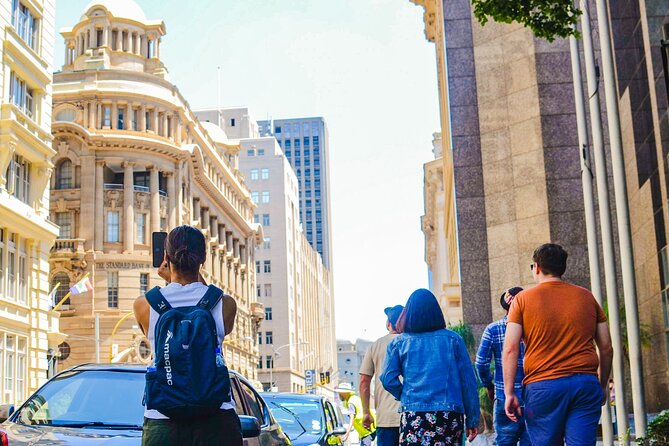
Johannesburg’s city center makes far more sense on foot. This tour follows the story from the first gold diggings and grand office buildings to migrant labor, apartheid politics, street art, and today’s hard-edged urban life. You finish near Braamfontein, with the city still moving around you.
I like the way the route connects history with present-day Johannesburg, rather than showing you polished buildings in isolation. I also like the guides’ personal approach. Refiloe is often praised for his humor and broad knowledge, while Thabo, Mulalo, Mathapelo, Tebogo, and others have each led strong tours.
The main consideration is the pace and condition of the city center. You will walk for about three hours, sometimes on busy streets, and some stops can be closed. The Workers Museum has not always been open, and the Carlton Centre’s famous viewing platform may no longer be available, so this is best booked for the stories and street experience, not a guaranteed set of indoor visits.
Key points to know before you book

- Gold mining begins at Gandhi Square: The walk explains how Johannesburg grew from gold diggings into South Africa’s financial center.
- Mandela and Tambo’s former law office is on the route: Chancellor House adds a direct political link to the city streets.
- Newtown brings labor and culture together: The Workers Museum, Mary Fitzgerald Square, and Market Theatre show different sides of urban Johannesburg.
- The guide matters here: Refiloe, Thabo, Mulalo, Mathapelo, Tebogo, and other local guides are praised for clear explanations, humor, and care with the route.
- Nelson Mandela Bridge is the final major view: It gives you a strong photo stop before the walk ends near Braamfontein.
- Comfortable shoes are essential: The tour lasts three hours and can run longer if your guide adds stops or your group asks questions.
Why this Johannesburg walking tour is worth considering
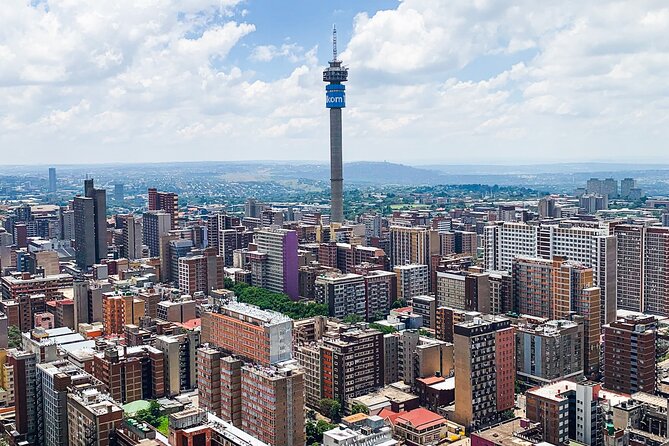
Johannesburg is often reduced to a few warnings or to the suburban shopping and hotel districts of Sandton. This walk gives you a different way to understand the city. You see the Central Business District as a working place, a political stage, a former mining town, and a neighborhood facing serious problems.
That matters because Johannesburg’s story is not tidy. Gold created enormous wealth, but the mining economy also depended on migrant labor and strict racial control. The tour makes those links visible as you move from court buildings and corporate offices to museums, public squares, and streets shaped by present-day pressures.
I would choose this experience early in a Johannesburg stay if you want context before visiting other parts of the city. It gives you names, dates, buildings, and local viewpoints that help the rest of your time in Gauteng make more sense.
The price is $40 per person for three hours. That is fair value if you want a live guide to explain the city rather than simply point out buildings. Entrance fees and bottled water are included, and you are paying for local interpretation of places that can be difficult to understand on your own.
The value is strongest when the group is small. Several bookings have turned into private walks, giving the guide time to answer questions and adjust the pace. A private-feeling experience is not guaranteed, but the format allows for it when numbers are low.
More Walking Tours in South Africa:
- Soweto: Walking Tour with a Local Guide and Lunch
★ 4.9 · 648 reviews - Plettenberg Bay: Bungee Jumping with Zipline and Sky Walk
★ 5.0 · 506 reviews - Cape Town: Nathi Langa Township Walking Tour
★ 4.9 · 493 reviews
Gandhi Square and the beginning of the gold story
Meet your guide outside Nando’s at Gandhi Square, near the Metropolitan Building. Be precise here, since Gandhi Square has several entrances and busy pedestrian movement. The meeting point puts you right in the old city center rather than at a hotel or a tourist transport stop.
From there, your guide introduces Johannesburg’s gold mining beginnings. The city grew rapidly after gold was found, attracting workers, investors, officials, and businesses. Main Street and the surrounding blocks still show pieces of that early commercial ambition in their older facades and formal public buildings.
The first part is useful because it gives you a timeline. You are not simply looking at architecture and guessing what it means. Your guide explains how mining shaped the city, why the center became so important, and how the gold economy affected the people who lived and worked here.
Carlton Centre and the changing skyline
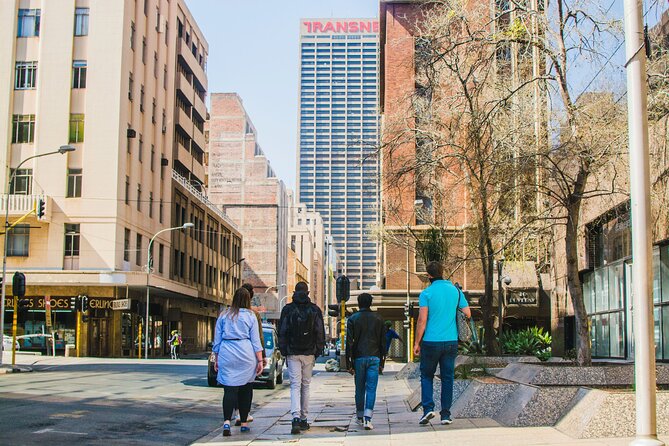
The Carlton Centre is scheduled as a guided stop of about 20 minutes. It is one of the major landmarks of Johannesburg’s downtown skyline, and the building helps you picture the scale of the city’s commercial rise.
There is one important qualification. Access to the former top viewing area has changed, and it may not be open to visitors. A past walk substituted another skyline viewpoint when the Carlton Centre’s 360-degree view was unavailable.
I would treat this stop as an architectural and historical visit, not as a promise of a panoramic platform. Ask your guide what is open on the day. The building remains useful for understanding Johannesburg’s height, ambition, and changing fortunes even if you cannot go to the top.
Courts, post offices, and the public face of power
The route continues through several buildings that show how government and business operate in the city. The High Court of South Africa, Gauteng Local Division, is a photo and explanation stop lasting about 20 minutes.
The High Court is more than a grand building. It gives your guide a chance to discuss law, government, and the country’s political past. Johannesburg’s public buildings often carry several layers at once: colonial administration, apartheid-era institutions, democratic government, and the practical pressures of a modern city.
You also stop at the Marshalltown Post Office for about 10 minutes. It is a short visit, but these smaller stops help break up the larger story. The route is not only about famous names. It also shows the everyday infrastructure that allowed the old city to function.
Same streets, a different guide:
- Cape Town: Art, Culture & History Walking Tour
★ 4.9 · 392 reviews - Cape Town: Street Art Walking Tour in Woodstock
★ 4.8 · 293 reviews - Stellenbosch: Guided Historical Walking Tour
★ 4.7 · 283 reviews - Cape Town: Langa Township Walking Tour
★ 4.8 · 272 reviews
Marshalltown and Ferreirasdorp on foot
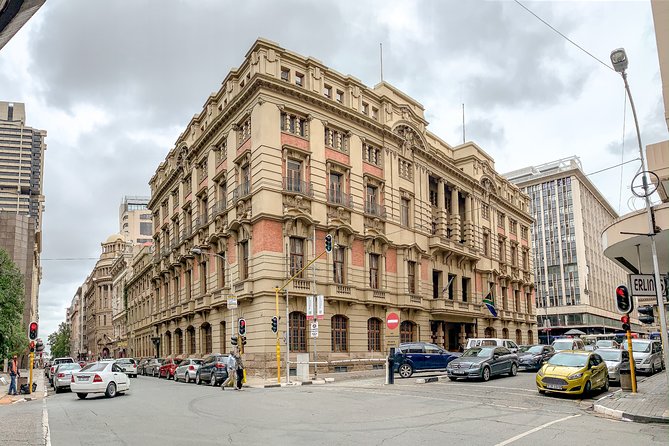
The walk through Marshalltown takes around 30 minutes, including sightseeing and explanations. This is where you get a stronger sense of the streets themselves, with the guide pointing out architecture, commercial blocks, and signs of how the center has changed.
The route then reaches Ferreirasdorp, often called the cradle of Johannesburg. The first gold diggings began here, and the earliest diggers settled in the area. That makes this one of the most important places on the tour, even if it does not look as polished as the grander parts of downtown.
I like this part because it corrects a common mistake. Johannesburg can feel like a modern city without a clear beginning, but Ferreirasdorp gives you a physical starting point. You can connect the gold rush to the streets, rather than treating the city’s origin as an abstract date in a history book.
Beyers Naude Square and the working city
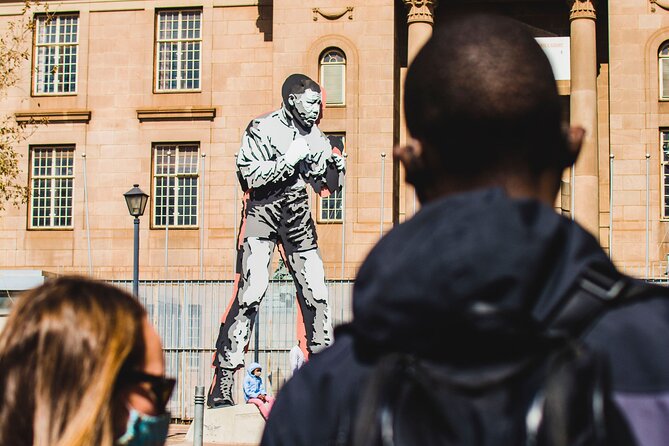
Beyers Naude Square is another photo and sightseeing stop, with around 20 minutes for the guide to explain the surroundings. The square helps shift the focus from the city’s origin to the people and institutions that shaped its public life.
Your guide also points out the Anglo American corporate office. This is a brief stop of about 10 minutes, but it ties the streets back to mining wealth and large business. The contrast is useful: Johannesburg’s impressive corporate buildings grew from the same gold economy that produced difficult labor conditions and deep inequality.
The Johannesburg Central Magistrate’s Court follows, with about 20 minutes for a visit and explanation. As with the High Court, this stop gives the walk a civic dimension. You see where law is applied, while your guide connects the building to wider questions about justice, government, and the city’s current condition.
Chancellor House and the Mandela connection
The tour’s political heart is Chancellor House, where Nelson Mandela and Oliver Tambo established their first black-owned law firm. This is a rare kind of historical stop because the building links major national figures to a specific Johannesburg address.
Your guide can place Mandela and Tambo within the city they knew, rather than presenting them only as distant political symbols. The law office also helps explain how legal work, resistance, and the struggle against apartheid intersected.
The visit is especially valuable if you already know the broad outline of South African history but want a more local sense of place. You are standing where political work happened, amid the same urban streets that continue to change today.
Newtown, migrant labor, and the Workers Museum
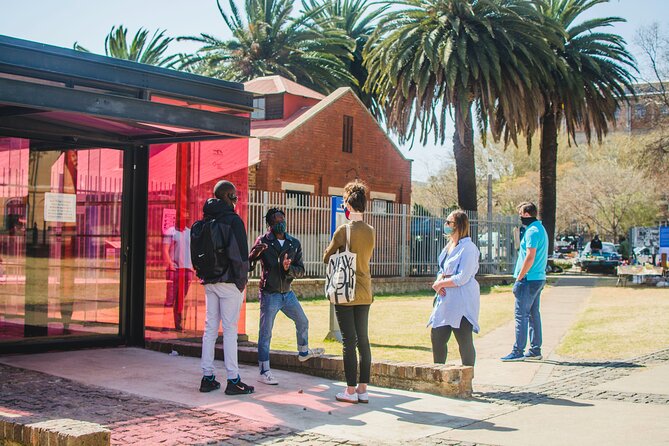
Newtown brings a different mood. The neighborhood is known for creative spaces, public art, and cultural venues, but the tour also uses it to explain Johannesburg’s migrant labor system.
The Workers Museum is scheduled as a 15-minute stop. Its focus is the lives of workers who came to Johannesburg, often from rural areas and neighboring countries, to labor in the mines and other industries. This subject is essential to understanding the city. Gold did not grow Johannesburg by itself. People did the work, often under restrictive and painful conditions.
The museum’s opening hours are a practical concern. It has been closed on some Monday visits, and access can change. If the doors are shut, your guide can still explain the living and working conditions connected to the site, but you will lose the chance to see the displays.
I would not cancel the tour solely because of the museum. The surrounding explanation remains important, but you should know that a closed museum can make this section feel shorter than expected.
Mary Fitzgerald Square and Market Theatre
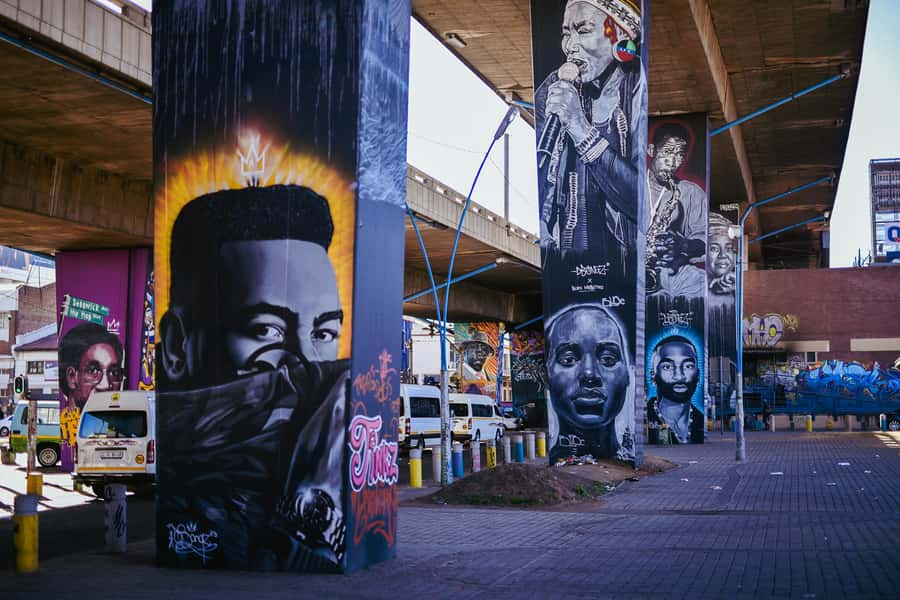
Mary Fitzgerald Square is a 15-minute stop within Newtown. It offers space to discuss workers, public gatherings, and the changing role of the neighborhood. The square also adds breathing room after the tighter streets of the central business district.
The Market Theatre comes next, usually as a short five-minute visit or pass-by. Its importance is cultural and political. The theater has long been associated with performance, debate, and creative work during difficult periods in South African history.
Around this part of the route, you may see street art, galleries, and other cultural spaces. The tour does not treat art as decoration only. It presents Newtown as a place where Johannesburg tells stories about itself, including stories that official buildings once left out.
Nelson Mandela Bridge and the walk into Braamfontein
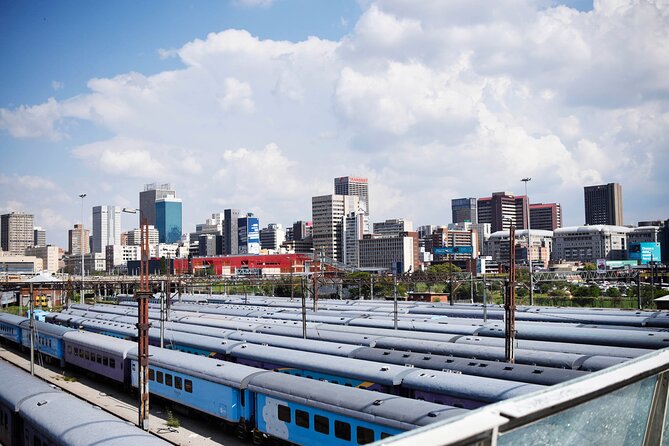
Nelson Mandela Bridge is one of the clearest photo stops on the route. The bridge gives you views along the city and links different Johannesburg neighborhoods in a single piece of infrastructure.
The stop lasts about 10 minutes, but the walk toward it is part of the appeal. You see the city open up after the denser sequence of courts, offices, and historic buildings. Your guide can also help you choose a good angle for photographs.
The tour finishes near Braamfontein at Sha’p Braai, a shisanyama restaurant. Lunch is not included, but ending here gives you the option of buying food after the walk. Braamfontein is known for its youthful energy, creative culture, and changing urban identity, so the final location fits the tour’s move from old mining city to present-day Johannesburg.
The guides make a real difference
This tour depends heavily on the guide. Refiloe is especially praised for combining clear historical explanations with humor and a relaxed manner. Several people found that he extended a three-hour walk to four hours when time and group size allowed.
Thabo is also described as entertaining and passionate about showing the city. Mulalo Mphuma has led private-feeling walks, while Mathapelo has been praised for warmth, care, and strong explanations of both national history and modern South African life. Clement and Tebogo have also guided walks that left people feeling looked after and comfortable.
Names can change with the schedule, so you should not book solely to guarantee one person. The consistent strength is the local guide’s ability to explain both the official story and the street-level reality.
Safety is a common concern in Johannesburg’s CBD. The guides manage the route, explain where to go, and help you move through the area with purpose. Several people felt safe during the walk, but you should still follow your guide’s instructions and stay with the group.
Walking conditions, access, and what to bring
Wear comfortable shoes. The walk lasts three hours, includes long sections between stops, and can run longer if you have a private group or ask many questions. Bottled water is included, but you should still dress for the weather and bring any personal essentials you need.
The tour is described as suitable for all ages, but the detailed conditions say it is not suitable for pregnant women or wheelchair users. The booking information also uses wheelchair-accessible wording, so there is a clear inconsistency. If you use a wheelchair, have limited mobility, or are pregnant, contact the provider before paying and ask for the current route and access details.
Hotel pickup and drop-off are not included. You need to reach Gandhi Square yourself and arrange your own way back from Braamfontein. Lunch is also separate, although the finish at Sha’p Braai gives you a convenient place to eat.
English is the stated tour language. Free cancellation is available up to 24 hours before the start, and reserve-now, pay-later booking can help if your Johannesburg plans are still shifting.
Who should book this walk
I would recommend it to you if you want to understand Johannesburg beyond shopping malls, hotels, and the suburban business districts. It suits history-minded visitors, architecture fans, first-time visitors seeking orientation, and anyone curious about how politics and daily city life meet.
It is also a good choice if you are nervous about visiting the CBD alone. A local guide gives the route structure and context. You will still need to be alert, but you will not be trying to work out the city’s streets and history at the same time.
I would be more cautious if you dislike uneven urban walks, want a polished sightseeing circuit, or need guaranteed access to every indoor stop. The Workers Museum and Carlton Centre viewing access can vary, and the center itself may feel confronting rather than easygoing.
Should you book the Johannesburg City Centre Walking Tour?
Book it if you want the Johannesburg that grew from gold, law, labor, protest, business, and creative life. The $40 price makes sense for a three-hour guided walk with entrance fees and water, especially if your group is small and your guide can answer questions.
Go with realistic expectations. This is not a glossy city tour, and it cannot solve Johannesburg’s safety or access questions in a few hours. But with a strong guide such as Refiloe, Thabo, Mulalo, or Mathapelo, you get something far more useful: a grounded explanation of why the city center looks and feels the way it does.
FAQ
Where does the Johannesburg City Centre Walking Tour begin?
Meet your guide outside Nando’s Restaurant at Gandhi Square, near the Metropolitan Building area.
Where does the tour finish?
The walk ends at Sha’p Braai, a shisanyama restaurant in the Braamfontein area.
How long does the walking tour last?
The scheduled duration is three hours. Some walks have lasted longer, especially when the group was small or the guide had time to add explanations and stops.
What language is the tour conducted in?
The tour is conducted in English.
Is lunch included?
No. Lunch is not included, although the tour finishes at Sha’p Braai, where you may be able to buy food.
Are entrance fees included?
Yes. Entrance fees, bottled water, the guide, and the walking tour are included.
Is the Workers Museum always open during the tour?
No. The museum has been closed during some visits, including Monday visits. The guide can still explain the migrant labor history if the museum is not open.
Is the tour suitable for wheelchair users?
The information is inconsistent. It describes the activity as wheelchair accessible but also says it is not suitable for wheelchair users. Contact One Day Africa before booking to confirm the current route and access conditions.
New routes in South Africa
- Stellenbosch: Guided Historical Walking Tour★ 4.7 · 283 reviews
- Cape Town: Street Art Walking Tour in Woodstock★ 4.8 · 293 reviews
- Durban: Local Markets and Culture Guided Walking Tour★ 4.9 · 89 reviews
- Durban: City Sightseeing and Walking Tour★ 4.6 · 98 reviews
- Cape Town: Private Walking Tour with a Local★ 4.6 · 243 reviews
- Cape Town Walking Tour: Bo-Kaap & City Highlights★ 4.8 · 161 reviews
- Cape Town: Bo-Kapp Walking Tour and Malay Cooking Class★ 4.7 · 105 reviews
- Cape Town: Langa Township Walking Tour★ 4.8 · 272 reviews
South Africa Walking Tours, compared.

Soweto: Walking Tour with a Local Guide and Lunch
Read our review →
Plettenberg Bay: Bungee Jumping with Zipline and Sky Walk
Read our review →
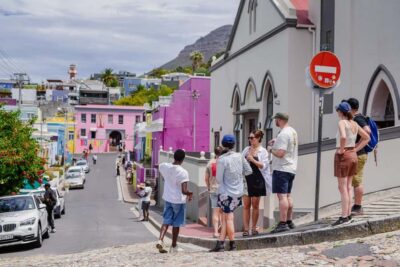
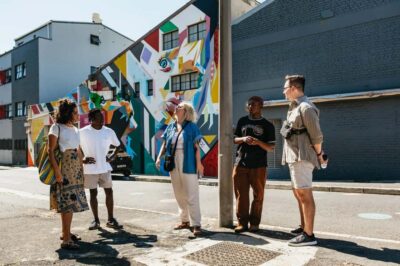
Cape Town: Street Art Walking Tour in Woodstock
Read our review →

Cape Town Walking Tour: Bo-Kaap & City Highlights
Read our review →Browse the lists this tour appears in