
Review · ISTANBUL
Istanbul City Walk: Blue Mosque, Hagia Sophia & Basilica
Istanbul’s greatest monuments sit close together, but they make far more sense when someone connects the Roman, Byzantine, and Ottoman chapters for you. This three-hour Sultanahmet walking tour links Hagia Sophia, the Blue Mosque, the Hippodrome, and the Basilica Cistern without making you sort out ticket lines and historical details on your own.
I like the small-group format, which makes it easier to hear the guide and ask questions. I also like the Cistern option, especially for its wooden walkways, shadowy columns, and upside-down Medusa heads. The main drawback is that three hours goes quickly, and the tour involves steady walking, standing, stairs, and crowded spaces.
Key points at a glance
- Four major sights in one compact walk: Cover Hagia Sophia, Sultan Ahmed Mosque, the Basilica Cistern, and the Byzantine Hippodrome from a meeting point near the German Fountain.
- Priority entry where it matters most: Pre-reserved admission helps at Hagia Sophia, and at the Basilica Cistern when that option is selected, but it does not guarantee instant entry through security or during mosque prayer times.
- A guide who adds context: Expect explanations of Byzantine engineering, Ottoman customs, İznik tiles, mosaics, obelisks, and the reason Ottoman sultans were buried in the Hagia Sophia courtyard.
- A useful first-day orientation: The tour ends in Sultanahmet Square, leaving you well placed to continue exploring the Old City independently.
- Plan for mosque etiquette: Bring a headscarf, wear modest clothing, and be ready for a possible wait outside the Blue Mosque during prayer.
- Good value at $32: The price is especially fair if you want admission help and historical explanation rather than simply walking past the buildings for photographs.
Why this Sultanahmet walk works well
Sultanahmet is compact on a map, but it can feel confusing in person. Tourist groups gather around the German Fountain, mosque entrances have changing rules, and ticket queues can stretch at busy times. A local guide gives you a clear starting point and keeps the route moving.
The tour is priced at $32 per person, which is reasonable for three hours, a licensed guide, and priority admission to Hagia Sophia. The Basilica Cistern is included only if you select that option, so check the exact package before paying. This detail matters because the tour title includes the Cistern, while the booking choices may treat it as an optional addition.
The guide assignment varies. Past groups have been led by Emre, John, Hussein, Hassan, Fatih, Deniz, Elif, Samed, and others, with English, German, Russian, French, Italian, Arabic, Portuguese, and Spanish listed as available languages. Your guide may not be one of these people, but the strongest part of the experience is clear explanation and group control, not a particular personality.
The company asks you to meet a guide holding a Tourmania sign at the German Fountain, also called Alman Çeşmesi. Arrive on time. The guide cannot wait more than five minutes for late arrivals, and the square can be crowded enough to make a hurried search unpleasant.
More Walking Tours in Turkey:
- Istanbul: Blue Mosque, Hagia Sophia, & Old Town Walking Tour
★ 4.8 · 2,372 reviews - Istanbul: Fener Balat Half-day Guided Walking Tour
★ 4.9 · 1,711 reviews - Istanbul Highlights Small-Group Walking Guided Tour
★ 4.5 · 1,346 reviews
German Fountain and the Byzantine Hippodrome
The German Fountain is a practical meeting point because it sits in the middle of Sultanahmet, close to the Blue Mosque, Hagia Sophia, and Hippodrome. The tour often begins with a short explanation of the square before moving toward the monuments.
The nearby Hippodrome gives you the first useful piece of historical scale. This was the center of public life in Byzantine Constantinople, used for races, ceremonies, and political gatherings. You will see ancient obelisks and hear why this open space mattered to daily life in the city.
I like beginning here because it gives the rest of the walk a setting. The monuments are not isolated buildings. They grew around a public center that served different rulers and faiths over many centuries.
The Hippodrome is an outdoor stop, so it is also a good chance to take photographs and listen without worrying about mosque clothing rules. On busy days, surrounding noise can make the guide hard to hear. Some groups have found an audio system helpful, while others have noted that microphones occasionally cut out or street noise gets in the way.
Sultan Ahmed Mosque and its İznik tiles
The Blue Mosque, formally Sultan Ahmed Mosque, is one of Istanbul’s most recognizable buildings. Its cascading domes and six minarets create a powerful view from the square, but the interior is the reason to go inside.
Your guide explains the mosque’s place in Ottoman Istanbul and points out the Iznik tiles, which were added over time. These tiles are not just decoration. They help you see how the building changed as later Ottoman taste, religious practice, and royal patronage shaped the interior.
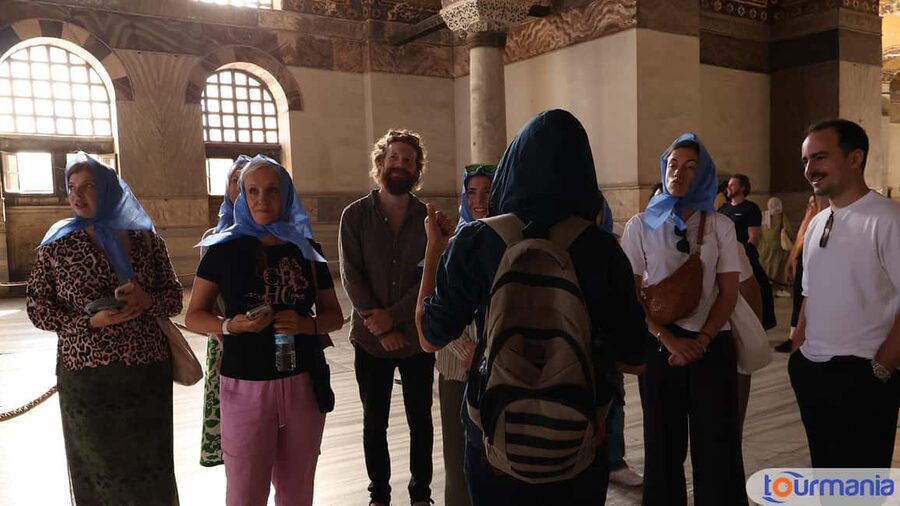
Modest clothing is required. Shorts and short skirts are not suitable, and women need a headscarf. Bring your own if possible, as it is one less thing to manage at the entrance. Shoes are removed before entering, so comfortable footwear that is easy to take off helps.
The Blue Mosque remains an active place of worship. You may need to wait outside during prayer, and no guide can remove that pause. This is one reason the phrase skip the line needs a little care. Priority arrangements can save time at ticket points, but they do not override worship schedules, security checks, or visitor controls.
Flash photography is not allowed inside the Blue Mosque or Hagia Sophia. Large bags, backpacks, and large umbrellas are also not permitted inside those buildings. Travel light for this outing.
Hagia Sophia, where church and mosque meet
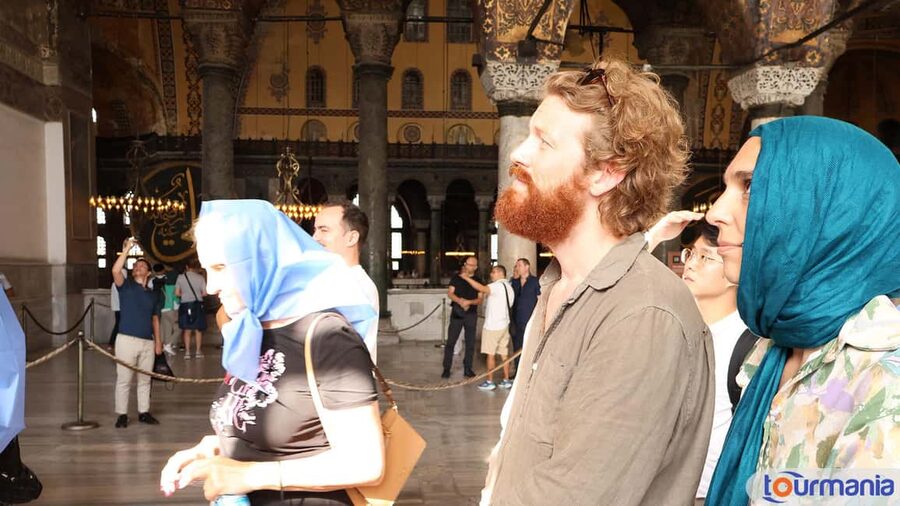
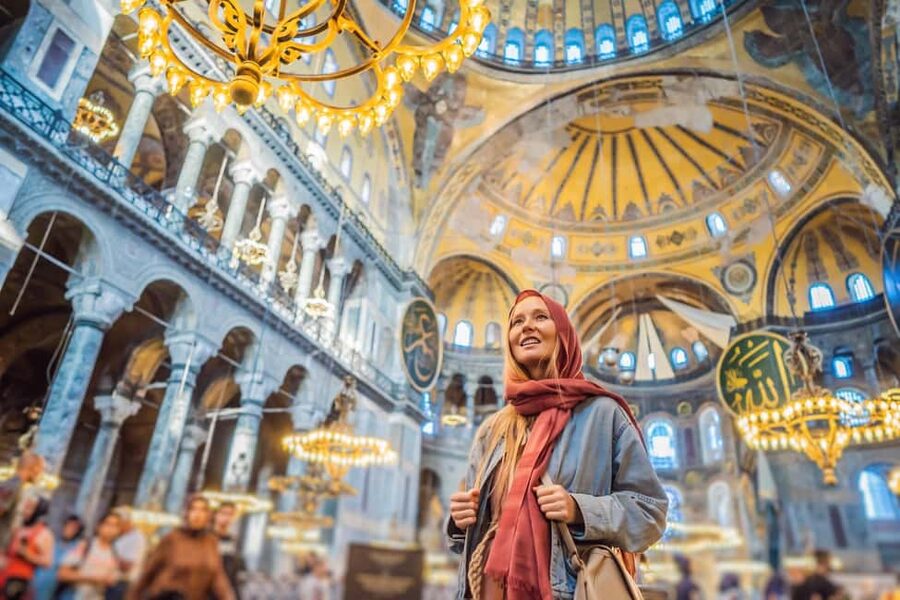
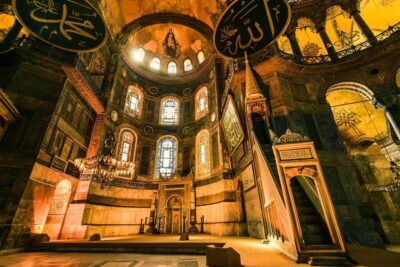
Hagia Sophia is the emotional center of the tour. It began as a Byzantine Christian church and later became a mosque after the Ottoman conquest of Constantinople. Its current identity as a mosque means you should approach it as an active religious place as well as a historic monument.
Inside, the guide helps you notice the building’s layered character: a huge dome, Roman columns, Christian mosaics, painted details, and Ottoman additions. The Virgin Mary mosaic is one of the details specifically highlighted on the route. You also learn how İznik tiles entered the building over time and why Ottoman sultans were buried in the courtyard.
That explanation is valuable because Hagia Sophia can otherwise become a quick sequence of photographs. The building contains different eras at once, and the guide’s job is to show how those layers coexist rather than treating the site as a single-period museum.
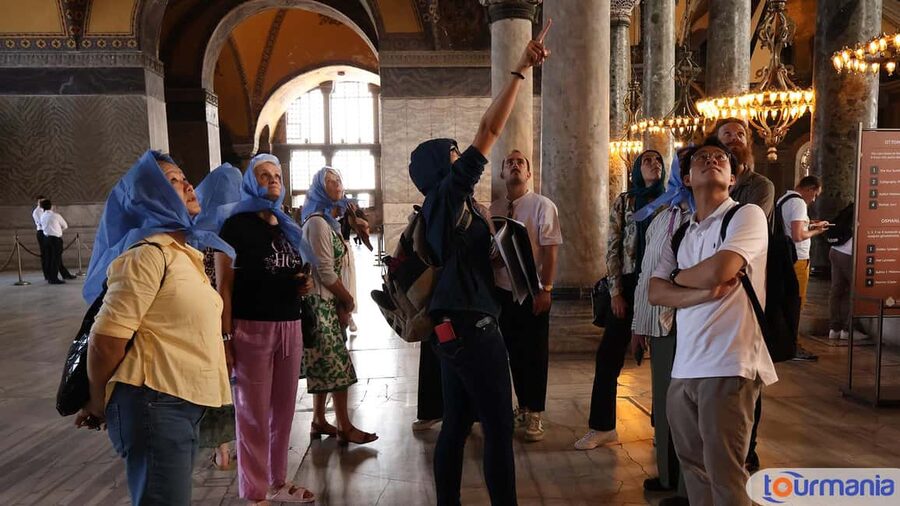
Women need a headscarf when visiting Hagia Sophia Mosque, and everyone should dress modestly. Expect rules to change according to prayer and security needs. Pre-reserved tickets are included for the standard small-group option, which should help you avoid the longest ticket-office queue. It does not promise that every line outside the building will disappear.
The site can be loud and crowded. Several groups may be speaking nearby, so stay close to the guide. One practical advantage of a small group is that you have a better chance of hearing the explanation and staying together. If your tour uses audio equipment, keep the receiver close and tell the guide if the sound drops.
Same streets, a different guide:
- Istanbul: European and Asian Side Guided Foodie Walking Tour
★ 4.9 · 1,038 reviews - Istanbul: Colorful Fener & Balat Walking Tour w/Expert Guide
★ 4.7 · 234 reviews - Istanbul: Asian Side Walking Tour with Ferry Ride
★ 4.4 · 224 reviews - Istanbul Highlights Small-Group Walking Guided Tour
★ 4.4 · 179 reviews
The Basilica Cistern and its Medusa heads
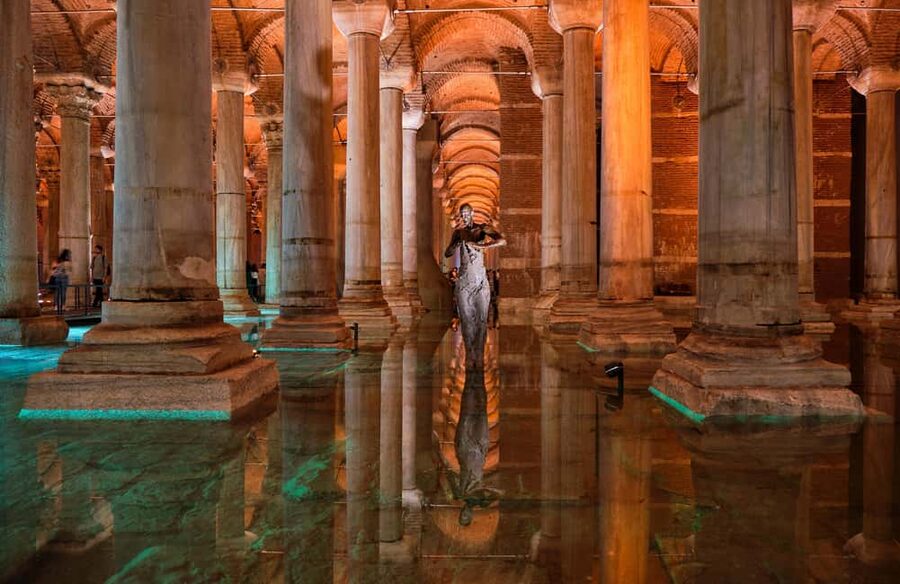
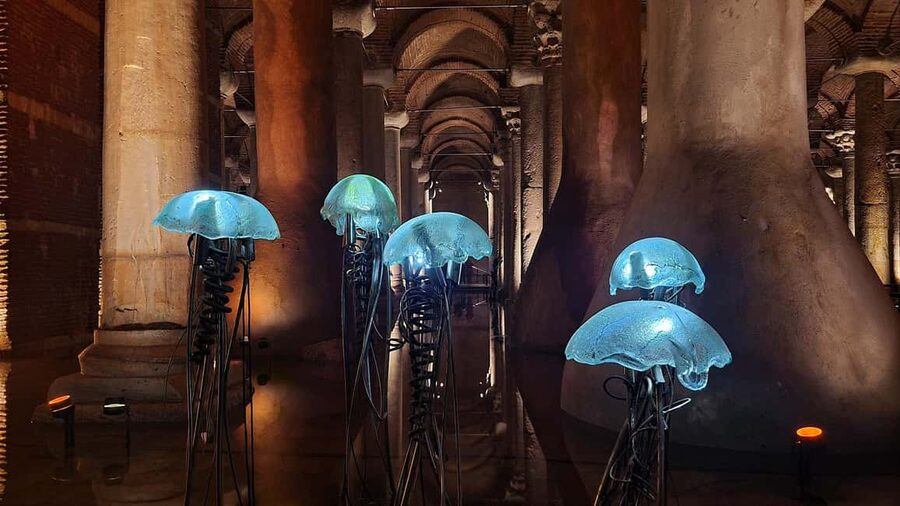
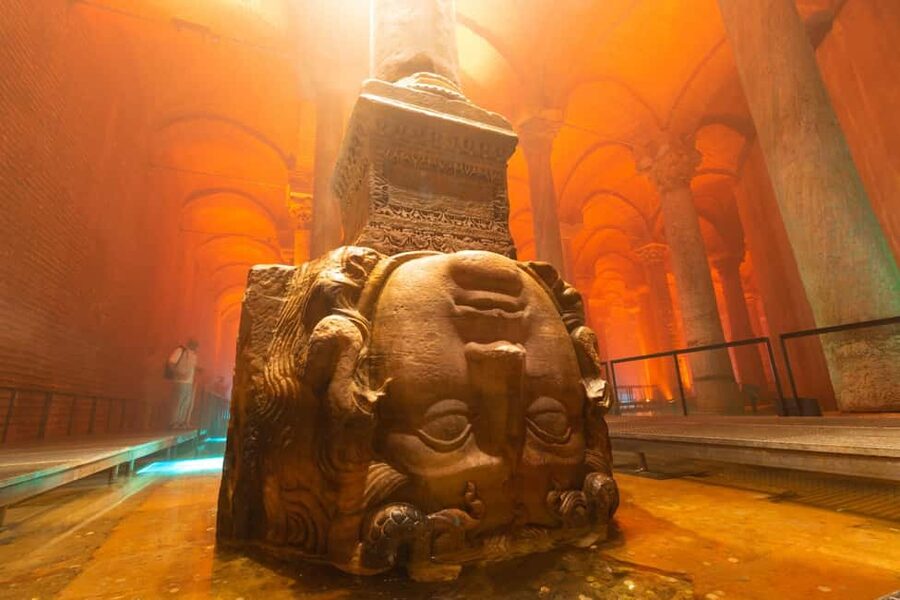
The Basilica Cistern is the most atmospheric stop. Descend underground into the former Byzantine water-storage system, where columns rise from the dark water and wooden walkways carry you through the chamber.
The wooden paths make the visit easy to follow and give you changing views of the columns. The famous upside-down and sideways Medusa heads are the detail most people remember, but the larger point is the engineering. The cistern shows how Constantinople stored and managed water for a major imperial city.
This stop also changes the rhythm of the tour. After open squares and large mosques, the Cistern is enclosed, dim, and cool in feel. If you dislike confined spaces, note the warning that the tour is not suitable for people with claustrophobia.
The Basilica Cistern ticket is included only when that option is selected. This is the single most important booking detail to verify. A few people have arrived expecting the Cistern because it appears in the tour name, only to find that their chosen package focused on the mosques. Check your confirmation and ask at the meeting point if you are unsure.
The usual route may place the Cistern before Hagia Sophia, after the mosques, or at another point depending on entry conditions. The key promise is the guided visit to the major sites, not a fixed order that never changes.
What three hours feels like on foot
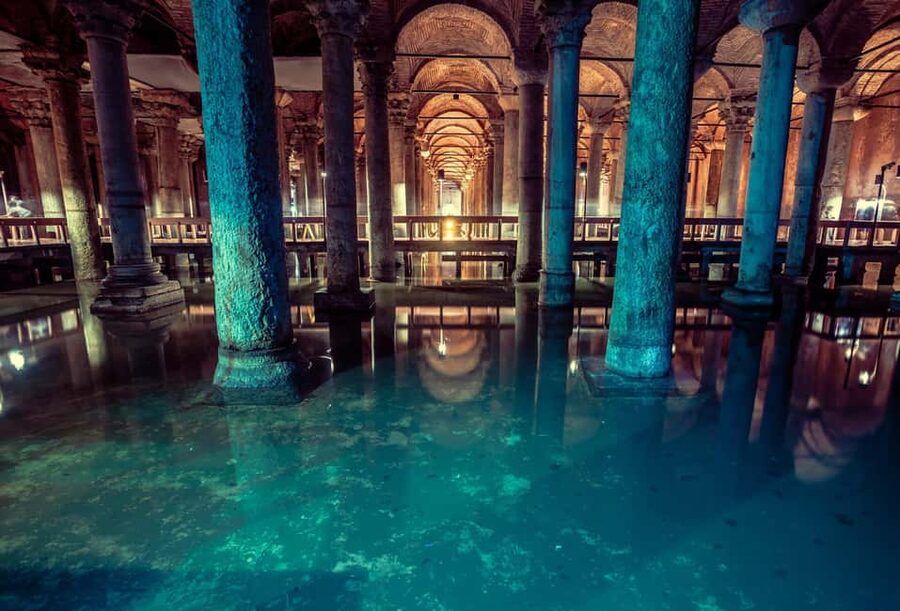
All four locations are close, so there is no sightseeing bus or hotel transfer. That is a strength: you see Sultanahmet as a connected historic district rather than jumping between separate attractions. It also means you should expect a moderate amount of walking, standing, and moving with a group.
Wear comfortable shoes. Bring water, sunscreen, and a sun hat in warm weather. The outdoor portions are exposed, while the Basilica Cistern is underground. The tour runs in different languages and at different starting times, so check availability for the day you want.
Children under five may find the pace difficult. The tour is not wheelchair accessible and is not recommended for people with mobility impairments, back problems, or pregnancy concerns related to extended walking. One guide did make special efforts to help a participant with a mobility issue, but that should not be treated as a guarantee of full accessibility.
A small group is usually the best compromise here. You get the social energy of a shared tour without the feel of a large procession. The guide can answer questions and watch the group more easily, though crowded squares and overlapping tour groups can still make listening difficult.
The guide makes the difference
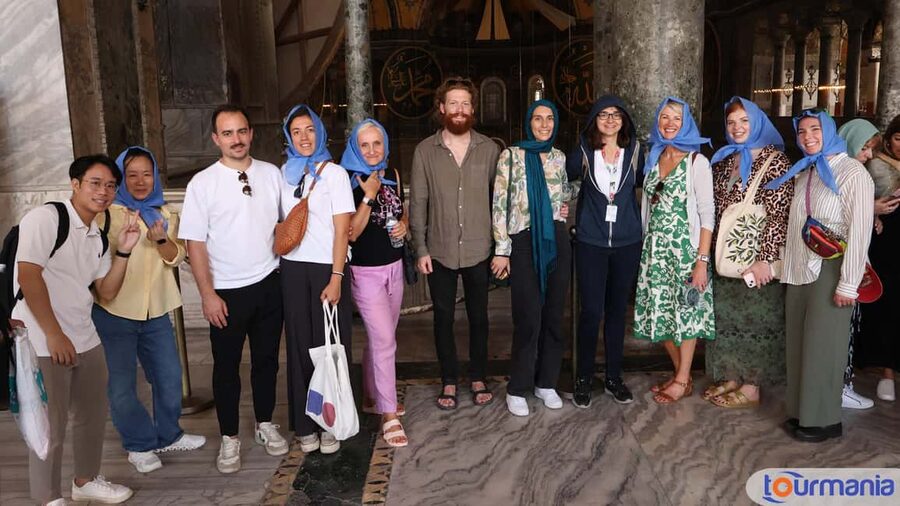
The buildings are worth seeing without help, but the tour’s value comes from the stories between the photographs. You learn why the Hippodrome mattered, how a church became a mosque, what the Ottoman additions mean, and how the Cistern supported the city.
The strongest guide feedback centers on clear storytelling, patience, and good pacing. Guides named Emre, John, Hussein, Hassan, Fatih, Elif, and Samed have been praised for answering questions, keeping groups together, using visual aids, and allowing time for photographs. One group especially appreciated a guide who combined useful facts with humor rather than delivering a dry list of dates.
There are a few practical limits. A microphone can cut out, and street noise can drown out explanations. If you are translating into another language for someone in your party, the guide may need to speak slowly and loudly enough for both listeners. Tell the guide early if someone cannot hear well.
The guide also helps with photographs. The route includes photo stops, and some guides point out good angles or take pictures for members of the group. Still, this is a history-focused walk, not a dedicated photography tour.
Who should book this tour
I would choose this experience for a first visit to Istanbul, especially if you have only one day in the Old City. It gives you the essential monuments, a useful historical framework, and a simple way to handle entry arrangements.
It also suits people who prefer explanation over independent wandering. If you want to know why Hagia Sophia has both Christian and Ottoman features, or why the Blue Mosque looks and feels different from Hagia Sophia, a guide adds real value.
The tour is less suitable if you want long, quiet time inside each site. Three hours covers a lot, but it cannot provide a slow museum-style visit. It is also not the right choice for anyone needing step-free access or a low-walking itinerary.
At $32, the price works best when you select the Cistern and want the convenience of a guide. If you already know the history, dislike group schedules, and are comfortable arranging tickets yourself, an independent visit may give you more freedom. A private group is available if you want a more personal pace.
Cancellation is free up to 24 hours before the tour, and you can reserve now and pay later. Those terms help if your Istanbul plans are still shifting, but the practical rules remain firm: arrive on time, dress for mosque entry, and bring only a small bag.
Should you book it?
Book this tour if you want a well-paced introduction to Sultanahmet with a guide who can connect Byzantine and Ottoman history across several major sites. Select the Basilica Cistern option if you want the underground walkways and Medusa heads, and confirm that it is included before you arrive.
Skip it if you need full accessibility, want to avoid enclosed spaces, or prefer to spend half a day at just one monument. For most first-time visitors, though, the mix of Hagia Sophia, the Blue Mosque, Hippodrome, and Basilica Cistern offers strong value in three focused hours.
FAQ
How long is the Istanbul City Walk?
The guided tour lasts three hours. Starting times vary, so check availability for your chosen date.
What sights are included?
The route covers Hagia Sophia, Sultan Ahmed Mosque, the Basilica Cistern when that option is selected, the Hippodrome, Sultanahmet Square, and the surrounding Sultanahmet district.
Is the Basilica Cistern included in the price?
Basilica Cistern priority admission is included if you select the Cistern option. Check your booking choice carefully because the Cistern may not be included in every package.
Where does the tour meet?
Meet at the German Fountain, also known as Alman Çeşmesi, in the Sultanahmet area. The guide holds a Tourmania sign.
Do I need to dress differently for the mosques?
Yes. Modest clothing is required at the Blue Mosque, and women need a headscarf at Hagia Sophia Mosque. Shorts and short skirts are not suitable.
Can I skip all lines?
Priority admission is included for Hagia Sophia and for the Basilica Cistern when selected. Security checks, prayer times, and visitor controls at the active mosques can still require waiting.
Is the tour suitable for wheelchair users?
No. The tour is not wheelchair accessible and is not suitable for people with mobility impairments. It also involves a moderate amount of walking and may not suit people with back problems or claustrophobia.
New routes in Turkey
- Istanbul Highlights Small-Group Walking Guided Tour★ 4.4 · 179 reviews
- Istanbul City Walk: Galata Tower, Istiklal Street & Karaköy★ 4.7 · 97 reviews
- Istanbul: Asian Side Walking Tour with Ferry Ride★ 4.4 · 224 reviews
- Istanbul: Private Guided Walking Tour★ 4.8 · 167 reviews
- Istanbul: Best of the City Private Full-Day Walking Tour★ 4.5 · 125 reviews
- Istanbul: Colorful Fener & Balat Walking Tour w/Expert Guide★ 4.7 · 234 reviews
- From Kusadasi/Izmir: Ephesus Private Tour with Less Walking★ 4.9 · 121 reviews
- Cappadocia: Guided Full-Day Tour with Lunch and River Walk★ 4.6 · 99 reviews
Istanbul Walking Tours, compared.
Blue Mosque, Hagia Sophia, & Old Town Walking Tour
Read our review →

Istanbul Highlights Small-Group Walking Guided Tour
Read our review →
European and Asian Side Guided Foodie Walking Tour
Read our review →
Colorful Fener & Balat Walking Tour w/Expert Guide
Read our review →
Browse the lists this tour appears in