
Review · SPAIN
Valencia: Historical Walking Tour
Valencia’s Old Town is best understood on foot, and this tour gives you a useful first look at its grand squares, medieval gates, market streets, and landmark buildings. You begin near the Torres de Serranos, then work through the old quarter toward the Central Market, cathedral, City Hall, and Silk Exchange. I like the clear route and the chance to ask an official guide what deserves a closer look later.
I also like that the tour connects history with daily life. You see the city’s major monuments, but you also get tips about local traditions, food, and places to return to. Guides including Amparo and Carmen have been praised for making the past easy to follow, even when explaining in two languages.
The main consideration is pace. Two hours is enough for a strong orientation, not a detailed visit inside every monument. Tickets are not included, and mixed-language groups can make explanations longer or slightly harder to hear, especially if the guide uses an audio device.
Key points to know before you book
- Serranos Towers provide a memorable starting point: The tour opens beside one of Valencia’s most impressive historic gateways.
- You cover the central Old Town highlights: The route includes Plaza Redonda, Central Market, City Hall, the cathedral area, the Silk Exchange, and the railway station.
- Guides add useful local context: Amparo and Carmen are among the guides praised for clear explanations, friendly manner, and practical advice.
- The tour is built for orientation: It works especially well on your first day, helping you decide which sights and restaurants deserve more of your time.
- The price is modest: At $17 per person, the tour offers a good-value overview, though monument entry fees are extra.
- Expect a walk, not a string of indoor visits: Wear comfortable shoes and plan to see many landmarks from outside unless you arrange separate admission.
Why this is a smart first look at Valencia
Valencia can feel scattered when you first arrive. Its historic center contains medieval streets, grand civic buildings, a major market, religious monuments, and later Art Nouveau architecture. A guided walk helps you connect those pieces instead of seeing them as unrelated photo stops.
The route is particularly useful because it moves through the city’s old center in a natural order. You begin at the medieval edge near the Serranos Towers, pass into the narrow streets, find the unusual Plaza Redonda, and continue toward the market and larger public squares. Along the way, your guide explains how Valencia developed and points out details you could easily walk past alone.
I would book this early in your stay. Several people who took the tour at the start of a trip used the walk to choose restaurants and sights for later. That is the real value here. You are not simply collecting landmark photos. You are getting a mental map of the center.
The tour has a rating of 4.6 from 390 reviews, with especially strong praise for the guides’ friendliness, clarity, and ability to answer questions. That does not guarantee the same guide or group size on every date, but it gives you a reasonable sense of the experience’s strengths.
More History Walking Tours in Spain:
- Barcelona: Tapas Walking Tour with Food, Wine, and History
★ 4.8 · 4,261 reviews - Barcelona Tapas Walking Tour: Food, Wine & History
★ 4.5 · 1,928 reviews - Madrid Historic Centre Food Tour with Authentic Tapas & Wines
★ 5.0 · 814 reviews
Beginning at the Torres de Serranos
The meeting point is at the Torres de Serranos, on C. de la Blanqueria, 1, although the exact meeting point can depend on the option you book. Check your confirmation carefully before setting out.
The towers make a fitting introduction. They are monumental city gates, and their size gives you an immediate sense of Valencia’s former defenses and importance. The guided stop lasts about 15 minutes, so you should expect an explanation of the site rather than a long interior visit.
This is also a practical place to begin because the towers are easy to recognize. If you are meeting a guide in an unfamiliar city, a large historic gateway is less confusing than a small shopfront or street corner.
The opening talk sets the tone for the rest of the walk. You get the broad story first, then see how that story appears in the streets and buildings around you. If you arrive early, use the time to locate the guide and settle your shoes. You will be walking for roughly two hours, and Valencia’s old streets often reward looking upward as much as looking ahead.
Finding the small Plaza Redonda
From the towers, the walk continues into Ciutat Vella, Valencia’s old quarter. One of the early stops is Plaza Redonda, a circular space tucked among the narrow streets.
This square is a useful contrast to the large civic spaces later in the tour. It feels enclosed and intimate, and its shape makes it easy to miss if you are exploring without a guide. The planned stop lasts about 10 minutes, which is enough to understand why the plaza is unusual and take a close look before moving on.
I like this part of the route because it shows Valencia at a more human scale. The grand cathedral and City Hall can dominate your attention, but places such as Plaza Redonda help you notice the structure of the old quarter itself.
Do not expect a long shopping break here. This is a guided orientation stop, not free time for browsing. If the square catches your interest, make a note and return later when you can explore at your own pace.
Walking through Ciutat Vella for about 30 minutes
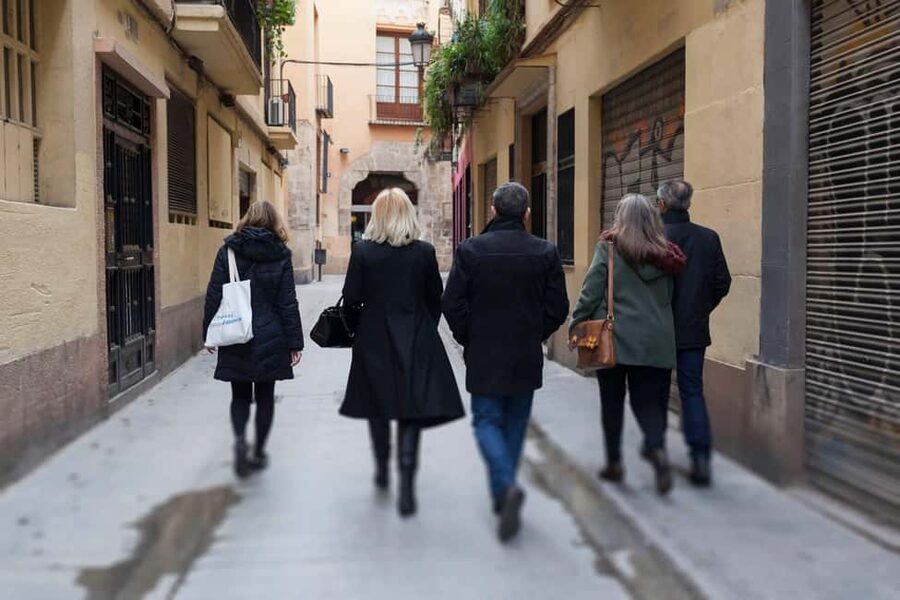
The longest section is a guided walk through Ciutat Vella, lasting about 30 minutes. This is where the tour earns its keep. Instead of rushing from one isolated monument to the next, you move through the streets between them and hear how the buildings fit into Valencia’s past and present.
Your guide may point out details that are easy to miss without local help. One particularly useful feature is the opportunity to ask questions as you go. You can ask about the city’s traditions, food, architecture, or what to see next, rather than waiting for a formal question period at the end.
The language setup varies. Live guiding is available in English, Spanish, and Italian, and the tour may be bilingual or monolingual depending on the group. Guides have handled mixed English and Italian groups well, though one person found an audio device difficult to understand. If you have hearing concerns, stay close to the guide and ask for clarification when needed.
The walk is wheelchair accessible, but it still takes place through an old urban area. The practical details of each street surface are not provided, so anyone needing specific access information should confirm the route before booking.
More Walking Tours in Spain:
- Barcelona Tapas and Wine Experience Small-Group Walking Tour
★ 5.0 · 5,804 reviews - Madrid Tapas & Wine Tasting Walking Tour – Small Group Local Bars
★ 5.0 · 3,644 reviews - Granada: Albaicín and Sacromonte Guided Sunset Walking Tour
★ 4.9 · 2,962 reviews - Toledo Tour & Vineyard Walk with Wine Tasting from Madrid
★ 5.0 · 2,546 reviews
City Hall and Plaça del Ajuntament
The walk includes Plaça del Ajuntament, Valencia’s largest public square. This is where the scale changes again. After the compact streets of the old quarter, you reach an open civic space framed by ornate buildings.
The Post Office is one of the architectural highlights here. It was built in an eclectic style by Miguel Angel Navarro, and your guide can give the building more meaning than a quick photograph would. Look for the contrast between formal public architecture and the everyday activity of the square.
The square also helps you understand modern Valencia’s civic center. It is not only a scenic stop. It shows how the city presents itself through grand public buildings, broad space, and ceremonial design.
You also see the old bullfighting ring. Its size makes an impression even if you have no interest in bullfighting. The stop offers a chance to place one of Valencia’s long-standing public traditions within the city’s broader culture.
The cathedral and the city’s religious center
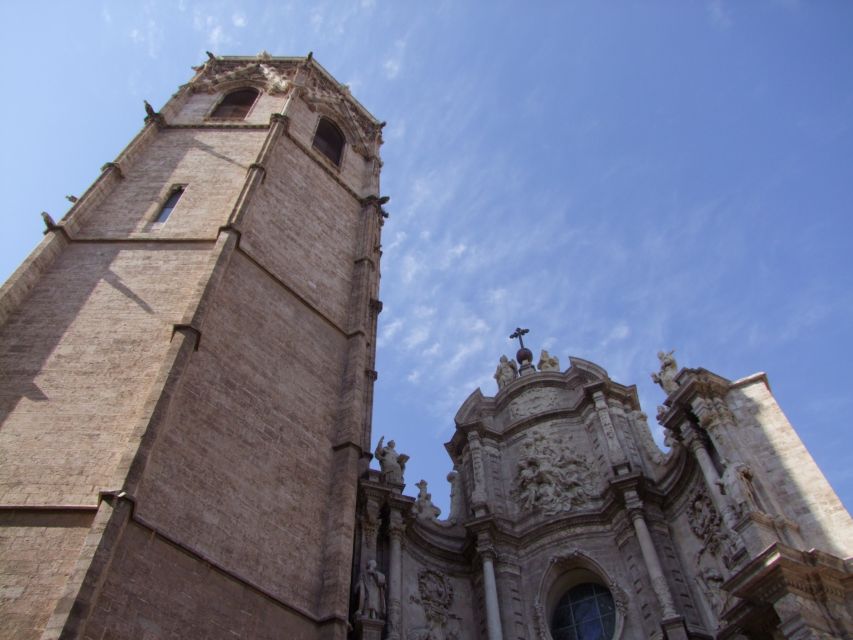
The cathedral is another major landmark on the route. The tour passes this important religious building and explains its place in Valencia’s history, but entrance tickets are not included.
That distinction matters. If you want a detailed look inside, you will need to plan a separate visit and pay any admission required at the time. This walking tour is best for orientation and outside views, not for replacing a full cathedral visit.
Still, seeing the cathedral with a guide has real value. A good explanation can help you notice the building’s setting, its relationship to the surrounding streets, and the layers of Valencia’s past. The route gives you enough context to decide if you want to return for a longer look.
You should also use this part of the walk to ask about timing for later sightseeing. Since the guide knows the central area well, you can ask what to prioritize if your stay is short.
The Central Market and Valencia’s food culture
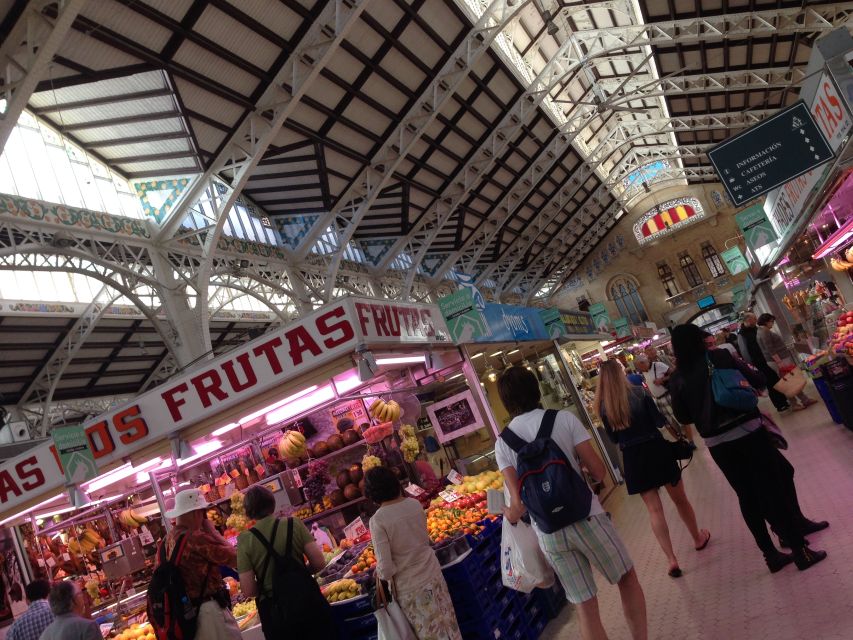
The Central Market is one of the clearest links between Valencia’s history and daily life. The tour includes a 15-minute visit, giving you a chance to see the market as a working food hall rather than simply another decorated building.
This is where the tour’s focus on gastronomy becomes most useful. Valencia is closely tied to food traditions, and the market gives you a setting for asking what to eat, what local products to notice, and which customs matter to residents.
Fifteen minutes is not enough for a full market shop. Think of it as a preview. You can return later with more time, especially if you want to browse carefully or eat nearby.
The market is also a good place to stay alert to the group. Food halls can be crowded, and a walking tour has a fixed route and schedule. Keep your belongings secure, listen for the guide, and save your detailed browsing for a return visit.
The Silk Exchange and Valencia’s commercial past
The historical Silk Exchange, known as La Lonja de la Seda, is one of the tour’s most important stops. It represents Valencia’s commercial past and gives the walk a strong connection to trade, craft, and the city’s place in Mediterranean life.
The experience does not include monument tickets, so you should not assume you will receive a full indoor visit. The guide can introduce the building and explain why it matters, while you decide if you want to buy admission and explore it in greater detail later.
This is one of the stops where a short guided explanation can save time. Without context, the building may look like an impressive old structure. With context, you understand why it was built and what kind of activity once took place there.
If historic architecture interests you, mark this as a likely return visit. The walking tour gives you the reason to go back, but the separate visit gives you the time to study it properly.
Art Nouveau at the main railway station
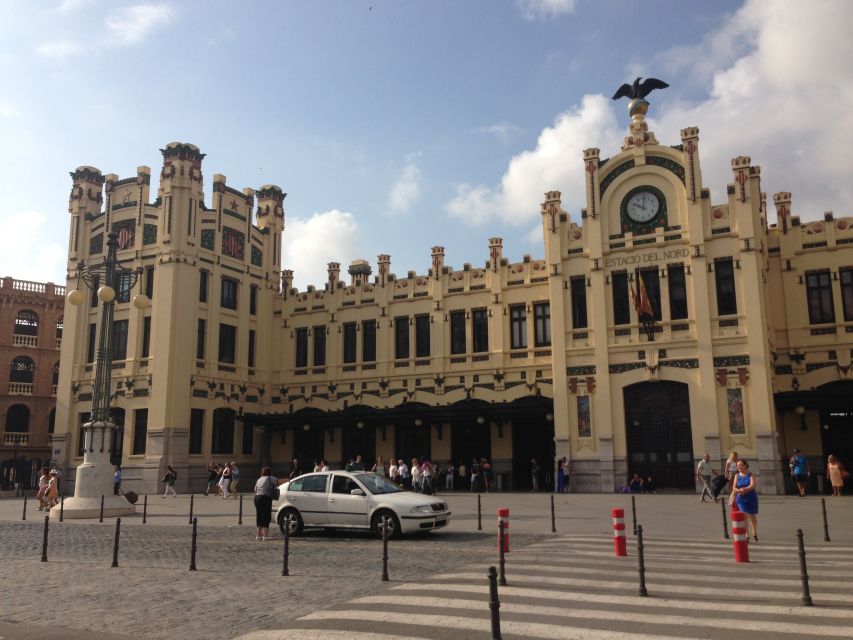
The main railway station adds a different architectural note. The tour points out its Art Nouveau design, giving you a welcome change from medieval gates, religious buildings, and older commercial landmarks.
This stop shows that Valencia’s identity is not limited to its oldest monuments. The city continued to express itself through later public architecture, and the station is a fine example of that change.
It is also a practical sight. You may use the station during your stay, so learning to recognize its design and location can help you orient yourself. The tour turns an ordinary transport building into part of the city’s story.
What the guide adds to the experience
The guide is the central reason to choose this tour instead of following a map alone. Guides such as Amparo and Carmen have been praised for being friendly, well informed, and willing to answer questions. Amparo has also managed tours with both English and Italian commentary, keeping the group engaged despite the extra language work.
That kind of flexibility matters. A mixed-language tour can take longer because each explanation may need to be repeated. You might also find an audio device less clear than a direct conversation. On the other hand, the live format lets you ask questions and request clarification, something a recorded tour cannot do.
The strongest guide reports describe the experience as a good introduction rather than an academic lecture. That is the right expectation. You get stories, context, and practical suggestions, but not a specialist treatment of every monument.
Is $17 a good value?
At $17 per person, this is a reasonable price for a guided two-hour introduction to Valencia’s center. You cover several major sights, receive local background, and can ask for advice about the rest of your stay.
The value is best if you are new to Valencia or have limited time. A self-guided walk costs less, but it requires preparation and gives you no one to answer questions. This tour gives you a route and a human explanation for a relatively small fee.
The price does not cover tickets to monuments. That keeps the basic cost low, but you should budget separately if you want to enter the cathedral, Silk Exchange, or other paid sights.
The stated duration is described as two hours to 135 minutes, so allow up to two hours and 15 minutes. Starting times vary, and the meeting point may depend on the option booked. Plan your day with a little space around the walk rather than scheduling an immediate restaurant reservation or museum entry.
Who will enjoy this walking tour most?
I would recommend it to first-time visitors, couples, solo travelers, families with older children, and anyone who wants a practical introduction before exploring alone. It suits people who enjoy history but do not want a full-day lecture.
It is also useful for anyone interested in architecture and food. The route includes civic buildings, a cathedral, a medieval gate, a market, a trade center, and Art Nouveau design. That is a lot of variety for one short walk.
You should think twice if you want long indoor visits or plenty of free time at each stop. This is a moving overview. Babies under one year old are not considered suitable for the tour, and comfortable shoes are essential.
The tour is wheelchair accessible, which widens its appeal, but anyone with specific mobility needs should confirm the current route and meeting point before booking.
Should you book the Valencia Historical Walking Tour?
Book it if you want to get your bearings fast, learn the basic story of Valencia, and receive useful ideas for the rest of your stay. The combination of Serranos Towers, Plaza Redonda, the Central Market, City Hall, cathedral, Silk Exchange, railway station, and old-town streets gives you a solid first look.
The best plan is to take it near the beginning of your visit, then return to the market, cathedral, or Silk Exchange with more time. At $17, it is good value for that first layer of context.
Skip it if you prefer to explore entirely alone or want admission and extended time inside each monument. For most first-time visitors, though, the friendly guiding style, central route, flexible language options, and practical local advice make this a sensible start to Valencia.
FAQ
How long does the Valencia Historical Walking Tour last?
The tour lasts about two hours, with the stated duration ranging up to 135 minutes. Check the available starting times when booking.
Where does the tour begin?
One listed starting point is the Torres de Serranos at C. de la Blanqueria, 1. The meeting point may vary depending on the option booked.
Which languages are available?
Live guiding is available in English, Spanish, and Italian. The tour may be monolingual or bilingual depending on the group.
Is the tour wheelchair accessible?
Yes, the activity is listed as wheelchair accessible. If you have specific access needs, confirm the exact route and meeting point before booking.
Are monument entrance tickets included?
No. Tickets to monuments are not included, so separate admission may be needed if you want to enter places such as the cathedral or Silk Exchange.
What sights does the tour cover?
The route includes Torres de Serranos, Plaza Redonda, Ciutat Vella, Central Market, City Hall, Plaça del Ajuntament, the cathedral, the Silk Exchange, the old bullfighting ring, and the main railway station.
What should I bring?
Bring comfortable shoes because the experience is a walking tour lasting about two hours.
Can I bring a baby under one year old?
The tour is not considered suitable for babies under one year old.
Can I cancel the booking?
You can cancel up to 24 hours in advance for a full refund. The reserve-now, pay-later option lets you keep your plans flexible.
New routes in Spain
- Toledo: Guided Walking Tour with Cathedral Ticket and Tour★ 4.2 · 98 reviews
- Toledo: Guided Monument Walking Tour with Wristband Pass★ 4.5 · 487 reviews
- Valencia: Fallas Festival Walking Tour with Entry Ticket★ 4.6 · 86 reviews
- Barcelona: “The Shadow of the Wind” Literary Walking Tour★ 4.5 · 176 reviews
- Tenerife: Underwater Walk – Sea Trek Experience★ 5.0 · 237 reviews
- Tarragona: Roman Heritage Guided Walking Tour★ 4.7 · 261 reviews
- Seville: Sunset Roof Top Walking Tour★ 4.2 · 131 reviews
- Seville: Paranormal and Legends Guided Walking Tour★ 4.7 · 336 reviews
Spain Walking Tours, compared.
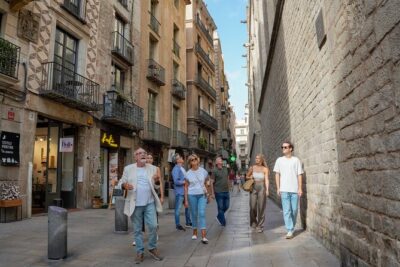
Barcelona Tapas and Wine Experience Small-Group Walking Tour
Read our review →
Tapas Walking Tour with Food, Wine, and History
Read our review →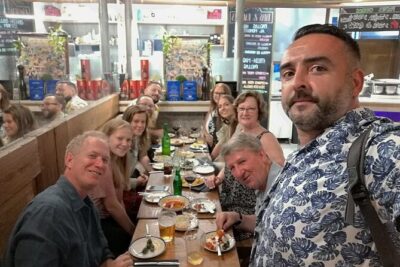
Madrid Tapas & Wine Tasting Walking Tour – Small Group Local Bars
Read our review →
Albaicín and Sacromonte Guided Sunset Walking Tour
Read our review →
Toledo Tour & Vineyard Walk with Wine Tasting from Madrid
Read our review →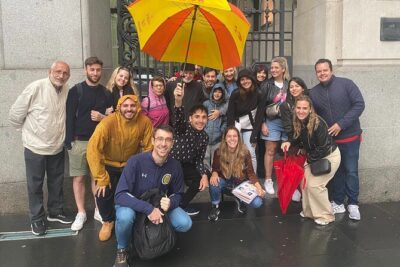

Browse the lists this tour appears in